admin1
Decadent Chocolate Pecan Loaf Cake Recipe
A rich, moist, fudgy chocolate pecan loaf cake topped with a silky chocolate ganache and generously decorated with crunchy pecan halves is the ultimate dessert for chocolate lovers. This beautiful loaf combines the deep flavor of cocoa, the buttery nuttiness of pecans, and the luxurious smoothness of melted chocolate to create a dessert that looks elegant enough for a special celebration but is simple enough to prepare at home.
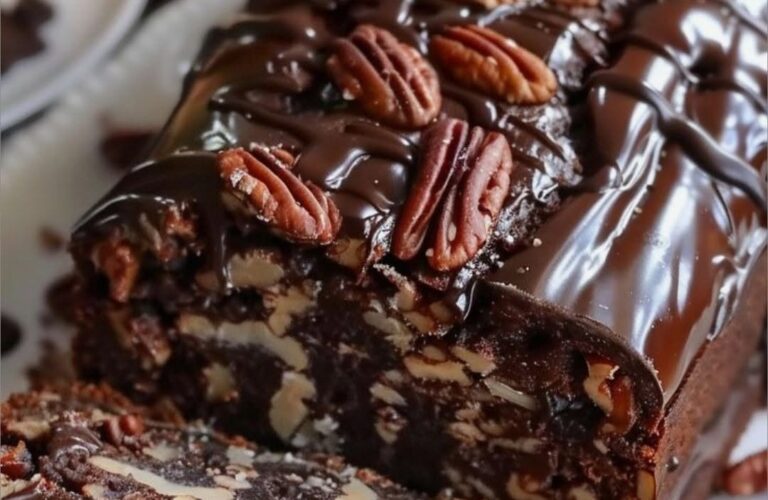
Inspired by the chocolate pecan loaf in the picture, this recipe features a tender chocolate cake filled with chopped pecans, a rich chocolate coating, and plenty of toasted pecans arranged across the top. Every slice reveals a dark, moist chocolate crumb dotted with nuts, while the glossy ganache adds another layer of chocolate flavor. The combination of soft cake, crunchy pecans, and silky chocolate makes this loaf especially satisfying.
Whether you serve it with coffee, enjoy it as an afternoon treat, prepare it for a birthday, or present it as the centerpiece of a dessert table, this chocolate pecan loaf is a wonderful homemade dessert that feels both comforting and luxurious.
Introduction to Chocolate Pecan Loaf Cake
Chocolate and pecans are a naturally delicious combination. Chocolate provides a deep, bittersweet flavor, while pecans contribute a delicate buttery taste and a pleasant crunch. When these ingredients are combined in a moist loaf cake, they create a dessert with several contrasting textures and layers of flavor.
This recipe is designed to produce a cake that is rich without being excessively heavy, sweet without losing the flavor of the cocoa, and moist enough to remain enjoyable for several days when stored correctly.
The chocolate cake itself is soft and tender, with a fine crumb that holds together beautifully when sliced. Chopped pecans are distributed throughout the batter, providing little pockets of nutty flavor in every bite. Once the cake has cooled, it is covered with a smooth chocolate ganache that flows gently over the sides and creates the glossy finish seen in the photograph.
Whole pecan halves are arranged over the top to give the loaf an attractive bakery-style appearance. A few additional pecans can be placed around the serving plate for a more decorative presentation.
The best part is that you do not need special baking equipment or professional pastry skills to make this dessert. A standard loaf pan, a mixing bowl, a whisk, and a saucepan are enough to create an impressive result.
Recipe Overview
Preparation time: 25–30 minutes
Baking time: 50–65 minutes
Cooling time: 1–2 hours
Decoration time: 15 minutes
Total time: Approximately 2 hours and 30 minutes, including cooling
Yield: 10–12 slices
Difficulty level: Easy to moderate
Serving style: Dessert, afternoon tea, coffee accompaniment, celebration cake, or homemade gift
Texture: Moist, soft, fudgy, and nutty
Flavor: Deep chocolate with buttery pecans and smooth chocolate ganache
Ingredients for the Chocolate Pecan Loaf Cake
The ingredients below are divided into separate sections to make preparation easier. Measuring everything before beginning helps the baking process run smoothly and reduces the chance of forgetting an ingredient.
Dry Ingredients
All-purpose flour: 1 ½ cups, approximately 190 grams. Flour provides the structure that holds the cake together. Measure it accurately to prevent the loaf from becoming dry or dense.
Unsweetened cocoa powder: ½ cup, approximately 45–50 grams. Cocoa gives the cake its deep chocolate flavor and dark color. Natural unsweetened cocoa works well, although Dutch-process cocoa can also be used if the baking powder and other ingredients are adjusted appropriately.
Granulated sugar: 1 cup, approximately 200 grams. Sugar adds sweetness, helps retain moisture, and contributes to the tenderness of the cake.
Brown sugar: ½ cup, approximately 100 grams, packed. Brown sugar adds a subtle caramel flavor and helps create a moist crumb.
Baking powder: 1 teaspoon. This helps the cake rise and develop a light texture.
Baking soda: ½ teaspoon. Baking soda contributes to the cake’s rise and works with the acidic ingredients in the batter.
Salt: ¼ teaspoon. Salt balances the sweetness and enhances the flavor of the chocolate.
Instant coffee powder: 1 teaspoon, optional. Coffee deepens the chocolate flavor without making the cake taste strongly of coffee.
Wet Ingredients
Large eggs: 2, at room temperature. Eggs help bind the ingredients together and contribute to the cake’s structure and softness.
Whole milk: ¾ cup, at room temperature. Milk adds moisture and helps combine the dry ingredients into a smooth batter.
Vegetable oil: ½ cup. Oil helps keep the cake moist even after refrigeration. A neutral-flavored oil is best.
Vanilla extract: 2 teaspoons. Vanilla complements the cocoa and brings warmth to the overall flavor.
Sour cream or plain full-fat yogurt: ½ cup. This ingredient adds moisture and tenderness while giving the cake a soft, rich texture.
Hot water: ½ cup. Hot water helps the cocoa dissolve and intensifies its flavor. The batter will be relatively thin, which is normal for this style of chocolate cake.
Ingredients for the Pecan Filling
Chopped pecans: 1 cup, approximately 110 grams. These are mixed into the batter to provide crunch and buttery flavor.
Melted butter: 1 tablespoon, optional. A small amount of butter can be used to toast the pecans before adding them to the cake.
Ground cinnamon: ¼ teaspoon, optional. Cinnamon adds warmth and pairs particularly well with pecans and chocolate.
Ingredients for the Chocolate Ganache
Semi-sweet chocolate: 200 grams, finely chopped. Use good-quality chocolate bars or baking chocolate for a smooth finish.
Heavy cream: ¾ cup, approximately 180 milliliters. Cream softens the chocolate and creates a glossy, pourable ganache.
Unsalted butter: 1 tablespoon, optional. Butter adds shine and a silky finish.
Vanilla extract: ½ teaspoon, optional. A small amount of vanilla rounds out the flavor.
Salt: A tiny pinch, optional. Salt helps balance the sweetness and brings out the richness of the chocolate.
Ingredients for the Topping
Pecan halves: ¾ to 1 cup. These are arranged over the ganache to create the decorative finish shown in the picture.
Extra melted chocolate: 50–75 grams, optional. Additional melted chocolate can be drizzled over the pecans for a more elaborate appearance.
Flaky sea salt: A small pinch, optional. A light sprinkling creates a delicious contrast with the chocolate.
Equipment Needed
Prepare the following equipment before starting.
A standard 9-by-5-inch loaf pan is ideal for this recipe. A slightly smaller pan may also work, but the cake will be deeper and may need additional baking time.
You will also need parchment paper, a large mixing bowl, a medium mixing bowl, a whisk, a silicone spatula, measuring cups or a kitchen scale, a sieve for the flour and cocoa, a small saucepan, a heatproof bowl, a cooling rack, and a sharp serrated knife for slicing.
If you have a digital kitchen thermometer, it can help determine whether the cake is fully baked. However, a wooden skewer inserted into the center is sufficient for most home kitchens.
Step-by-Step Instructions
Step 1: Prepare the Oven and Loaf Pan
Begin by preheating your oven to 175°C, or 350°F. Allow the oven to heat fully before placing the cake inside. An oven that has not reached the correct temperature can cause uneven rising and inconsistent baking.
Take a standard loaf pan and lightly grease the bottom and sides with butter or cooking oil. Line the pan with parchment paper, allowing some paper to extend over the longer sides. These overhanging edges will serve as handles when you lift the cooled cake from the pan.
Grease the parchment paper lightly as well, especially if you are using a pan that tends to stick.
Set the prepared pan aside while you make the batter.
Step 2: Toast the Pecans for Better Flavor
Although pecans can be added directly to the batter, lightly toasting them creates a deeper, nuttier flavor.
Preheat a dry skillet over medium-low heat. Add the chopped pecans and stir them frequently for approximately 3–5 minutes. Watch them carefully because nuts can burn quickly.
When the pecans become fragrant and slightly darker, remove them from the skillet and transfer them to a plate to cool.
If you prefer to use the oven, spread the pecans on a baking tray and toast them at approximately 160°C for 5–8 minutes, checking frequently.
Allow the pecans to cool before adding them to the batter. Hot nuts can warm the batter unnecessarily and may affect the final texture.
Reserve the pecan halves separately for the topping.
Step 3: Combine the Dry Ingredients
Place a large mixing bowl on your work surface.
Sift the all-purpose flour and cocoa powder into the bowl. Sifting helps remove lumps and distributes the cocoa evenly throughout the flour.
Add the granulated sugar, brown sugar, baking powder, baking soda, salt, and instant coffee powder if using.
Whisk everything together until the mixture looks uniform. Break up any remaining lumps of brown sugar with the back of a spoon.
Mixing the dry ingredients first ensures that the raising agents are evenly distributed. This helps the cake rise consistently instead of developing large air pockets or uneven areas.
Set the bowl aside.
Step 4: Prepare the Wet Ingredients
In a separate medium-sized bowl, crack the eggs and whisk them gently until the yolks and whites are combined.
Add the milk, vegetable oil, vanilla extract, and sour cream or yogurt.
Whisk until the mixture is smooth and evenly blended.
The eggs, milk, and sour cream should ideally be at room temperature. Cold ingredients can make the batter harder to combine smoothly, while room-temperature ingredients help produce a more uniform mixture.
Do not worry if the mixture looks slightly thick because of the sour cream. It will loosen when combined with the dry ingredients and hot water.
Step 5: Combine the Wet and Dry Mixtures
Pour the wet ingredients into the bowl containing the dry ingredients.
Using a whisk or silicone spatula, gently stir the mixture until the flour is almost completely incorporated.
Scrape around the sides and bottom of the bowl to make sure no dry pockets remain.
Avoid beating the mixture vigorously. Excessive mixing develops gluten in the flour, which can make the finished cake tough rather than tender.
At this stage, the batter may look thick. This is expected because the hot water has not yet been added.
Step 6: Add the Hot Water
Carefully pour the hot water into the batter in a slow, steady stream while stirring gently.
The batter will become thinner and more fluid. Continue mixing until the cocoa has dissolved and the batter looks smooth and glossy.
Hot water is especially useful in chocolate baking because it helps release the flavor of the cocoa powder. It also gives the cake a moist texture.
Do not use boiling water directly from a vigorously boiling kettle if it makes handling difficult. Very hot water is sufficient.
Once the batter is smooth, stop mixing.
Step 7: Fold in the Chopped Pecans
Add the cooled toasted pecans to the chocolate batter.
Use a silicone spatula to fold them in gently. Make broad movements from the bottom of the bowl toward the top, turning the bowl as you work.
The aim is to distribute the pecans evenly without overmixing the batter.
If you enjoy a particularly nutty cake, you can reserve a small handful of chopped pecans to sprinkle over the surface before baking.
For a slightly sweeter filling, you can also mix the pecans with a small amount of brown sugar and a pinch of cinnamon before adding them to the batter.
Step 8: Transfer the Batter to the Pan
Pour the prepared batter into the lined loaf pan.
Use a spatula to scrape the bowl so that none of the mixture goes to waste.
Spread the batter evenly into the corners of the pan. Gently tap the pan against the countertop once or twice to release any unusually large air bubbles.
If you reserved a few chopped pecans, scatter them lightly over the top.
Do not fill the pan all the way to the rim. The cake needs enough space to rise during baking.
Step 9: Bake the Chocolate Pecan Loaf
Place the loaf pan on the center rack of the preheated oven.
Bake for approximately 50–65 minutes. The exact baking time will depend on your oven, the dimensions of your pan, and the moisture content of the batter.
Avoid opening the oven door during the first 35–40 minutes. A sudden drop in temperature can affect the cake’s rise.
As the cake bakes, the top will gradually become firm, and the kitchen will begin to smell of chocolate.
Start checking for doneness at around 50 minutes. Insert a wooden skewer into the center of the loaf. If it comes out with wet batter attached, continue baking for another 5–8 minutes before checking again.
A few moist crumbs on the skewer are perfectly acceptable. The cake should not be baked until it becomes completely dry, because that can reduce its fudgy texture.
If the top begins to darken too quickly while the center remains uncooked, loosely cover the pan with aluminum foil and continue baking.
Step 10: Cool the Cake in the Pan
Once the cake is baked, remove the pan from the oven and place it on a heatproof surface.
Allow the cake to rest in the pan for approximately 15–20 minutes. This short resting period helps the structure settle and makes the loaf easier to remove.
Use the parchment paper handles to lift the cake gently from the pan.
Transfer it to a wire rack and allow it to cool completely before adding the ganache.
This step is important. If warm cake is covered with chocolate ganache, the topping may melt excessively, slide off the sides, or soak into the crumb rather than forming a smooth coating.
Depending on the temperature of your kitchen, complete cooling may take 60–90 minutes.
Step 11: Prepare the Chocolate Ganache
Finely chop the semi-sweet chocolate and place it in a heatproof bowl.
Pour the heavy cream into a small saucepan. Warm it over medium-low heat until it is steaming and tiny bubbles begin to appear around the edges.
Do not allow the cream to boil vigorously.
Pour the hot cream over the chopped chocolate, making sure the chocolate is mostly covered. Let the mixture stand undisturbed for approximately 3–5 minutes.
The resting time allows the heat from the cream to soften the chocolate.
After resting, begin stirring slowly from the center of the bowl. Gradually work outward in small circles until the chocolate and cream form a smooth, glossy mixture.
Add the butter, if using, and stir until completely melted. Mix in the vanilla extract and a tiny pinch of salt if desired.
The ganache should look shiny and uniform, with no visible pieces of unmelted chocolate.
If a few pieces remain, place the bowl over a saucepan containing gently simmering water for a short time and stir until smooth. Do not let the bottom of the bowl touch the water.
Step 12: Allow the Ganache to Thicken Slightly
Leave the ganache at room temperature for approximately 10–20 minutes, stirring occasionally.
The goal is to achieve a consistency that flows slowly from a spoon but is thick enough to cling to the cake.
If the ganache is too hot and runny, it may slide off the loaf. If it becomes too thick, it may be difficult to spread smoothly.
For a thinner glaze, use the ganache while it is still slightly warm. For a thicker coating, allow it to cool longer.
You can also refrigerate it briefly, stirring every few minutes, but avoid leaving it unattended for too long because it can firm up quickly.
Step 13: Coat the Loaf with Chocolate Ganache
Place the completely cooled cake on a wire rack with a tray or sheet of parchment underneath to catch excess chocolate.
Pour the ganache slowly over the center of the loaf.
Use an offset spatula or the back of a spoon to guide the chocolate toward the edges. Allow some of the ganache to drip naturally down the sides.
For a generous coating similar to the photograph, apply a thick layer across the top and spread additional ganache along the sides.
If you prefer a more controlled finish, spread the chocolate in a smooth layer rather than allowing large drips to form.
Let the ganache settle for a few minutes before arranging the pecans.
Step 14: Decorate with Pecan Halves
Arrange the pecan halves over the top of the loaf while the ganache is still slightly soft.
You can place them in neat rows, create a central line, or arrange them in a decorative pattern from one end of the cake to the other.
For a look similar to the pictured dessert, position the pecans close together, alternating their directions slightly. This creates an attractive pattern and ensures that each slice contains some decorative nuts.
Press each pecan very gently into the chocolate so it stays in place without disappearing beneath the ganache.
If you want an even more luxurious appearance, melt a little additional chocolate and drizzle it over the pecans using a spoon.
A tiny pinch of flaky sea salt can also be sprinkled over the ganache. The salt enhances the chocolate flavor and contrasts beautifully with the sweetness of the cake.
Step 15: Allow the Chocolate to Set
Leave the decorated loaf at room temperature until the ganache begins to firm.
This usually takes approximately 30–60 minutes, depending on the temperature of the kitchen and the thickness of the chocolate coating.
If you need the ganache to set more quickly, refrigerate the cake for 15–25 minutes and then check its texture.
Avoid wrapping the cake while the topping is still wet, because condensation can make the chocolate surface dull or sticky.
Once the ganache is set enough to hold its shape, transfer the cake to a serving platter.
Your chocolate pecan loaf is now ready to slice and serve.
How to Slice the Loaf Perfectly
A beautiful loaf deserves neat slices that show off the chocolate crumb and the pecans inside.
Use a long, sharp serrated knife. Allow the ganache to set before cutting, as this reduces the chance of the topping sliding away from the cake.
For especially clean slices, dip the knife into warm water, wipe it completely dry, and cut through the loaf with gentle sawing motions. Clean the knife between slices to prevent chocolate from accumulating along the blade.
Avoid pressing down too hard, because this can compress the soft crumb and crack the chocolate coating.
For a dessert platter, cut the loaf into approximately 10–12 slices. For a rich after-dinner dessert, thinner slices may be sufficient. For an afternoon treat with coffee or tea, slightly thicker slices work beautifully.
If the cake has been refrigerated, let the slices stand at room temperature for 15–20 minutes before serving so that the crumb softens and the ganache becomes pleasantly smooth.
The Secret to a Moist Chocolate Pecan Cake
A great chocolate loaf should be moist without being underbaked. Several small details make a significant difference.
Measure the Flour Carefully
Too much flour can make the cake dense, dry, or crumbly. The most accurate method is to weigh the flour using a kitchen scale.
If measuring with cups, fluff the flour first, spoon it into the measuring cup, and level the top with a straight edge. Avoid packing the flour tightly into the cup.
Use Oil for Lasting Moisture
Butter provides wonderful flavor, but oil remains liquid at room temperature and helps a cake retain a moist texture.
That is why this recipe uses vegetable oil in the batter and reserves butter for the ganache, where its flavor and richness are especially useful.
Do Not Overmix the Batter
Once the flour is added, mix only until the ingredients are combined.
Overmixing can produce a tougher crumb and an uneven texture. A few gentle strokes with a spatula are usually better than prolonged beating.
Do Not Overbake
Chocolate cakes can be difficult to judge by color alone because the batter is already dark.
Begin testing the loaf near the lower end of the recommended baking time. The skewer should come out without wet batter, but a few moist crumbs are acceptable.
Remember that the cake continues to settle as it cools.
Cool Before Decorating
Allowing the loaf to cool completely is essential for achieving a smooth ganache coating.
Warm cake can melt the chocolate mixture and make it slide away from the surface. A fully cooled cake gives the ganache a better chance to form an attractive layer.
Tips for Making the Best Chocolate Ganache
Chocolate ganache may look sophisticated, but it is made from just a few ingredients.
The most important factor is the ratio of chocolate to cream. This recipe uses 200 grams of chocolate with approximately 180 milliliters of heavy cream, creating a rich glaze that remains soft enough to cut while still coating the loaf.
Finely chopping the chocolate helps it melt evenly. Large pieces may remain solid in the center even when the surrounding mixture looks melted.
Warm the cream gently rather than boiling it. Excessive heat can affect the texture of the mixture, particularly if the chocolate is delicate.
When stirring, start in the center and move outward gradually. This encourages the chocolate and cream to combine into a smooth emulsion.
If the ganache looks slightly separated or oily, remove it from the heat and stir in a teaspoon of warm cream at a time until it becomes smoother. Gentle stirring is usually more effective than vigorous whisking, which can introduce unnecessary air bubbles.
For an especially glossy finish, add a tablespoon of unsalted butter after the chocolate and cream have combined.
Variations to Try
Double Chocolate Pecan Loaf
For an even richer cake, fold ½ cup of semi-sweet chocolate chips into the batter along with the pecans.
The chocolate chips create small pockets of melted chocolate throughout the cake, giving each slice an extra layer of indulgence.
Use chocolate chips that hold their shape reasonably well during baking, and distribute them evenly so that they do not all settle at the bottom.
Chocolate Pecan Brownie Loaf
If you prefer a denser, brownie-like texture, replace ¼ cup of the flour with an additional ¼ cup of cocoa powder only if you also adjust the overall recipe carefully; simply adding more cocoa can dry out the cake.
A more reliable option is to use a dedicated brownie-loaf recipe with a higher proportion of chocolate, butter, and eggs and less flour.
The result will be denser and more fudgy than the cake described here.
Chocolate Caramel Pecan Loaf
Caramel and pecans are a classic combination.
Once the ganache has set slightly, drizzle 2–3 tablespoons of thick caramel sauce over the top. Add the pecans afterward so that the caramel helps hold them in place.
You can also spread a thin layer of caramel over the cooled cake before adding the ganache, but allow the layer to settle first.
Use a modest amount of caramel so that the topping does not become overly sweet or slide off the sides.
Chocolate Pecan Coffee Cake
For a deeper, more sophisticated flavor, increase the instant coffee powder to 1½ teaspoons.
The coffee will enhance the chocolate without making the finished cake taste like a cup of coffee.
Serve this version with plain coffee, cappuccino, or unsweetened tea.
Orange Chocolate Pecan Loaf
Chocolate pairs beautifully with citrus.
Add 1–2 teaspoons of finely grated orange zest to the wet ingredients. The fragrant orange oils complement the cocoa and provide a fresh note against the rich ganache.
You can also add a small amount of orange zest to the ganache, provided the mixture remains smooth.
Chocolate Pecan Coconut Loaf
Add ½ cup of unsweetened shredded coconut to the batter along with the chopped pecans.
The coconut contributes a gentle sweetness and a slightly chewy texture.
For the topping, you can scatter a little toasted coconut between the pecan halves, creating a more elaborate finish.
Dark Chocolate Pecan Loaf
Use dark chocolate containing approximately 60–70% cocoa for the ganache.
This produces a less sweet coating with a stronger cocoa flavor. The bitterness of the chocolate balances the sweetness of the cake and the buttery richness of the pecans.
If using very dark chocolate, taste the ganache before pouring it over the cake. You can add a small amount of extra cream or a little powdered sugar if you prefer a milder flavor.
Chocolate Pecan Loaf with Cream Cheese Swirl
For a different presentation, prepare a small cream cheese mixture using 115 grams of softened cream cheese, 2 tablespoons of sugar, and 1 egg yolk.
Spread half of the chocolate batter into the pan, spoon the cream cheese mixture over it, and cover with the remaining batter. Gently swirl the layers with a knife.
Because this variation adds another moist component, check the cake carefully for doneness and allow it to cool completely.
The cream cheese swirl creates a marbled interior and a slightly tangy contrast to the chocolate.
Chocolate Pecan Banana Loaf
Mash one medium ripe banana and add it to the wet ingredients, reducing the milk slightly if necessary.
Banana contributes sweetness and moisture while pairing naturally with chocolate and pecans.
The flavor will be more pronounced than in the original recipe, so this variation is best for those who enjoy banana-flavored baked goods.
Ingredient Substitutions
If you do not have every ingredient at home, several substitutions may work.
Milk: You can use unsweetened oat milk or soy milk. The flavor and texture may vary slightly, but these alternatives can work well in chocolate cake.
Sour cream: Plain full-fat yogurt is a convenient alternative. Greek yogurt can also work, although its thicker consistency may slightly change the batter.
Vegetable oil: Canola oil or another neutral oil can be used. Melted butter is another option, but the cake may have a slightly different texture after cooling.
Brown sugar: You can use additional granulated sugar if necessary. The cake may lose some of the caramel-like flavor and moisture associated with brown sugar.
Pecans: Walnuts are the closest common substitute and provide a similar crunch. Almonds or hazelnuts can also be used, although their flavors are different.
Semi-sweet chocolate: Dark chocolate or milk chocolate can be used for the ganache. Milk chocolate is sweeter and softer, so the final coating may require a different chocolate-to-cream ratio.
Coffee powder: This ingredient is optional. You can omit it without significantly changing the cake’s structure.
Gluten-free flour: A commercially prepared gluten-free baking blend designed to replace all-purpose flour may work, but the texture can vary. Follow the blend’s guidance and check the cake carefully while baking.
Common Mistakes and How to Avoid Them
The Cake Turned Out Dry
A dry cake is often caused by too much flour, excessive baking, or inaccurate measurements.
Use a kitchen scale whenever possible and begin checking for doneness before the full baking time has elapsed.
Also make sure the oven temperature is accurate. An oven that runs hotter than its setting can dry out the edges before the center finishes baking.
The Center Sank
A sunken center can occur when the cake is underbaked, when the oven door is opened too early, or when the batter contains too much raising agent.
Check that the baking powder and baking soda are fresh, measure them accurately, and avoid disturbing the cake during the first part of baking.
A slight dip in the center is not necessarily a problem, particularly for a moist chocolate loaf.
The Cake Stuck to the Pan
This can happen when the pan is insufficiently greased or the cake is removed before it has rested.
Line the pan with parchment paper and let the loaf cool for 15–20 minutes before lifting it out.
If the cake still sticks, carefully loosen the sides with a thin spatula before removing it.
The Ganache Is Too Runny
The ganache may be too warm, or the cream-to-chocolate ratio may be too high for the type of chocolate used.
Allow it to cool at room temperature, stirring occasionally, until it thickens.
If it remains very thin, melt a little additional chocolate separately and stir it into the mixture.
The Ganache Is Too Thick
If the ganache becomes too firm before you finish decorating, gently warm it over a bowl of warm water.
You can also stir in a teaspoon of warm cream at a time until it reaches a pourable consistency.
Avoid overheating it.
The Pecans Fell Off the Top
The pecans may have been added after the ganache had already set.
Arrange the pecans while the chocolate coating is still slightly soft, pressing them gently into place.
If the coating has already hardened, a small dab of melted chocolate can be used to attach individual pecans.
The Cake Crumbled While Slicing
The cake may not have cooled completely, or the knife may have been pressing rather than slicing through the crumb.
Allow the loaf to cool fully, use a serrated knife, and cut with gentle sawing motions.
For the cleanest presentation, wait until the ganache has set before slicing.
Serving Suggestions
Chocolate pecan loaf cake is rich enough to serve on its own, but a few simple accompaniments can make it feel even more special.
Serve with Coffee
A slice of chocolate pecan loaf pairs wonderfully with freshly brewed coffee, espresso, or cappuccino.
The slight bitterness of coffee balances the sweetness of the ganache and highlights the chocolate flavor.
Serve with Tea
Black tea, English breakfast tea, or lightly spiced chai makes an excellent accompaniment.
The warm flavors of tea complement the pecans and create a comforting afternoon treat.
Serve with Vanilla Ice Cream
Place a slice of cake on a dessert plate and add a small scoop of vanilla ice cream beside it.
The cold, creamy ice cream contrasts with the rich chocolate and crunchy nuts. For an especially indulgent presentation, warm the cake slice slightly before serving, but avoid heating it so much that the ganache becomes excessively runny.
Serve with Whipped Cream
A spoonful of lightly sweetened whipped cream provides a soft, airy contrast to the dense chocolate cake.
You can prepare the cream with heavy whipping cream, a small amount of powdered sugar, and a little vanilla extract.
Whip until soft or medium peaks form, then serve immediately alongside the cake.
Add Fresh Berries
Strawberries, raspberries, and cherries all pair well with chocolate.
Their freshness and mild acidity help balance the richness of the ganache. Arrange a few berries beside each slice rather than covering the entire loaf, so the chocolate and pecans remain the focus.
Create a Dessert Platter
For gatherings, serve thin slices of the loaf with fresh fruit, a few extra pecans, and small bowls of whipped cream or chocolate sauce.
This arrangement gives guests several ways to enjoy the dessert without requiring complicated decorations.
How to Store Chocolate Pecan Loaf Cake
Proper storage helps preserve the cake’s moisture and keeps the chocolate topping in good condition.
At Room Temperature
If your kitchen is cool and the cake will be eaten within a day, you can keep it in an airtight container in a cool place.
Because the loaf contains eggs and dairy ingredients and is topped with cream-based ganache, refrigeration is the safer choice in a warm environment. Avoid leaving it out for extended periods, especially in hot weather.
In the Refrigerator
Place the cooled cake in an airtight container and refrigerate it for approximately 4–5 days.
The ganache will become firmer in the refrigerator, and the cake itself may feel slightly denser while cold.
For the best texture, remove individual slices and let them stand at room temperature for approximately 15–20 minutes before serving.
Avoid leaving the cake uncovered in the refrigerator, as it can absorb odors and gradually dry out.
In the Freezer
You can freeze the cake for longer storage.
For the best results, freeze the undecorated loaf after it has cooled completely. Wrap it tightly in plastic wrap, followed by a layer of aluminum foil or a freezer-safe bag.
Freeze for up to approximately 2–3 months for good quality.
Thaw the loaf in the refrigerator overnight, then bring it toward room temperature before adding freshly prepared ganache and pecans.
Individual slices can also be frozen separately. Place parchment between the slices to prevent them from sticking together.
If freezing an already decorated cake, allow the ganache to firm first, then freeze the loaf uncovered briefly until the surface is firm before wrapping it carefully. The topping may lose some of its original shine after thawing, but the flavor should remain enjoyable.
Make-Ahead Instructions
This recipe is convenient for parties because several steps can be completed in advance.
You can bake the loaf a day before serving. Once it has cooled completely, wrap it well and refrigerate it or keep it in a cool place if conditions are suitable for safe storage.
Prepare the ganache on the day you plan to decorate the cake for the smoothest finish.
You can also toast the pecans a day ahead and store them in an airtight container once completely cool.
For a celebration, bake the loaf, allow it to cool, and decorate it the following day. This makes it easier to coordinate the dessert with other dishes.
If you want to transport the cake, allow the ganache to set firmly before placing it in a cake carrier. Keep the loaf level and avoid placing heavy items on top.
Frequently Asked Questions
Can I make this chocolate pecan loaf without coffee?
Yes. Coffee powder is optional and is included only to deepen the chocolate flavor. The cake will still taste rich and chocolatey without it.
Can I use walnuts instead of pecans?
Yes. Walnuts are an excellent substitute and work well in both the batter and the topping. They have a slightly more earthy, mildly bitter flavor, while pecans are generally sweeter and more buttery.
Can I make the cake without sour cream?
Yes. Plain yogurt is a suitable alternative. If neither is available, you can use an appropriate amount of milk, but the cake may be slightly less tender and rich.
Why is the batter so thin?
The hot water creates a relatively fluid chocolate batter. This is normal and helps produce a moist cake. Do not add extra flour simply because the batter looks thinner than a traditional butter cake batter.
Can I use milk chocolate for the ganache?
Yes, but milk chocolate is sweeter and usually softer than semi-sweet chocolate. You may need to use a little more chocolate or less cream to achieve a coating that sets firmly.
How do I make the topping look glossy?
Use good-quality chocolate, warm the cream gently, and stir the ganache until smooth. Adding a tablespoon of butter can help create a glossy finish. Allow the mixture to cool slightly before pouring it over the cake.
Can I bake this recipe in a round cake pan?
Yes, but the baking time will change depending on the size and depth of the pan. A round pan may produce a shorter cake with a different presentation, so begin checking for doneness earlier and rely on the skewer test rather than the loaf-pan timing.
Can I make muffins from this batter?
You can adapt the batter for muffins. Divide it among lined muffin cups, filling each approximately two-thirds to three-quarters full. Bake at 175°C and begin checking after about 18–22 minutes. The exact time will depend on the size of the muffins.
Why did my pecans become soft?
Pecans inside the cake naturally soften somewhat because they absorb moisture from the batter. Toasting them beforehand enhances their flavor, while the pecans on top retain more crunch because they are added after baking.
Can I prepare the ganache ahead of time?
Yes. Prepare it, allow it to cool, and refrigerate it in an airtight container. When ready to use it, warm it gently until spreadable, stirring frequently. If necessary, add a little warm cream to adjust the consistency.
Is this cake suitable for a celebration?
Absolutely. The glossy chocolate coating and decorative pecans make the loaf look elegant without requiring complicated piping or special decorating equipment. You can serve it for birthdays, family gatherings, festive meals, or afternoon tea.
Presentation Ideas for a Bakery-Style Finish
The appearance of this dessert is one of its most appealing features. A few simple presentation choices can make the homemade loaf look particularly attractive.
First, ensure the sides of the cake are reasonably even before applying the ganache. If the top has a small crack, you can cover it with chocolate, so there is no need to worry about achieving a perfectly flat surface.
Next, pour the ganache slowly and allow it to fall naturally over the edges. Avoid repeatedly spreading the chocolate once it begins to set, because excessive handling can reduce its shine.
Arrange the pecan halves in a consistent pattern. A neat row running along the length of the loaf gives the dessert a professional appearance and makes it easy to estimate where each slice will be cut.
If you prefer a more rustic look, arrange the pecans in small clusters instead of perfectly straight rows.
For an extra decorative touch, drizzle thin lines of melted chocolate over the top. Use a spoon or a small piping bag to control the pattern.
Finally, transfer the loaf to a clean white serving platter. The contrast between the white plate, dark chocolate, and warm brown pecans makes the cake stand out beautifully.
Wipe away any chocolate smudges from the platter before serving. A few loose pecan pieces can be placed near the base of the loaf, but keep the arrangement simple so that the cake remains the main focus.
Estimated Nutritional Information
The following figures are approximate and depend on the brands of chocolate, cream, pecans, and other ingredients used.
For one slice, assuming the loaf is divided into 12 servings:
- Calories: approximately 400–500
- Carbohydrates: approximately 40–50 grams
- Protein: approximately 5–7 grams
- Fat: approximately 25–32 grams
- Fiber: approximately 3–5 grams
- Sugar: approximately 25–35 grams
These values are estimates rather than laboratory measurements. The final nutrition information will vary with the size of each slice and the amount of ganache used.
Final Thoughts
This decadent chocolate pecan loaf cake brings together everything that makes a homemade chocolate dessert memorable: a moist and tender crumb, the deep flavor of cocoa, the buttery crunch of pecans, and a smooth chocolate ganache that creates a beautiful glossy finish.
The recipe uses familiar ingredients and straightforward techniques, making it suitable for home bakers who want a dessert that looks impressive without requiring complicated pastry skills. Toasting the pecans enhances their natural flavor, while the combination of oil, milk, and sour cream helps the cake remain moist. The ganache provides the luxurious chocolate coating, and the pecan halves create the decorative finish inspired by the photograph.
Serve a slice with coffee for an afternoon treat, pair it with vanilla ice cream for a special dessert, or place the entire loaf on a serving platter when entertaining guests. You can also customize the recipe with caramel, orange zest, extra chocolate chips, or a different variety of nuts.
For the best result, measure the ingredients accurately, avoid overmixing the batter, check the cake carefully while baking, and allow it to cool completely before decorating.
Once the ganache has set and the loaf is sliced, each piece reveals a rich chocolate interior filled with pecans and covered with a smooth layer of chocolate. It is a comforting, elegant, and delicious dessert that is well worth making whenever you want something homemade, chocolatey, and special.