admin1
Crispy Spicy Onion Pakora Recipe
Introduction
Crispy spicy onion pakoras are a popular savory snack made with thinly sliced onions, gram flour, aromatic spices, and fresh herbs. They are especially loved for their crunchy texture, golden-brown color, and delicious combination of sweet onions, earthy chickpea flour, and warming spices. Every bite offers a satisfying contrast between the crisp outer coating and the tender onions inside.
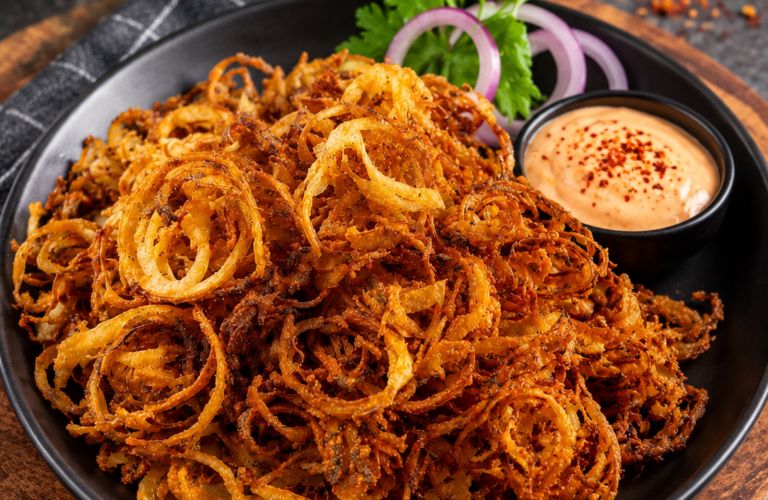
These onion pakoras are inspired by the delicious snack shown in the picture, with delicate onion rings coated in a spiced batter and fried until beautifully crisp. The addition of red chili powder, cumin, coriander, turmeric, and fresh green chilies creates a flavorful mixture that is savory, slightly spicy, and wonderfully aromatic. A creamy dipping sauce on the side makes them even more irresistible.
Onion pakoras are enjoyed throughout South Asia, especially in Pakistan and India, where they are commonly served with evening tea, during rainy weather, at family gatherings, and as an appetizer before a larger meal. They are also a favorite during Ramadan, when freshly fried snacks are often served at iftar.
One of the best things about this recipe is that it uses simple pantry ingredients. You do not need an elaborate preparation process or expensive equipment to make delicious pakoras at home. With the right onion-cutting technique, a well-balanced batter, and carefully controlled frying temperature, you can prepare onion pakoras that are crunchy, flavorful, and beautifully golden.
This recipe explains the ingredients, preparation, seasoning, frying technique, serving suggestions, storage methods, and helpful troubleshooting tips in detail so that you can achieve excellent results even if you are making onion pakoras for the first time.
Recipe Overview
Preparation time: 20 minutes
Resting time: 10–15 minutes
Cooking time: 20–30 minutes, depending on the batch size
Total time: Approximately 50–65 minutes
Servings: 4–6 people as a snack
Cuisine: Pakistani and Indian inspired
Course: Appetizer, tea-time snack, or side dish
Cooking method: Deep-frying
Difficulty level: Easy to moderate
Texture: Crispy outside, tender inside, with delicate crunchy onion strands
Flavor profile: Savory, spicy, aromatic, and slightly sweet from the onions
Ingredients
For the onion pakoras
Onions: 4 medium-sized onions, approximately 500–600 grams. Choose firm onions with fresh, dry outer skins. Yellow, white, or red onions can all be used. Yellow onions offer a balanced sweetness, white onions provide a sharper flavor, and red onions add a slightly sweeter taste and attractive color.
Gram flour: 1 cup, approximately 120–130 grams. Gram flour, also called besan, is made from ground chickpeas. It gives the pakoras their characteristic flavor and helps form a crisp coating around the onion slices. Use fresh flour without lumps for the best texture.
Rice flour: 2 tablespoons. Rice flour helps create a lighter, crunchier exterior. Although it is optional, it is particularly useful when you want pakoras with a texture similar to the ones served at restaurants and street-food stalls.
Cornstarch: 1 tablespoon. This is another optional ingredient that can help improve crispness. If you prefer to use only traditional ingredients, you can omit it or replace it with a little additional rice flour.
Green chilies: 1–2 finely chopped. Adjust the quantity according to your preferred spice level. Remove the seeds for a milder flavor.
Fresh coriander leaves: 3 tablespoons, finely chopped. Coriander adds freshness and a pleasant herbal aroma that balances the richness of the fried coating.
Fresh curry leaves: 6–8 leaves, finely chopped. These are optional but contribute a distinctive aromatic flavor.
Ginger: 1 teaspoon, finely grated. Fresh ginger gives the pakoras a gentle warmth and a deeper savory flavor.
Garlic: 1 small clove, finely grated. Garlic is optional, but it works well if you prefer a stronger, more savory taste.
Salt: 1 teaspoon, or to taste. Salt helps season the batter and draws moisture from the onions, which is important for binding the mixture together.
Red chili powder: ½–1 teaspoon. Use a mild or hot variety according to your preference. Kashmiri chili powder is a good option when you want a vibrant reddish-orange color without excessive heat.
Ground cumin: 1 teaspoon. Cumin contributes a warm, earthy aroma that complements both the onions and the gram flour.
Ground coriander: 1 teaspoon. This adds a mild citrusy, earthy flavor and gives the seasoning more depth.
Turmeric powder: ¼ teaspoon. A small quantity gives the coating a warm golden color and subtle earthy flavor.
Carom seeds, or ajwain: ½ teaspoon. These seeds are traditionally used in many pakora recipes. Their distinctive flavor pairs especially well with gram flour.
Crushed black pepper: ¼ teaspoon. Black pepper provides a gentle warmth and makes the seasoning more complex.
Baking soda: a very small pinch, optional. A tiny amount can make the coating slightly lighter. Too much may affect the flavor and cause the batter to puff excessively, so it is best used sparingly or omitted.
Water: approximately 2–5 tablespoons, only as needed. The onions will release moisture after they are salted, so you may need very little additional water. Add it gradually rather than pouring it in all at once.
Neutral cooking oil: approximately 750 ml–1 liter for a typical deep-frying pot, as needed. Sunflower, canola, vegetable, or peanut oil can be used if appropriate for your dietary needs. The amount actually absorbed by the pakoras will be much smaller than the quantity used in the pot.
For the creamy dipping sauce
Mayonnaise: ½ cup. This creates a smooth, rich base for the sauce.
Plain yogurt: 2 tablespoons. Yogurt lightens the mayonnaise and adds a gentle tang.
Lemon juice: 1 teaspoon. Fresh lemon juice brightens the flavor.
Garlic: ½ small clove, finely grated. Use a small quantity to avoid overpowering the sauce.
Paprika: ¼ teaspoon. Paprika adds a mild pepper flavor and attractive color.
Red chili flakes: ¼ teaspoon, optional. Add more if you enjoy a spicy dipping sauce.
Salt: a small pinch, to taste. Season carefully because mayonnaise already contains salt.
Black pepper: a small pinch. This provides a final layer of seasoning.
Fresh coriander: 1 teaspoon, finely chopped, optional. A little fresh coriander adds color and freshness.
Choosing and Preparing the Onions
The quality of your onions has a major influence on the final texture of your pakoras. Fresh onions with firm flesh are easier to slice and produce more consistent results than soft or old onions.
Begin by removing the dry outer skins. Cut off the root and stem ends, then slice each onion in half from top to bottom. Place each half flat-side down on a cutting board to make slicing easier and safer.
Slice the onions into thin, even strips approximately 2–3 millimeters thick. You can separate the strips into individual strands with your fingers.
Thin slices are important because they cook relatively quickly and become tender while the coating turns crisp. If the slices are too thick, the outer batter may brown before the onion becomes sufficiently tender. If they are extremely thin, they may become difficult to handle and can burn more quickly during frying.
You can also include a few onion rings, similar to those visible in the picture. Keep the rings relatively thin and separate them carefully so that the batter can coat their surfaces.
Place the sliced onions in a large mixing bowl. Add the salt and gently toss everything together. Let the onions rest for approximately 10–15 minutes.
During this time, the salt draws some natural moisture from the onions. This moisture helps the gram flour cling to the slices and allows the ingredients to combine without requiring too much water.
After resting, gently squeeze and toss the onions with clean hands or a large spoon. You should notice a little moisture collecting at the bottom of the bowl.
Do not drain away this moisture automatically. It is useful for creating the batter. If the onions are particularly watery, however, avoid adding any additional water until you have mixed in the flour.
Preparing the Spiced Flour Mixture
In a separate bowl, combine the gram flour, rice flour, and cornstarch. Stir them together thoroughly so that the different flours are evenly distributed.
Add the red chili powder, ground cumin, ground coriander, turmeric, carom seeds, black pepper, and optional baking soda.
Mix the dry ingredients until the seasoning looks uniform. This simple step prevents concentrated pockets of chili powder or salt from forming in the finished pakoras.
Add the chopped green chilies, coriander leaves, curry leaves, grated ginger, and optional garlic. Stir again to distribute the fresh ingredients throughout the flour mixture.
Fresh herbs should be chopped relatively finely. Large pieces can fall away during frying, whereas smaller pieces cling more easily to the onions and become part of the crisp coating.
If you want a deeper roasted-spice flavor, you can gently toast the cumin and coriander seeds in a dry pan before grinding them. Allow the spices to cool before mixing them into the flour. This is optional, but it adds a pleasant aroma.
Avoid adding too much turmeric or too much baking soda. The goal is to create a balanced seasoning that enhances the onions rather than covering up their natural flavor.
Making the Pakora Batter
Add the seasoned flour mixture to the salted onions in two or three portions. Toss the onions after each addition so that the flour gradually coats the strands.
At first, the mixture may appear dry. Continue tossing gently for a minute or two. The moisture released from the onions will begin combining with the gram flour to create a thick coating.
The ideal mixture is not a smooth, runny batter like pancake batter. Instead, it should resemble a loosely bound collection of onion strands held together by a thin layer of seasoned flour.
If the mixture remains powdery after thorough mixing, add water one teaspoon at a time. Toss after every addition and stop as soon as the flour clings to the onions.
Usually, only a small quantity of extra water is needed, although the exact amount depends on the moisture content of the onions and the absorbency of the flour.
If you accidentally add too much water, sprinkle in a little more gram flour and rice flour. Mix gently until the consistency becomes thick again.
The coating should cling to the onions without dripping heavily from them. When you lift a small handful, the strands should remain loosely connected, with a few delicate pieces sticking out around the edges.
These irregular strands are important because they create the attractive, crunchy appearance of the pakoras shown in the picture.
Allow the mixture to rest for another 5 minutes if necessary. This gives the flour time to absorb the moisture and helps the coating hold together during frying.
Do not leave the batter standing for a very long time. Onions continue releasing moisture, and an initially thick mixture can gradually become watery. If this happens, adjust the consistency with a little additional flour before frying.
Preparing the Oil
Choose a deep, heavy-bottomed pot or a sturdy deep-frying pan. A heavy pot helps maintain a more stable temperature when the pakoras are added.
Pour in enough oil to allow the pakoras to float or fry freely without touching the bottom too much. Leave ample space at the top of the pot because the oil level can rise and bubble when food is added.
Heat the oil over medium heat until it reaches approximately 170–180°C, or 340–355°F.
A kitchen thermometer is the most reliable way to check the temperature. If you do not have one, place a tiny amount of batter into the oil. It should begin bubbling immediately and rise toward the surface gradually.
If the batter remains at the bottom with little bubbling, the oil is probably too cool. If it darkens almost immediately, the oil is too hot.
Oil temperature is one of the most important factors in achieving crisp pakoras. Oil that is too cool can produce greasy, heavy snacks, while oil that is too hot can brown the outside before the onions have cooked sufficiently.
Keep the heat at a moderate level and allow the oil to recover its temperature between batches.
Never leave heating oil unattended, and do not fill the pot so high that bubbling oil could overflow. Keep water away from the hot oil, and never pour water onto burning cooking oil.
Shaping the Onion Pakoras
Once the oil is ready, prepare a small portion of the onion mixture in your hand or on a spoon.
Take a loose handful of coated onion strands and gently press them together just enough to create a small cluster. Do not compress the mixture into a dense ball.
A loose shape allows hot oil to move between the onion strands, helping them become crisp throughout. The uneven edges also develop the crunchy texture that makes onion pakoras so appealing.
For a presentation similar to the picture, create a mixture of small clusters and a few individual onion rings.
Dip or coat the rings lightly in the remaining flour mixture before lowering them into the oil. They should be coated rather than covered with a thick, heavy layer of batter.
Carefully lower each portion into the oil. Release it close to the surface to minimize splashing.
Fry only a few portions at a time. Overcrowding the pot causes the oil temperature to drop and makes the pakoras more likely to stick together.
Allow some space between the pieces so that they can cook evenly.
Frying the Onion Pakoras
Fry the pakoras over medium to medium-low heat, adjusting the flame as needed to maintain a steady oil temperature.
During the first minute, the batter begins to set and the onions start softening. Avoid moving the pieces too aggressively at this stage because the coating may still be delicate.
Once the outside becomes firmer, gently turn the pakoras with a slotted spoon.
Continue frying, turning occasionally, until the onion strands become golden brown and crisp. Depending on the size and thickness of each portion, this may take approximately 4–7 minutes per batch.
Smaller, loosely formed pakoras generally cook faster than large, compact clusters.
Watch the color carefully. A beautiful golden-brown exterior is desirable, but very dark brown or blackened edges indicate excessive browning.
If the outside becomes dark while the center remains soft, reduce the heat slightly and make the next batch smaller. This gives the onions more time to cook without burning the coating.
As the pakoras approach doneness, the bubbling around them may become less vigorous. This is a useful visual clue, although it should not be the only way you judge readiness.
Remove one pakora and allow it to cool briefly before breaking it open. The onions should be tender, and the coating should feel crisp rather than wet or doughy.
Once cooked, lift the pakoras out with a slotted spoon. Hold them above the pot for a few seconds so excess oil can drain away.
Transfer them to a wire rack placed over a tray. A wire rack allows air to circulate underneath the pakoras, helping preserve their crispness.
Paper towels can be used if a rack is unavailable, but do not pile the pakoras into a deep mound while they are still steaming. Trapped steam can soften the coating.
Continue frying the remaining mixture in batches, allowing the oil to return to the correct temperature between batches.
How to Make the Pakoras Extra Crispy
The difference between ordinary onion pakoras and exceptionally crispy ones usually comes down to a few small details.
First, slice the onions evenly. Thin strands provide more surface area for the flour coating to cling to and allow moisture to escape during cooking.
Second, control the moisture in the mixture. Onions naturally release water, so adding too much additional liquid can produce a thick, soft coating instead of a crisp one.
Third, use rice flour or a little cornstarch alongside gram flour. These ingredients can help create a lighter, more delicate crust.
Fourth, avoid shaping the pakoras too tightly. Loose clusters develop more crisp edges than dense balls.
Fifth, maintain a suitable frying temperature. A thermometer makes this easier because the oil temperature changes whenever cold batter is added.
Sixth, fry in manageable batches. Too many pakoras in the pot at once can lower the temperature and prevent even browning.
Finally, drain the finished pakoras on a wire rack and serve them soon after frying. Freshly cooked pakoras have their best texture when the coating is still crisp and the onions are warm.
If you want to prepare them in advance, you can fry the pakoras until lightly golden, allow them to cool briefly, and then fry them again for a short time at approximately 180°C, or 355°F, until crisp and fully cooked. Take care not to burn them during the second frying.
Preparing the Creamy Dipping Sauce
The creamy sauce adds a cool, tangy contrast to the warm spices in the onion pakoras.
Place the mayonnaise in a small bowl. Add the plain yogurt, lemon juice, grated garlic, paprika, optional chili flakes, salt, and black pepper.
Whisk everything together until the sauce becomes smooth and evenly colored.
Taste the mixture and adjust the seasoning. If you prefer a tangier sauce, add a little more lemon juice. For a milder flavor, add another spoonful of yogurt. If you like more heat, include a small pinch of chili flakes.
Fold in the finely chopped coriander if desired.
Cover the bowl and refrigerate the sauce for approximately 10–15 minutes before serving. This short resting period allows the garlic and seasonings to blend into the creamy base.
For food safety, keep the sauce refrigerated until it is needed, and do not leave it sitting beside hot pakoras for an extended period.
Alternative Mint and Coriander Chutney
If you prefer a traditional South Asian accompaniment, mint and coriander chutney is an excellent choice.
Combine 1 cup of fresh coriander leaves, ½ cup of fresh mint leaves, one small green chili, 1 tablespoon of lemon juice, a small piece of ginger, a pinch of cumin, salt to taste, and 2–4 tablespoons of water in a blender.
Blend until smooth, adding the water gradually. The finished chutney should be thick enough to cling to the pakoras without being overly watery.
Taste and adjust the lemon juice, salt, and chili. If the chutney tastes too sharp, you can balance it with a small spoonful of plain yogurt.
Refrigerate until serving. This chutney provides a fresh herbal flavor that complements the sweet onions and roasted notes of the pakora coating.
Serving the Onion Pakoras
Arrange the freshly fried pakoras on a large serving plate. For a presentation inspired by the photograph, use a dark serving platter and place the pakoras in a generous mound.
Garnish with fresh coriander leaves and a few thinly sliced red onion rings. You can also add a small pinch of chili flakes or freshly ground black pepper if desired.
Place the creamy dipping sauce in a small bowl beside the pakoras. Alternatively, serve mint chutney, tamarind chutney, or a combination of sauces.
Serve the pakoras while they are warm and crisp.
They pair especially well with a cup of hot tea, including traditional Pakistani doodh patti, cardamom tea, or ginger tea. The savory crunch of the pakoras contrasts beautifully with the warmth of the drink.
For a more substantial snack, serve them alongside fresh cucumber slices, tomato wedges, lemon wedges, and a small salad.
They can also be served as an appetizer before vegetable pulao, biryani, lentil curry, or other South Asian dishes.
If serving guests, fry the pakoras shortly before everyone is ready to eat. Freshly fried pakoras generally have a better texture than those that have been sitting covered for a long time.
Variations of Onion Pakoras
Spicy Street-Style Onion Pakoras
For a bolder flavor, increase the red chili powder slightly and add a little extra chopped green chili. Include cumin, coriander, carom seeds, and fresh coriander for a traditional seasoning profile.
Keep the batter thick and fry the onions in small, loose clusters. Avoid using excessive flour because the aim is to highlight the crisp onions rather than create a heavy coating.
Potato and Onion Pakoras
Add one small potato, peeled and cut into very thin matchsticks, to the onion mixture.
Because potatoes take longer to cook than thin onions, the pieces must be sufficiently thin to cook through during frying. You may need to fry the pakoras a little longer at a moderate temperature.
This variation creates a more substantial snack with additional crunch and a mild, earthy flavor.
Spinach and Onion Pakoras
Add approximately 1 cup of finely chopped fresh spinach to the onions. Wash the spinach thoroughly and dry it well before chopping.
Spinach contains moisture, so you may need to adjust the flour quantity slightly. Mix the ingredients until the coating clings to the vegetables, then fry in small portions.
The spinach adds color and a mild vegetal flavor that works well with the spices.
Garlic and Black Pepper Pakoras
For a more savory version, increase the garlic slightly and use freshly cracked black pepper alongside the cumin and coriander.
Keep the chili powder moderate so that the garlic and pepper remain noticeable. This variation pairs particularly well with a yogurt-based dipping sauce.
Lemon and Herb Pakoras
Add extra chopped coriander and a small amount of finely grated lemon zest to the flour mixture.
Avoid adding too much lemon juice directly to the batter because extra liquid can change its consistency. Serve fresh lemon wedges on the side instead.
This variation has a bright, fresh aroma that contrasts nicely with the fried coating.
Mild Family-Style Pakoras
For a gentler flavor, reduce the red chili powder and omit the green chilies. Retain the cumin, coriander, turmeric, and a little black pepper to preserve the aromatic character.
Serve with plain yogurt mixed with a pinch of salt and roasted cumin powder.
Gluten-Free Onion Pakoras
Traditional gram flour is naturally gluten-free, and rice flour is also generally gluten-free. This recipe can therefore be prepared without wheat flour.
If you need to avoid gluten strictly, check that all packaged ingredients are labeled appropriately and have not been contaminated during processing. Also ensure that the utensils and cooking surfaces are clean.
Common Mistakes and How to Avoid Them
The pakoras become soggy
Soggy pakoras often result from excess moisture, an overly thick coating, oil that is too cool, or steam trapped after cooking.
Use only enough water to help the flour cling to the onions. Fry at the appropriate temperature and place the finished pakoras on a wire rack rather than covering them immediately.
If they soften before serving, briefly reheat them in an oven or air fryer until crisp again.
The pakoras absorb too much oil
Excess oil absorption may occur when the frying temperature is too low or the batter contains too much liquid.
Check the oil temperature before each batch and avoid overcrowding the pot. The mixture should cling to the onions without becoming runny.
Do not assume that increasing the heat dramatically will solve the problem. Excessively hot oil can burn the coating before the onions are properly cooked.
The coating falls off the onions
This usually happens when the batter is too watery or the onion strands have not been mixed thoroughly with the flour.
Salt the onions first, allow them to release some moisture, and then mix in the dry ingredients. Add water only when necessary.
If the mixture is loose, incorporate a little more gram flour and toss until the onions are coated evenly.
The pakoras are hard instead of crispy
A hard coating may result from too much gram flour, tightly packed clusters, or prolonged frying.
Use a moderate quantity of flour and form loose portions. Add a little rice flour for a lighter texture, and remove the pakoras once the coating is golden and crisp.
The pakoras brown too quickly
If the outside darkens before the onions become tender, the oil is too hot or the pakoras are too large.
Reduce the heat and shape smaller portions. Maintaining a moderate temperature allows the onions to soften while the exterior gradually becomes crisp.
The pakoras taste bitter
Bitterness can develop if the spices burn, the onions become excessively dark, or the oil is old or unsuitable for frying.
Use fresh spices, avoid excessive turmeric or baking soda, and maintain a steady frying temperature.
Discard oil that smells rancid or shows other signs of deterioration.
The mixture becomes watery while waiting
Onions continue releasing moisture after salt is added. If the mixture becomes too wet, sprinkle in a small amount of gram flour and rice flour.
Mix thoroughly and begin frying promptly. Avoid leaving the prepared mixture standing for an extended period.
Make-Ahead Instructions
You can prepare several components in advance to make cooking easier.
The onions can be peeled and sliced a few hours ahead, then stored in an airtight container in the refrigerator. For the best texture, add the salt and flour mixture shortly before frying rather than mixing everything together far in advance.
You can also combine the dry spices and flours ahead of time. Store this mixture in a clean, dry, airtight container until you are ready to use it.
The creamy dipping sauce can be prepared a day ahead and refrigerated in a covered container. Stir it before serving and use clean utensils whenever you take some from the bowl.
For parties, prepare the onions, spices, and sauce in advance, then combine and fry the pakoras close to serving time.
If you must fry them ahead, allow them to cool briefly on a wire rack. Reheat them in a preheated oven at approximately 190°C, or 375°F, until hot and crisp. An air fryer can also work well for reheating.
Do not store hot pakoras in a sealed container because trapped steam can soften the crust.
Storage Instructions
Allow leftover pakoras to cool promptly before refrigeration. Place them in a clean, airtight container and refrigerate within two hours of cooking, or within one hour if the surrounding temperature is above 32°C, or 90°F.
For best quality, eat refrigerated pakoras within 3–4 days. Their texture will soften during storage, so reheating is recommended.
To reheat, arrange them in a single layer in an oven or air fryer. Heat at approximately 180–190°C, or 355–375°F, until they are thoroughly hot and the coating has regained some crispness.
The exact time depends on the size of the pakoras and the appliance, so check them regularly to prevent excessive browning.
Avoid reheating them repeatedly. Reheat only the amount you intend to serve.
Freezing is possible, although the texture may be less delicate after thawing. Arrange cooled pakoras in a single layer until firm, then transfer them to a freezer-safe container. For best quality, use them within approximately 1–2 months.
Reheat from frozen in an oven or air fryer until thoroughly hot. Do not leave cooked pakoras at room temperature for extended periods.
Nutritional Information
The nutritional value of onion pakoras depends on the amount of flour used, the size of the portions, the cooking method, and the quantity of oil absorbed during frying.
A rough estimate for one serving, assuming the recipe makes six servings and excluding the dipping sauce, is approximately:
Calories: 180–280
Carbohydrates: 20–30 grams
Protein: 4–7 grams
Fat: 8–16 grams
Fiber: 3–5 grams
These figures are estimates rather than laboratory-tested values. Actual amounts can vary substantially, especially with deep-frying and serving size.
The onions provide fiber and naturally occurring plant compounds, while gram flour contributes plant-based protein. However, the finished pakoras are still a fried snack, so portion size and overall dietary variety are worth considering.
For a lighter preparation, use a moderate amount of oil and try the air-fryer variation below.
Air-Fryer Onion Pakoras
If you want to reduce the amount of oil used, you can adapt the recipe for an air fryer.
Prepare the onion mixture as described above, keeping the coating thick enough to cling to the onions. Shape the mixture into small, loose clusters.
Preheat the air fryer to approximately 190°C, or 375°F, if your appliance recommends preheating.
Lightly grease the basket and arrange the pakoras in a single layer with a little space between them. Brush or spray the exposed surfaces lightly with oil.
Air-fry for approximately 10–16 minutes, turning the pakoras halfway through and checking their color as they cook. Larger portions may require additional time.
The exact cooking time depends on the air fryer and the thickness of the onion clusters. Continue cooking until the onions are tender and the coating is golden and crisp.
Because air-fried pakoras do not sit in hot oil, their texture will usually be different from traditionally deep-fried pakoras. They may be slightly drier and less uniformly crisp, but they can still be delicious.
Do not overcrowd the basket. Air circulation is essential for browning, and cooking in batches often produces better results.
Frequently Asked Questions
Can I make onion pakoras without rice flour?
Yes. Gram flour alone works well and produces traditional onion pakoras. Rice flour is included to improve crispness, but it is not essential.
If you do not have rice flour, use the gram flour specified in the recipe and keep the batter relatively dry.
Why do onions need to rest with salt?
Salt draws moisture from the onions. This natural moisture helps the flour cling to the strands and reduces the amount of additional water required.
Resting the onions also helps the seasoning distribute more evenly.
Can I prepare the batter the night before?
It is better to prepare the dry ingredients in advance and combine them with the onions shortly before frying.
If the onions sit in the salted batter overnight, they may release too much moisture and become difficult to fry into crisp clusters.
Which onions work best?
Yellow, white, and red onions can all be used. Choose firm onions and slice them evenly.
Yellow onions provide a balanced flavor, white onions are sharper, and red onions tend to be somewhat sweeter.
How do I know when the oil is ready?
A thermometer provides the most reliable measurement. Aim for approximately 170–180°C, or 340–355°F, for the initial frying.
Without a thermometer, test with a small piece of batter. It should bubble steadily and gradually rise rather than immediately darkening.
Can I omit the green chilies?
Yes. Green chilies are optional and can be omitted for a milder snack. You can also reduce the red chili powder.
The cumin, coriander, ginger, and fresh herbs will still provide plenty of flavor.
Can I make the pakoras without baking soda?
Absolutely. Baking soda is optional. The combination of properly sliced onions, a suitable flour mixture, and correct frying temperature is more important for good texture.
What is the best sauce to serve with onion pakoras?
Mint and coriander chutney is a classic accompaniment. Tamarind chutney provides a sweet-and-tangy contrast, while creamy garlic sauce offers a rich, cooling flavor.
You can serve more than one sauce if you are preparing the pakoras for guests.
How can I keep pakoras crispy for a party?
Fry them in small batches and place them on a wire rack. If necessary, keep them briefly in a low oven, around 90–100°C, or 195–210°F, on a rack that allows air to circulate.
Avoid covering them tightly or stacking them while hot. For the best results, serve them as soon as possible after frying.
Can I use the same recipe for other vegetables?
Yes. Thinly sliced potatoes, spinach, cauliflower, and eggplant can all be used in variations of pakoras.
Different vegetables contain different amounts of moisture and require different cooking times. Slice them appropriately and check that each piece is cooked through before serving.
Final Tips for Perfect Onion Pakoras
The secret to excellent onion pakoras is not simply adding more spices or frying them for longer. It is the balance between the onion moisture, the flour coating, the shape of each portion, and the temperature of the oil.
Use thinly sliced onions, season them evenly, and let them release some moisture before adding the flour. Keep the mixture thick and slightly irregular rather than turning it into a smooth, watery batter.
Use rice flour if you want an extra-crispy coating, and shape the pakoras loosely so the onion strands develop plenty of crunchy edges. Fry in small batches and maintain a steady temperature to avoid greasy or burnt results.
Finally, allow the pakoras to drain on a rack and serve them warm with creamy garlic sauce or fresh mint chutney.
These homemade crispy spicy onion pakoras make a wonderful addition to an evening tea spread, a family snack platter, or a festive appetizer table. With their golden coating, savory seasoning, tender onions, and satisfying crunch, they are a simple and flavorful dish that can be enjoyed on many different occasions.