admin1
Cheesy Baked Stuffed Cabbage Rolls Recipe
Cheesy baked stuffed cabbage rolls are a comforting, hearty, and delicious homemade meal made with tender cabbage leaves wrapped around a flavorful filling of seasoned ground meat, rice, onions, garlic, herbs, and melted cheese. The rolls are arranged closely in a baking dish, covered with a rich tomato-based sauce, and baked until the cabbage becomes soft, the filling is perfectly cooked, and the tops develop a beautiful golden-brown color.
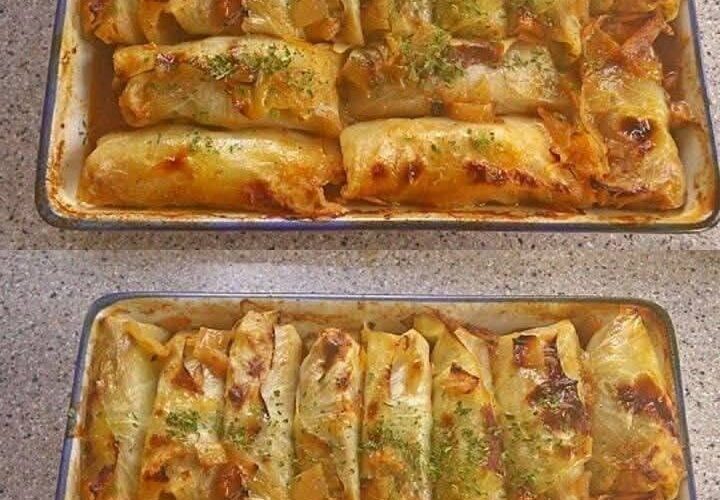
This recipe is inspired by the stuffed cabbage rolls shown in the picture. The cabbage leaves are folded around a savory filling, placed in a baking dish, covered with a creamy tomato sauce and cheese, and baked until everything comes together into a warm, satisfying casserole. The combination of tender cabbage, juicy meat, fluffy rice, tangy tomato sauce, and melted cheese makes this dish ideal for family dinners, weekend meals, potlucks, and special occasions.
One of the best things about baked stuffed cabbage rolls is that they look impressive while using simple, everyday ingredients. Although rolling the cabbage leaves takes a little time, the process is straightforward, and most of the preparation can be completed before the dish goes into the oven. Once the rolls are assembled, the oven does most of the work, allowing the flavors to blend together beautifully.
Recipe Overview
Recipe name: Cheesy Baked Stuffed Cabbage Rolls
Preparation time: 40–50 minutes
Cooking time: 60–75 minutes
Total time: Approximately 1 hour 45 minutes to 2 hours
Servings: 6–8 people
Difficulty: Moderate
Cooking method: Oven baking
Main ingredients: Cabbage, ground beef, rice, onion, garlic, tomato sauce, cheese, and herbs
Flavor profile: Savory, cheesy, rich, tangy, and mildly sweet
Texture: Soft cabbage leaves, tender rice, juicy meat filling, and a golden, cheesy topping
Why You Will Love These Baked Stuffed Cabbage Rolls
These stuffed cabbage rolls combine several comforting flavors in one dish. The cabbage becomes tender during baking and absorbs the delicious tomato sauce, while the seasoned filling remains moist and flavorful. Every roll contains a satisfying combination of meat, rice, herbs, and seasonings.
The melted cheese adds another layer of flavor. As it bakes, the cheese forms a soft, creamy topping with lightly browned areas that make the dish especially appealing. The edges of the cabbage rolls absorb the sauce and become slightly caramelized, creating a wonderful contrast with the soft centers.
Another reason to love this recipe is its flexibility. You can use ground beef, ground chicken, ground turkey, or a mixture of beef and pork. You can also replace the meat with lentils, mushrooms, or a plant-based mince for a vegetarian variation.
The tomato sauce can be made mild and slightly sweet or given a deeper flavor with paprika, black pepper, garlic, and Italian herbs. Mozzarella provides a stretchy, creamy topping, while cheddar contributes a stronger, sharper flavor.
These rolls can also be prepared ahead of time, making them useful when you want a homemade meal without doing all the work at once.
Ingredients for the Stuffed Cabbage Rolls
For the cabbage
- 1 large green cabbage, approximately 1.2–1.5 kg
- Water, enough to boil or blanch the cabbage
- 1 teaspoon salt for the cooking water
- 1 tablespoon olive oil, optional, for greasing the baking dish
Choose a cabbage with large, healthy leaves that are flexible enough to fold without tearing. Green cabbage is usually the easiest variety to work with because its leaves soften nicely when blanched.
A large cabbage provides enough leaves for approximately 14–18 rolls, depending on the size of the leaves. Smaller inner leaves can be used to line the baking dish or fill gaps between the rolls.
For the meat and rice filling
- 750 g ground beef
- 1 cup uncooked long-grain rice
- 1 medium onion, finely chopped
- 4 cloves garlic, minced
- 2 tablespoons olive oil
- 1 medium carrot, finely grated, optional
- 2 tablespoons tomato paste
- 1 teaspoon salt, or to taste
- 1 teaspoon freshly ground black pepper
- 1 teaspoon sweet paprika
- 1 teaspoon dried oregano
- 1 teaspoon dried parsley
- ½ teaspoon dried thyme
- ½ teaspoon ground cumin, optional
- ½ teaspoon onion powder, optional
- 2 tablespoons chopped fresh parsley
- ¼ cup water or unsalted broth, if needed to moisten the mixture
The ground beef gives the filling a rich, savory flavor, while the rice adds body and helps make each cabbage roll satisfying. Onion and garlic provide the aromatic foundation, and paprika, oregano, parsley, and black pepper give the mixture a balanced seasoning.
The carrot is optional, but it adds a mild sweetness and a little extra texture. Finely grating it allows it to blend easily into the filling without overpowering the other ingredients.
For the best texture, use rice that has been partially cooked before mixing it with the meat. This allows the rice to soften fully during baking without requiring the cabbage rolls to cook for an excessively long time.
For the tomato sauce
- 2 tablespoons olive oil
- 1 medium onion, finely chopped
- 3 cloves garlic, minced
- 2 tablespoons tomato paste
- 2 cans crushed tomatoes, approximately 800 g total
- 1 cup tomato passata or tomato sauce
- 1 cup beef broth or vegetable broth
- 1 tablespoon Worcestershire sauce, optional
- 1 teaspoon sugar or honey, optional, to balance the acidity
- 1 teaspoon sweet paprika
- 1 teaspoon dried oregano
- ½ teaspoon dried basil
- ½ teaspoon black pepper
- 1 teaspoon salt, adjusted to taste
- 1 bay leaf, optional
- 2 tablespoons chopped fresh parsley
The sauce is an important part of this recipe because it keeps the cabbage rolls moist and brings all the flavors together. Crushed tomatoes provide texture, while tomato passata creates a smoother consistency.
Tomato paste gives the sauce a deeper, more concentrated flavor. Broth loosens the mixture so it can circulate around the rolls during baking, helping the cabbage become tender and allowing the rice and meat filling to cook evenly.
If you prefer a slightly creamy sauce, you can stir in ¼ cup of cooking cream near the end of cooking. For a more traditional tomato flavor, leave the cream out.
For the cheesy topping
- 2 cups shredded mozzarella cheese
- 1 cup shredded cheddar cheese
- ¼ cup grated Parmesan cheese, optional
- 2 tablespoons chopped fresh parsley
- 1 teaspoon dried Italian herbs, optional
- 2 tablespoons cream, optional, for a richer finish
Mozzarella melts smoothly and creates the soft, stretchy texture that works so well with baked cabbage rolls. Cheddar adds a stronger cheesy flavor and gives the topping a deeper golden color.
Parmesan contributes a salty, savory finish. If you prefer a milder dish, use mozzarella alone or combine it with a small amount of mild cheddar.
For the best melting results, shred the cheese yourself from a block if possible. Pre-shredded cheese is convenient, but freshly shredded cheese often melts more smoothly.
Equipment You Will Need
Prepare the following equipment before beginning:
- One large pot for blanching the cabbage
- One large frying pan or skillet
- One medium saucepan for the tomato sauce
- One large mixing bowl
- One sharp knife
- One cutting board
- One wooden spoon
- One pair of kitchen tongs
- One baking dish measuring approximately 9 by 13 inches
- Aluminum foil for covering the dish
- A grater for the cheese and optional carrot
- Measuring cups and spoons
A deep baking dish is especially useful because it holds the cabbage rolls closely together and provides enough space for the sauce. The rolls should fit snugly without being crushed.
Step 1: Prepare the Cabbage
Begin by removing any damaged or discolored outer cabbage leaves. Rinse the cabbage thoroughly under cool running water to remove dirt or debris.
Place the cabbage on a cutting board and carefully cut around the core at the bottom. Removing some of the thick core makes it easier for the leaves to separate once the cabbage has softened.
Fill a large pot with water and bring it to a boil. Add the teaspoon of salt.
Carefully lower the cabbage into the boiling water, using tongs to protect your hands from splashing water. Allow it to cook for approximately 5 minutes, then begin gently removing the outer leaves as they soften.
You do not need to cook the entire cabbage until it becomes completely soft. The goal is to make the leaves flexible enough to roll without cracking.
Transfer each softened leaf to a large plate or tray. Continue removing leaves as they become loose and pliable.
If the inner leaves remain firm, return the cabbage to the boiling water for another 3–5 minutes. Repeat the process until you have approximately 14–18 usable leaves.
Allow the leaves to cool until they are comfortable to handle.
How to make the cabbage leaves easier to roll
Inspect each cabbage leaf and look at the thick central rib. This rib can make the leaf difficult to fold, especially near the bottom.
Place a leaf flat on the cutting board with its inner side facing upward. Use a small knife to carefully shave down the thickest part of the rib, keeping the blade nearly parallel to the board.
Do not cut completely through the leaf. Removing only a little of the thickness will make the leaf flexible enough to fold around the filling.
If a leaf tears, do not discard it. Small tears can often be covered with another piece of cabbage or positioned underneath the roll so the filling stays inside.
Set the prepared leaves aside while you make the filling.
Step 2: Partially Cook the Rice
Measure one cup of uncooked rice and rinse it under cool water until the water runs relatively clear.
Place the rice in a saucepan with water according to the rice package instructions. Cook it until it is partially tender, usually for about 5–7 minutes for long-grain rice, depending on the variety.
The rice should not be completely cooked at this stage. It will continue cooking inside the cabbage rolls as the dish bakes.
Drain the rice thoroughly and spread it on a plate to cool slightly.
Partially cooking the rice is helpful because the cabbage leaves and meat filling need enough time to become tender, but fully raw rice can sometimes remain firm if the filling does not receive enough moisture.
Avoid adding hot rice directly to the raw meat mixture. Letting it cool briefly makes the filling easier to mix and handle.
Step 3: Prepare the Aromatic Vegetables
Place a large skillet over medium heat and add two tablespoons of olive oil.
When the oil becomes warm, add the finely chopped onion. Cook for approximately 4–5 minutes, stirring occasionally, until the onion becomes soft and translucent.
Add the minced garlic and cook for another 30–45 seconds. Stir continuously so the garlic releases its aroma without burning.
If you are using grated carrot, add it now and cook for another 2–3 minutes. The carrot should soften slightly but does not need to become completely tender.
Add the two tablespoons of tomato paste and stir it into the vegetables. Allow it to cook for approximately one minute.
Cooking tomato paste briefly helps develop a richer flavor and removes some of its raw taste.
Remove the skillet from the heat and allow the vegetable mixture to cool for a few minutes.
These cooked aromatics will provide a flavorful foundation for the meat filling and help distribute the garlic and onion evenly throughout the rolls.
Step 4: Prepare the Meat Filling
Place the ground beef in a large mixing bowl.
Add the partially cooked rice, softened onion and garlic mixture, salt, black pepper, paprika, oregano, dried parsley, thyme, and any optional seasonings you have chosen.
Add the two tablespoons of chopped fresh parsley.
Using clean hands or a large spoon, gently mix everything until the ingredients are evenly distributed.
Do not squeeze or overwork the mixture. A light, thorough mix is enough to combine the ingredients without making the filling unnecessarily dense.
If the mixture seems dry, add one or two tablespoons of water or broth. The filling should hold together when pressed lightly, but it should not be wet enough to drip.
If it seems too loose, add a little more partially cooked rice rather than adding large amounts of dry breadcrumbs. The rice helps create the traditional texture of the cabbage rolls.
For an extra savory flavor, you can add a tablespoon of finely grated Parmesan cheese to the filling. This is optional and should be considered when adjusting the salt.
How to check the seasoning safely
Before assembling the rolls, you may want to check the seasoning of the meat mixture. Because it contains raw ground beef, do not taste it uncooked.
Instead, cook a small spoonful of the mixture thoroughly in a skillet. Allow it to cool slightly, then taste it and adjust the seasoning if necessary.
This simple step helps ensure the finished filling has enough salt, pepper, garlic, and herbs.
Step 5: Prepare the Rich Tomato Sauce
Place a medium saucepan over medium heat and add two tablespoons of olive oil.
Add the chopped onion and cook for 4–5 minutes, stirring occasionally, until it becomes soft and translucent.
Add the minced garlic and cook for about 30 seconds.
Stir in the tomato paste and cook for one minute. Add the crushed tomatoes, tomato passata, broth, Worcestershire sauce if using, paprika, oregano, dried basil, black pepper, and salt.
Add the optional sugar or honey if the tomatoes taste particularly acidic. The goal is not to make the sauce sweet, but to balance the sharpness of the tomatoes.
Add the bay leaf if desired.
Stir everything together and bring the sauce to a gentle simmer.
Reduce the heat and cook for approximately 12–15 minutes, stirring occasionally. The sauce should become slightly thicker and develop a deeper flavor.
If it becomes too thick, add a little extra broth. If it remains very watery, allow it to simmer uncovered for a few additional minutes.
Taste the sauce and adjust the seasoning. Remember that the cheese will contribute additional saltiness later, so the sauce should be flavorful without being excessively salty.
Remove the bay leaf before assembling the dish if you prefer not to leave it in during baking.
Reserve approximately one cup of sauce for the bottom and top of the baking dish, then keep the remaining sauce ready for layering between the cabbage rolls.
Step 6: Fill the Cabbage Leaves
Place a cabbage leaf on a clean cutting board with the stem end facing toward you.
Spoon approximately two to three tablespoons of filling onto the lower third of the leaf, depending on its size.
Shape the filling into a small horizontal mound. Avoid using too much filling because the cabbage leaf must be able to wrap around it securely.
Fold the bottom edge of the cabbage leaf up and over the filling.
Fold the left and right sides inward, creating a neat envelope around the mixture.
Continue rolling the cabbage away from you until the filling is enclosed.
The finished roll should be firm enough to hold its shape but not so tight that the leaf tears or the filling has no room to expand as the rice finishes cooking.
Place the roll seam-side down on a clean tray.
Repeat with the remaining cabbage leaves and filling.
If you have some filling left after using all the large leaves, you can place it in a small ovenproof dish, cover it with sauce, and cook it thoroughly alongside the cabbage rolls.
Tips for evenly sized cabbage rolls
Try to use approximately the same amount of filling in each roll. This helps them cook evenly and makes the finished dish look attractive.
Larger leaves can hold more filling, while smaller leaves should contain less.
If a leaf is unusually large, you can cut it in half after removing the thick central rib. Smaller rolls are perfectly acceptable as long as the filling remains securely enclosed.
Arrange the finished rolls in rows as you work. This makes it easier to transfer them to the baking dish without losing their shape.
Step 7: Prepare the Baking Dish
Preheat your oven to 180°C, or 350°F.
Lightly grease a deep baking dish with olive oil.
Spread a thin layer of tomato sauce over the bottom of the dish. This prevents the cabbage rolls from sticking and gives the lower layer a flavorful base.
If you have leftover cabbage leaves that are too small to roll, place them over the sauce. They will help protect the bottom of the dish and become tender during baking.
Arrange the cabbage rolls in a single layer, seam-side down.
Place them close enough together that they support one another, but do not force them into the dish so tightly that the cabbage tears.
If you have more rolls than can comfortably fit in one layer, use a second baking dish rather than stacking them excessively.
Pour the remaining tomato sauce over the rolls, distributing it evenly so the cabbage is coated on all sides.
Use a spoon to spread sauce into any gaps between the rolls.
The sauce should surround the rolls and reach at least partway up their sides. If your cabbage leaves are particularly large or your dish is very full, add a little extra broth to ensure there is sufficient moisture during baking.
Step 8: Bake the Cabbage Rolls Until Tender
Cover the baking dish tightly with aluminum foil.
Place it in the preheated oven and bake for approximately 45–55 minutes.
During this covered stage, the trapped steam softens the cabbage leaves and helps the rice and meat filling cook evenly.
The sauce also circulates around the rolls, keeping them moist and allowing the flavors to blend together.
After approximately 45 minutes, carefully remove the dish from the oven and lift one corner of the foil away from your face to release the steam safely.
Check whether the cabbage leaves have begun to soften. If they still feel firm, cover the dish again and continue baking for another 10–15 minutes before adding the cheese.
The exact cooking time depends on the size of the rolls, the thickness of the cabbage leaves, the amount of sauce, and the accuracy of your oven.
The filling must be fully cooked before serving. Ground beef should reach an internal temperature of 71°C, or 160°F, measured with a food thermometer in the center of a representative roll. If it has not reached that temperature, continue baking and check again.
Step 9: Add the Cheesy Topping
Once the cabbage rolls are tender and the filling is cooked, remove the foil.
Sprinkle the shredded mozzarella evenly over the rolls.
Add the shredded cheddar and Parmesan, distributing them across the surface.
If you enjoy a slightly creamier finish, drizzle a small amount of cream over the cheese before returning the dish to the oven.
Sprinkle the dried Italian herbs over the top if desired.
Return the uncovered baking dish to the oven and bake for another 10–15 minutes.
During this stage, the cheese melts into the tomato sauce and forms a rich, golden topping.
The exposed cabbage leaves may develop attractive browned areas, while the edges of the dish begin to bubble gently.
If you prefer a more deeply browned cheese topping, you can briefly use the oven’s broiler or grill setting at the end. Watch it closely, because cheese can change from golden to burnt very quickly.
The finished dish should look similar to the picture, with plump cabbage rolls, rich sauce, golden cheese, and herbs scattered over the surface.
Step 10: Rest and Garnish Before Serving
Remove the baking dish from the oven and place it on a heat-safe surface.
Allow the cabbage rolls to rest for approximately 10–15 minutes before serving.
This resting period helps the sauce settle and makes the rolls easier to lift from the dish without tearing.
Sprinkle freshly chopped parsley over the top for a fresh, colorful finish.
If desired, add a small amount of grated Parmesan just before serving.
Use a wide spatula or serving spoon to lift each roll carefully. Spoon extra tomato sauce from the baking dish over the rolls so every serving receives plenty of moisture and flavor.
Serve the cabbage rolls warm while the cheese is still soft and the sauce is rich and fragrant.
What Makes These Cabbage Rolls So Flavorful?
The secret to excellent stuffed cabbage rolls is the balance between the filling, cabbage, sauce, and cheese.
The cabbage itself has a mild, slightly sweet flavor that becomes more noticeable as the leaves soften. Blanching makes the leaves flexible, while baking allows them to absorb the tomato sauce.
The meat filling provides a savory center. Ground beef contains enough natural flavor to complement the rice and seasonings, while onion and garlic add sweetness and aroma.
Rice absorbs some of the juices released during cooking. This helps the filling remain moist and gives the rolls a tender, satisfying texture.
The tomato sauce provides acidity and richness. Tomato paste deepens its flavor, while herbs contribute an aromatic finish.
Finally, the cheese adds creaminess and a lightly browned surface. Mozzarella melts smoothly, cheddar adds depth, and Parmesan gives the topping a savory finish.
When all these elements cook together, the result is a cohesive dish in which every bite contains a little cabbage, filling, sauce, and cheese.
Important Tips for Perfect Stuffed Cabbage Rolls
Choose the right cabbage
A large, fresh green cabbage is generally the easiest choice. Look for one with broad leaves and a firm head.
Very small cabbage heads may not provide enough large leaves for rolling. If you cannot find a large cabbage, use two medium-sized heads.
Do not overcook the cabbage during blanching
The cabbage leaves only need to become flexible enough to roll. If they are boiled for too long, they may become fragile and tear during assembly.
You can always soften particularly thick leaves a little longer, but avoid cooking all the leaves until they are completely limp.
Avoid overfilling the leaves
Too much filling can cause the rolls to open during baking. Use a moderate amount and fold the sides inward before rolling.
Remember that rice expands as it finishes cooking, so the filling needs a little space.
Keep enough sauce in the dish
The sauce is essential for preventing the cabbage rolls from drying out.
If your dish looks dry before baking, add extra broth or tomato sauce. The rolls should be surrounded by moisture rather than sitting in a nearly dry baking dish.
Cover the dish during the first stage
Foil traps steam and helps the cabbage soften. Baking the rolls uncovered from the beginning can cause the exposed leaves to dry out before the filling has finished cooking.
Remove the foil only when the cabbage is tender and the filling is nearly or completely cooked.
Add cheese near the end
Adding the cheese too early can cause it to overbrown before the cabbage and filling are ready.
Wait until the rolls have baked under foil and are tender, then add the cheese for the final stage.
Let the dish rest
Resting makes serving easier and allows the sauce to settle around the rolls.
The dish will still be hot after 10–15 minutes, but the rolls should hold together better when lifted from the baking dish.
Variations to Try
Cheesy Beef and Rice Cabbage Rolls
For a classic version, use ground beef, partially cooked rice, onion, garlic, and a combination of mozzarella and cheddar.
The beef provides a rich flavor, while the rice makes the filling tender and satisfying. Use a generous amount of tomato sauce to keep the rolls moist.
This is an excellent choice for anyone who wants a hearty family meal with familiar ingredients.
Chicken Stuffed Cabbage Rolls
Replace the ground beef with ground chicken.
Because ground chicken can be leaner than beef, add a tablespoon of olive oil to the filling and make sure the sauce is plentiful.
Season the mixture with garlic, paprika, parsley, oregano, and black pepper.
Cook ground chicken to an internal temperature of 74°C, or 165°F.
Mozzarella and a little Parmesan work particularly well with the milder flavor of chicken.
Turkey and Vegetable Cabbage Rolls
Ground turkey provides a lighter-flavored alternative to beef.
Combine it with rice, grated carrot, onion, garlic, and herbs. A small amount of tomato paste gives the filling additional depth.
Since turkey can become dry if overcooked, avoid using an excessively lean mixture without adding moisture. The tomato sauce will help keep the rolls tender.
Vegetarian Stuffed Cabbage Rolls
For a meat-free version, replace the ground beef with cooked lentils, finely chopped mushrooms, and additional vegetables.
Use approximately two cups of cooked lentils and one cup of finely chopped mushrooms as a starting point. Sauté the mushrooms with onion and garlic until their moisture has evaporated, then combine them with the lentils, partially cooked rice, herbs, and tomato paste.
Fill and roll the cabbage leaves in the same way.
Use vegetable broth in the sauce and choose vegetarian-friendly cheese if desired.
The result is a savory, satisfying dish with a tender texture and plenty of flavor.
Spicy Stuffed Cabbage Rolls
If you prefer a little heat, add ½ teaspoon of red chili flakes or a small amount of finely chopped chili to the meat filling.
You can also add cayenne pepper or a pinch of hot paprika to the tomato sauce.
Start with a small amount and adjust according to your preference.
The heat should complement the richness of the cheese and the sweetness of the cabbage rather than overpowering the dish.
Creamy Tomato and Cheese Cabbage Rolls
For a creamier variation, stir ¼ cup of cooking cream into the tomato sauce during the final few minutes of simmering.
You can also mix a small amount of cream cheese into the shredded cheese topping.
Avoid adding too much cream, because the sauce should remain flavorful enough to complement the cabbage and meat.
Extra-Cheesy Cabbage Roll Casserole
If you love cheese, increase the mozzarella to 2½ cups and add an additional ½ cup of cheddar.
Sprinkle a little Parmesan between the rolls before pouring over the sauce.
You can also add a small handful of cheese during the final covered stage, followed by the remaining cheese once the foil is removed.
This creates a richer, more pronounced cheesy layer without requiring a separate cheese sauce.
What to Serve with Baked Stuffed Cabbage Rolls
These cabbage rolls are substantial enough to serve as a complete meal, but a few simple side dishes can make dinner even more enjoyable.
Garlic bread
Warm garlic bread is excellent for soaking up the tomato sauce. You can use a crusty loaf, baguette, or homemade bread.
Spread softened butter mixed with minced garlic and parsley over the bread, then bake until lightly crisp.
The crunchy texture provides a pleasant contrast to the tender cabbage rolls.
Mashed potatoes
Creamy mashed potatoes are a traditional-style accompaniment for many stuffed cabbage dishes.
Boil peeled potatoes until tender, then mash them with butter, warm milk, salt, and black pepper.
Serve a small portion alongside the cabbage rolls and spoon a little tomato sauce over the potatoes.
Steamed rice
If you prefer a simpler side, serve the cabbage rolls with plain steamed rice.
Although the rolls already contain rice, additional rice can be useful when serving a large group or when you want the meal to stretch further.
Roasted vegetables
Roasted carrots, zucchini, cauliflower, or green beans add color and texture to the plate.
Toss the vegetables with olive oil, black pepper, and a little salt, then roast until tender and lightly browned.
Keep the seasoning simple so the vegetables complement the tomato sauce rather than competing with it.
Fresh green salad
A fresh salad provides a crisp contrast to the warm, cheesy casserole.
Combine lettuce, cucumber, tomatoes, and thinly sliced red onion. Dress with olive oil, lemon juice, black pepper, and a small pinch of salt.
The freshness and acidity of the salad help balance the richness of the meat, cheese, and sauce.
Plain yogurt or garlic yogurt sauce
A spoonful of plain yogurt can be a refreshing accompaniment, especially if the tomato sauce is spicy.
For a simple garlic yogurt sauce, mix plain yogurt with a little minced garlic, lemon juice, chopped parsley, and black pepper.
Serve it on the side rather than pouring it over the entire baking dish.
Make-Ahead Instructions
Stuffed cabbage rolls are particularly convenient when prepared ahead of time.
You can blanch the cabbage leaves, prepare the filling, cook the tomato sauce, and assemble the rolls several hours before baking.
Arrange the uncooked rolls in the baking dish, pour over the sauce, and cover tightly. Refrigerate promptly at 4°C or below and bake within 24 hours for the best quality.
For food safety, do not leave the assembled dish sitting at room temperature for extended periods. If the filling contains raw meat, keep the entire dish refrigerated until it is ready to cook.
When baking a cold dish straight from the refrigerator, allow extra cooking time and verify that the filling reaches the appropriate safe internal temperature. Use an oven-safe baking dish and avoid placing a very cold glass dish directly into a hot oven, as sudden temperature changes can cause breakage.
For the best cheese texture, you can add the cheese during the final stage of baking rather than before refrigeration.
How to Store Leftover Cabbage Rolls
Allow leftovers to cool slightly, then transfer them to shallow, airtight containers.
Refrigerate within two hours of cooking, or sooner in very warm conditions. Store at 4°C or below and consume within 3–4 days.
Keep the sauce with the rolls rather than storing them dry. The sauce helps protect the cabbage from drying out and makes reheating more enjoyable.
When reheating, transfer the desired portion to an oven-safe dish, cover it, and heat at 175°C, or 350°F, until thoroughly hot. Add a spoonful of water or broth if the sauce has thickened considerably.
You can also reheat individual portions in the microwave. Cover the dish loosely with a microwave-safe lid, heat in intervals, and turn or rearrange the rolls if necessary so they warm evenly.
Reheated leftovers should reach 74°C, or 165°F, throughout.
Avoid reheating the same portion repeatedly. Instead, remove only the amount you plan to eat.
Can You Freeze Stuffed Cabbage Rolls?
Yes, stuffed cabbage rolls freeze well, especially when stored with their tomato sauce.
For the best texture, allow the cooked rolls to cool, then place them in freezer-safe containers with enough sauce to coat them. Leave a little space at the top of each container for expansion.
Label the containers with the date and freeze at −18°C or below.
For best quality, use the frozen rolls within approximately 2–3 months.
You can freeze individual portions or a larger family-sized batch. Individual portions are especially convenient when you want a quick homemade meal later.
To reheat, thaw the rolls in the refrigerator overnight and warm them in a covered ovenproof dish until thoroughly hot. Alternatively, reheat them directly from frozen in a covered ovenproof dish, allowing additional time and checking that the center reaches 74°C, or 165°F.
The cabbage may become a little softer after freezing and thawing, but the flavor should remain delicious.
Common Mistakes and How to Avoid Them
The cabbage leaves keep tearing
This usually happens when the leaves have not been softened enough, the central rib is too thick, or the leaves are handled too roughly.
Blanch the cabbage until the leaves are flexible, trim the thick rib carefully, and avoid pulling the leaves away from the head before they loosen.
Small tears can be repaired by overlapping another cabbage piece over the damaged area.
The rice is still hard
Rice may remain hard if it is added completely raw and does not receive enough moisture during baking.
Partially cook the rice before adding it to the filling. Make sure there is enough tomato sauce around the rolls and keep the dish covered during the initial baking stage.
If the rice is still firm, continue baking with additional broth and check again before adding the cheese.
The filling is dry
Dry filling can result from using very lean meat, adding too little moisture, or baking the rolls for too long.
Use a suitable amount of sauce, avoid overcooking, and consider adding a tablespoon or two of broth to the filling if it appears dry before rolling.
Do not rely on the cheese alone to provide moisture. The tomato sauce is the main source of moisture during baking.
The cabbage rolls open during cooking
Rolls may open if they are overfilled or not folded securely.
Use moderate portions of filling, fold the sides inward, and finish each roll with the seam facing down.
Arranging the rolls close together also helps them maintain their shape.
The sauce is too watery
Excess liquid can come from the tomatoes, broth, or moisture released by the cabbage.
Simmer the sauce before assembling the dish so it thickens slightly. Avoid adding unnecessary liquid, but keep enough moisture for the cabbage and rice to cook.
If the finished sauce is thinner than you prefer, remove the cooked rolls carefully and simmer the sauce separately for a few minutes before serving.
The cheese browns too quickly
Cheese can brown before the cabbage becomes tender if it is added too early.
Bake the dish covered first, then add the cheese during the final 10–15 minutes.
If the cheese is already golden but the filling needs more cooking, cover the dish loosely with foil and continue baking until the filling is fully cooked.
The rolls taste bland
Season each component rather than relying on the final cheese topping.
Add enough flavor to the meat mixture, simmer the tomato sauce with garlic and herbs, and taste the sauce before assembling the dish.
Remember that cabbage is naturally mild, so the filling and sauce need to be well seasoned.
Frequently Asked Questions
Can I make these cabbage rolls without rice?
Yes. You can replace the rice with cooked quinoa, finely chopped mushrooms, or additional vegetables. If you omit the rice entirely, reduce the filling quantity or adjust the number of cabbage leaves accordingly.
The texture will be different, but the rolls can still be delicious.
Can I use uncooked ground beef?
Yes. The ground beef can be mixed with partially cooked rice and seasonings while still raw. The filling cooks inside the cabbage rolls during baking.
The important point is to ensure the center of the filling reaches 71°C, or 160°F, before serving.
Can I use cooked leftover rice?
Yes. Cooked leftover rice can be used instead of partially cooked rice. Allow it to cool and store it safely before using it in the filling.
Because the rice is already cooked, the filling may have a slightly softer texture. Be careful not to overmix it.
Can I prepare the rolls without cheese?
Absolutely. The tomato-sauce version is delicious without cheese.
Simply bake the covered dish until the cabbage is tender and the filling is fully cooked. Remove the foil for the final 10–15 minutes if you want the sauce to thicken slightly.
What is the best cheese for this recipe?
Mozzarella is excellent for melting, cheddar adds a stronger flavor, and Parmesan provides a salty, savory finish.
A combination of mozzarella and cheddar gives the dish a creamy topping with attractive golden-brown areas.
How do I know when the cabbage rolls are done?
The cabbage leaves should be tender, the sauce should be bubbling, and the meat filling should be fully cooked.
Use a food thermometer to check the center of a roll. Ground beef should reach 71°C, or 160°F, and ground poultry should reach 74°C, or 165°F.
Do not rely on the appearance of the cheese alone to determine whether the filling is cooked.
Can I make the recipe less spicy?
Yes. The recipe is naturally mild if you omit chili flakes, cayenne pepper, and hot paprika.
Use sweet paprika, oregano, parsley, and black pepper for a gentle, family-friendly flavor.
Can I use red cabbage?
Red cabbage can be used, but its leaves may behave differently from green cabbage. They can be firmer and may require more preparation to become flexible.
Green cabbage is generally the easiest option for traditional rolled cabbage leaves.
Can I prepare the sauce a day in advance?
Yes. Prepare the sauce, cool it promptly, and store it in an airtight container in the refrigerator.
When you are ready to assemble the dish, reheat the sauce gently or use it cold while allowing sufficient baking time for the entire casserole to heat through.
Can I make the rolls smaller?
Yes. Smaller cabbage rolls are excellent for parties, buffets, or serving as part of a larger meal.
Use smaller leaves and reduce the amount of filling in each one. Smaller rolls may cook faster, so begin checking them earlier and verify that the filling reaches a safe temperature.
Serving and Presentation Ideas
For an attractive presentation, arrange the cabbage rolls neatly in a rectangular baking dish with the golden cheese visible on top.
Sprinkle freshly chopped parsley over the surface just before serving. A little extra Parmesan can be added for a restaurant-style finish.
Serve each person two or three rolls, depending on their size, and spoon tomato sauce around them.
If you are serving guests, bring the baking dish to the table on a heat-safe mat. The golden cheese, bubbling sauce, and neatly arranged rolls create a welcoming centerpiece.
For a family-style dinner, place the side dishes in separate serving bowls and let everyone choose their preferred accompaniments.
The recipe also works well for meal preparation. Divide the finished rolls into individual containers with sauce, then refrigerate or freeze them for later meals.
Final Thoughts
These cheesy baked stuffed cabbage rolls are a wonderful example of how simple ingredients can become a deeply satisfying homemade meal. Tender cabbage leaves hold a flavorful mixture of seasoned ground beef and rice, while a rich tomato sauce keeps everything moist during baking.
The melted mozzarella and cheddar create the golden, bubbling topping that makes the dish especially inviting. Fresh parsley adds color and a fresh herbal finish, while the tomato sauce brings a pleasant balance of sweetness and acidity.
Although the recipe involves several preparation steps, each one is straightforward. Once the cabbage is softened, the filling is mixed, and the rolls are arranged in the baking dish, the oven takes care of most of the cooking.
You can customize the filling, adjust the herbs and spices, change the cheese, or make a vegetarian version to suit your preferences. You can also prepare the rolls in advance, making them a practical choice for busy evenings and family gatherings.
For the best results, remember three essential points: soften the cabbage leaves enough to roll them easily, keep the rolls surrounded by sufficient sauce, and allow the filling to cook completely before adding the final cheese topping.
Serve these warm, cheesy cabbage rolls with garlic bread, mashed potatoes, steamed vegetables, or a fresh salad for a comforting dinner that everyone can enjoy.