admin1
Crispy Air Fryer Garlic Soy Shrimp Recipe
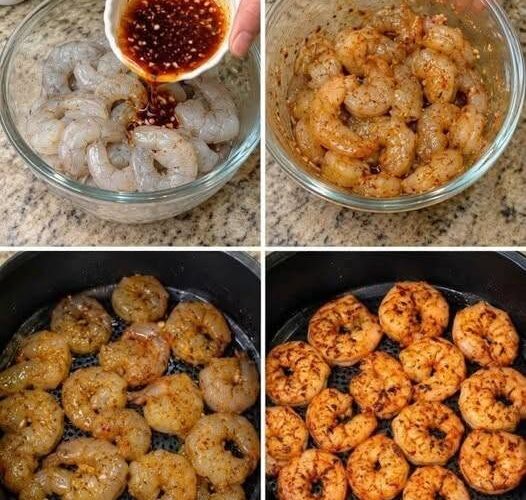
Crispy Air Fryer Garlic Soy Shrimp is a delicious, quick, and flavorful seafood dish made with juicy shrimp coated in a savory garlic soy marinade, seasoned with aromatic spices, and cooked in an air fryer until beautifully golden on the outside and tender on the inside. This recipe is inspired by the preparation shown in the picture, where raw shrimp are first tossed in a rich, dark marinade, allowed to absorb the flavors, and then arranged in an air fryer basket for even cooking. The finished shrimp have an attractive golden-orange color, lightly charred edges, and a delicious combination of garlic, soy sauce, pepper, and subtle sweetness.
This recipe is perfect for a quick lunch, a satisfying dinner, a family seafood meal, or an impressive appetizer for guests. It requires very little preparation, uses simple ingredients, and does not need a large amount of oil. The air fryer helps cook the shrimp evenly while developing a lightly roasted exterior that complements the naturally sweet and delicate flavor of the seafood.
One of the best things about this recipe is its versatility. You can serve the shrimp with steamed rice, noodles, fresh salad, roasted vegetables, garlic bread, or a simple dipping sauce. You can also adjust the seasoning according to your preference, making the shrimp mildly savory, extra garlicky, slightly sweet, or spicy.
Recipe Overview
Preparation time: 15 minutes
Marinating time: 15–30 minutes
Cooking time: 6–10 minutes per batch
Total time: Approximately 35–55 minutes, including marinating
Servings: 4
Cuisine: Asian-inspired
Cooking method: Air frying
Main ingredient: Shrimp
Difficulty level: Easy
Ingredients for the Shrimp
To prepare this recipe, you will need 1 pound of large raw shrimp, preferably peeled and deveined. You can leave the tails attached for a more attractive presentation or remove them for easier eating. Fresh shrimp work wonderfully, but frozen shrimp can also be used after they have been completely thawed and drained.
Use 1 tablespoon of olive oil or another neutral cooking oil to help the seasonings coat the shrimp evenly. Although the air fryer requires very little oil, a small amount helps the shrimp develop a lightly roasted surface and prevents the seasoning from appearing dry.
Add 3 tablespoons of soy sauce for the main savory flavor. Soy sauce provides saltiness, color, and a rich umami taste that pairs beautifully with shrimp. If you prefer a less salty dish, use reduced-sodium soy sauce.
Add 1 tablespoon of honey or brown sugar to balance the salty soy sauce with a touch of sweetness. Honey creates a slightly glossy coating, while brown sugar gives the marinade a deeper caramel-like flavor. If you prefer a less sweet version, reduce the amount to 1 teaspoon.
Use 4 garlic cloves, finely minced, or approximately 1½ teaspoons of garlic paste. Garlic is one of the most important ingredients in this recipe because it gives the shrimp their rich aroma and savory taste.
Add 1 teaspoon of freshly grated ginger for a gentle warmth and a fresh, aromatic flavor. Ginger is optional, but it complements soy sauce and garlic particularly well.
Include 1 teaspoon of paprika for color and mild smoky flavor. Regular paprika works well, while smoked paprika creates a deeper roasted taste.
Add ½ teaspoon of freshly ground black pepper to provide a mild, peppery finish.
Use ½ teaspoon of onion powder for extra savory flavor. If onion powder is unavailable, you can omit it without affecting the overall recipe significantly.
Add ½ teaspoon of red chili flakes or ¼ teaspoon of cayenne pepper if you enjoy spicy shrimp. You can leave out the chili entirely for a mild version suitable for people who prefer gentle seasoning.
Finally, add 1 teaspoon of lemon juice to brighten the marinade and balance its richness. Fresh lemon juice is ideal, although bottled lemon juice can also be used.
For serving, prepare additional lemon wedges, freshly chopped parsley or coriander, and sesame seeds if desired.
Choosing the Best Shrimp
The quality of the shrimp plays an important role in the final result. Large or extra-large shrimp are especially suitable because they remain juicy while developing a nicely browned exterior. Medium shrimp also work, but they generally require slightly less cooking time.
Choose shrimp that smell fresh and mild rather than strongly fishy. If using frozen shrimp, thaw them in the refrigerator or in a sealed bag placed in cold water. Do not leave raw seafood sitting at room temperature for an extended period.
After thawing, peel and devein the shrimp if necessary. Remove the shells and legs, then make a shallow cut along the back to remove the dark digestive tract. Rinse only if needed and pat the shrimp thoroughly dry with paper towels.
Drying the shrimp is an important step. Excess moisture can dilute the marinade and make it more difficult for the shrimp to develop a roasted surface. Properly dried shrimp absorb the seasoning more evenly and cook more consistently in the air fryer.
If the shrimp are particularly small, keep a close eye on them during cooking because they can become overcooked very quickly.
Preparing the Garlic Soy Marinade
Begin by choosing a medium-sized mixing bowl. Add the soy sauce, olive oil, honey, minced garlic, grated ginger, paprika, black pepper, onion powder, chili flakes, and lemon juice.
Whisk the ingredients together until the honey is mostly dissolved and the oil is distributed throughout the mixture. The marinade should look glossy and dark brown, with tiny pieces of garlic and visible flecks of seasoning.
Taste a small amount of the marinade before adding the raw shrimp. It should have a balanced combination of salty, sweet, garlicky, and slightly tangy flavors. Remember that soy sauce is already salty, so additional salt is usually unnecessary.
If the marinade tastes too salty, add a small amount of water or a little extra honey. If it seems too sweet, add a few drops of lemon juice. For a stronger garlic flavor, add another small clove of minced garlic.
For a spicier version, increase the chili flakes or add a little hot sauce. For a smoky version, use smoked paprika instead of regular paprika. If you enjoy a deeper Asian-inspired flavor, a small amount of toasted sesame oil can also be added, although it is best used sparingly because its flavor is strong.
Prepare the marinade immediately before using it, especially if you are working with fresh garlic. This helps preserve the aroma and ensures that the ingredients remain evenly mixed.
Coating the Shrimp
Place the cleaned and dried shrimp in a large mixing bowl. Pour the prepared garlic soy marinade over them, making sure that the liquid reaches as much of the shrimp as possible.
Using a spoon or clean hands, gently toss the shrimp until each piece is coated. Turn the shrimp several times so that the seasoning covers both sides and settles into the natural curves of the seafood.
The shrimp should appear lightly glossy rather than swimming in a large quantity of liquid. If excess marinade collects at the bottom of the bowl, toss the shrimp once more before arranging them in the air fryer.
Cover the bowl and refrigerate the shrimp for approximately 15–30 minutes. This short marinating period gives the garlic, ginger, soy sauce, and spices time to flavor the seafood.
Avoid marinating the shrimp for excessively long periods in a strongly acidic mixture. Lemon juice can gradually affect the texture of the shrimp, so a short marinating time is sufficient for this recipe.
For food safety, keep the shrimp refrigerated while they marinate. Do not reuse marinade that has been in contact with raw shrimp as a finishing sauce unless it is thoroughly cooked first.
Preparing the Air Fryer
Place the air fryer on a stable, heat-resistant surface and ensure that the basket is clean and dry.
Preheat the air fryer to 400°F, or approximately 200°C, for 3–5 minutes if your appliance recommends preheating. Preheating helps the shrimp begin cooking immediately and can encourage a more evenly roasted finish.
Lightly brush the basket with a small amount of oil if necessary. A nonstick air fryer basket may not need any additional oil, especially when the shrimp have already been coated with olive oil in the marinade.
Arrange the shrimp in a single layer in the basket. Leave a little space between the pieces so that hot air can circulate around them. Avoid piling the shrimp on top of one another because crowded seafood tends to cook unevenly.
If you are preparing a full pound of shrimp, you may need to cook them in two batches, depending on the size of your air fryer. Cooking in batches generally produces better results than overcrowding the basket.
The image shows the shrimp spread across the perforated air fryer basket, which is a useful arrangement for achieving consistent cooking and attractive browning.
Cooking the Shrimp in the Air Fryer
Once the air fryer has been preheated, slide the basket into place and cook the shrimp at 400°F, or 200°C, for approximately 3–5 minutes.
Carefully open the basket and turn or shake the shrimp so that the other sides are exposed to the hot air. Continue cooking for another 3–5 minutes, depending on their size, the amount of marinade, and the performance of your appliance.
The shrimp should gradually change from translucent gray to opaque pinkish-orange. The outer surface may develop golden-brown patches and lightly charred seasoning, while the centers remain tender and juicy.
Check the shrimp toward the beginning of the final cooking period rather than relying entirely on the clock. Small shrimp can finish cooking quickly, while particularly large shrimp may need a little longer.
For food safety, shrimp should reach an internal temperature of 145°F, or approximately 63°C, measured with a food thermometer. Once cooked, the flesh should be opaque and firm, with a curved shape.
Avoid cooking the shrimp for too long. Overcooked shrimp can become rubbery, dry, and less flavorful. The goal is to achieve a well-seasoned exterior while preserving the delicate texture inside.
If you want a slightly more roasted finish, cook the shrimp for an additional short interval only if necessary and while monitoring them closely. Marinades containing honey or sugar can darken quickly at high temperatures, so avoid leaving the shrimp unattended.
When the shrimp are ready, carefully remove the basket and transfer the cooked shrimp to a serving plate.
How to Get Beautifully Golden Shrimp
Achieving the attractive golden-orange appearance shown in the picture depends on several small but important details.
First, dry the shrimp before adding the marinade. Excess water creates steam and can interfere with browning.
Second, use a balanced amount of oil. The shrimp do not need to be drenched in oil, but a small amount helps the seasonings adhere and promotes an evenly roasted finish.
Third, do not overcrowd the air fryer. Shrimp need space for hot air to circulate around them. If the basket is too full, cook smaller batches.
Fourth, turn the shrimp during cooking. This exposes different surfaces to the circulating hot air and helps the seasoning cook more evenly.
Fifth, pay attention to the amount of honey or sugar in the marinade. A small quantity encourages a glossy, browned finish, but too much can cause the outside to become dark before the shrimp are properly cooked.
Finally, serve the shrimp soon after cooking. Their texture is usually at its best while they are still warm and freshly prepared.
Making the Recipe Extra Garlicky
If you love garlic, you can increase the garlic flavor without changing the entire recipe.
Use 5–6 garlic cloves instead of 4, depending on their size and your preference. Freshly minced garlic gives the marinade a more pronounced aroma than garlic powder alone.
You can also add ¼ teaspoon of garlic powder to provide a deeper background flavor. Combining fresh garlic with garlic powder creates a fuller garlic taste.
For a finishing touch, mix a teaspoon of olive oil with a little minced garlic and chopped parsley. Drizzle a small amount over the cooked shrimp just before serving. If using raw garlic in a finishing mixture, prepare it fresh and serve immediately.
Do not add large amounts of fresh garlic directly to the air fryer basket after cooking. Small garlic pieces can burn easily at high temperatures, producing a bitter flavor.
Spicy Garlic Soy Shrimp Variation
To make spicy garlic soy shrimp, increase the chili flakes to 1 teaspoon and add ½ teaspoon of cayenne pepper. You may also include 1 teaspoon of sriracha or another chili sauce in the marinade.
The combination of garlic, soy sauce, honey, and chili creates a balanced flavor that is savory first, followed by gentle sweetness and heat.
If you prefer a milder spice level, use only a pinch of chili flakes. You can also serve chili sauce separately so that everyone can adjust the heat according to their preference.
Spicy garlic soy shrimp work especially well with plain rice, cucumber salad, steamed broccoli, or noodles because these sides help balance the stronger seasoning.
Lemon Garlic Shrimp Variation
For a fresher, brighter version, reduce the soy sauce to 2 tablespoons and increase the lemon juice slightly. Add a little lemon zest to the marinade for an aromatic citrus flavor.
You can also replace the honey with a smaller amount of sugar or omit the sweetener altogether if you prefer a more savory shrimp dish.
After cooking, squeeze fresh lemon juice over the shrimp and sprinkle with chopped parsley. The acidity complements the sweetness of the shrimp and makes the dish taste lighter.
This version pairs beautifully with roasted potatoes, grilled vegetables, fresh green salad, or warm bread.
Honey Garlic Shrimp Variation
For a sweeter, glossy finish, increase the honey to 1½ tablespoons while keeping the soy sauce, garlic, and other seasonings balanced.
Mix the honey thoroughly into the marinade before adding the shrimp. Because honey contains natural sugars, monitor the shrimp carefully during cooking to prevent the outside from becoming too dark.
Once the shrimp are cooked, you can toss them with a small amount of freshly prepared honey garlic sauce. If you want to use a sauce that contacted raw shrimp, bring it to a full boil and cook it thoroughly before serving.
This variation is excellent with rice bowls, noodles, sautéed vegetables, or a simple cabbage salad.
How to Make the Shrimp Less Salty
Soy sauce provides much of the flavor in this recipe, but some brands contain considerable sodium. If you prefer a less salty dish, use reduced-sodium soy sauce.
You can also replace part of the soy sauce with water or unsalted stock. For example, use 2 tablespoons of reduced-sodium soy sauce and 1 tablespoon of water.
Avoid adding extra salt before tasting the finished shrimp. Garlic, ginger, paprika, lemon, and black pepper can provide plenty of flavor without additional salt.
Serve the shrimp with plain rice, potatoes, or vegetables to create a balanced meal.
What to Serve with Air Fryer Garlic Soy Shrimp
Steamed white rice is one of the easiest and most satisfying accompaniments. Its mild flavor allows the garlic soy seasoning to stand out, while its soft texture complements the juicy shrimp.
Brown rice is another excellent choice, offering a slightly nutty flavor and a hearty texture. For a colorful rice bowl, combine the shrimp with rice, sliced cucumbers, shredded carrots, and spring onions.
Noodles also make a wonderful pairing. Toss cooked noodles with a little sesame oil, garlic, and vegetables, then place the shrimp on top. Avoid adding too much extra soy sauce if the shrimp are already strongly seasoned.
For a lighter meal, serve the shrimp with steamed broccoli, green beans, asparagus, bell peppers, or zucchini. These vegetables add color and texture while allowing the seafood to remain the main attraction.
A fresh salad made with lettuce, cucumber, tomatoes, carrots, and a light lemon dressing can provide a refreshing contrast to the warm, savory shrimp.
If you prefer a more substantial meal, serve the shrimp with roasted potatoes or homemade potato wedges. The combination of crisp potatoes and tender seafood makes a satisfying dinner.
You can also use the shrimp in tacos. Place them in warm tortillas with shredded cabbage, diced tomatoes, coriander, and a small amount of yogurt-based sauce. The garlic soy flavor creates an interesting alternative to traditional taco seasoning.
Preparing a Complete Shrimp Rice Bowl
To turn the recipe into a complete meal, prepare approximately 2 cups of cooked rice and a selection of fresh or cooked vegetables.
Divide the rice between four bowls. Add a portion of freshly cooked shrimp to each bowl, arranging them neatly over the rice.
Add sliced cucumber, shredded carrots, steamed broccoli, or sautéed bell peppers around the shrimp. Sprinkle with sesame seeds and chopped spring onions if desired.
For a simple dressing, mix 1 tablespoon of lemon juice with 1 teaspoon of honey and 1 teaspoon of water. Drizzle a small amount over the vegetables, keeping the amount modest so the shrimp’s seasoning remains noticeable.
Serve immediately while the shrimp are warm. The result is a colorful meal with protein, carbohydrates, and vegetables in one convenient bowl.
Preparing the Recipe for Meal Planning
If you want to prepare the shrimp for a planned meal, you can make the marinade ahead of time and refrigerate it in a covered container. Prepare the shrimp separately and keep them refrigerated until you are ready to cook.
For the best texture, cook the shrimp shortly before serving rather than air-frying them many hours in advance.
You can also prepare the rice and vegetables ahead of time, then cook the shrimp when needed. This approach reduces the amount of work required at mealtime while allowing the seafood to remain fresh and tender.
If you have already cooked the shrimp, refrigerate them promptly in a shallow, covered container. Properly refrigerated cooked shrimp should generally be consumed within 3–4 days.
Reheat leftovers until they are thoroughly hot, preferably using a moderate air fryer temperature for a short period. Check frequently because shrimp can become tough when reheated for too long.
Do not leave cooked seafood at room temperature for more than 2 hours, or more than 1 hour when the temperature is above 90°F, approximately 32°C.
Can You Use Frozen Shrimp?
Yes, frozen shrimp work very well in this recipe. The important step is to thaw them properly before marinating and cooking.
The best method is to place the frozen shrimp in the refrigerator until they thaw. If you need them sooner, put the shrimp in a sealed, leakproof bag and place the bag in cold water, changing the water as necessary.
Once thawed, drain the shrimp thoroughly and pat them dry with paper towels. Excess water can dilute the marinade and affect the final texture.
Avoid placing a large quantity of frozen shrimp directly into the air fryer for this particular recipe. Although some air fryers can cook shrimp from frozen, the seasoning may not adhere evenly, and the shrimp may release extra moisture.
Thawed, dried shrimp provide more predictable results and are easier to coat evenly with the garlic soy marinade.
Common Mistakes to Avoid
One common mistake is using wet shrimp. When the shrimp contain too much moisture, the marinade becomes diluted and the surface may not brown as well. Always pat the shrimp dry before seasoning.
Another mistake is overcrowding the air fryer basket. If the shrimp are piled on top of each other, hot air cannot circulate properly. Cook in batches whenever necessary.
Using too much honey or sugar can also cause problems. Sweet ingredients can darken rapidly at high temperatures, so keep the amount balanced and check the shrimp frequently.
Cooking the shrimp for too long is another issue. Shrimp cook quickly, and even an additional minute or two can affect their texture, depending on their size and the appliance.
Adding excessive salt can overpower the natural sweetness of the seafood. Because soy sauce already contains salt, taste the marinade before adding anything extra.
Finally, avoid serving the shrimp with a large amount of uncooked marinade. Any marinade that has contacted raw seafood must be cooked thoroughly before it is used as a sauce.
Frequently Asked Questions
Can I make garlic soy shrimp without an air fryer?
Yes. You can cook the shrimp in a skillet over medium-high heat. Add a small amount of oil, arrange the shrimp in a single layer, and cook for a few minutes on each side until they are opaque and reach an internal temperature of 145°F, or 63°C. Avoid overcrowding the skillet.
Can I use shrimp that have already been cooked?
You can, but the result will be different. Pre-cooked shrimp need only brief reheating, and prolonged cooking may make them rubbery. Toss them with the seasoning and heat just until thoroughly hot. For the best browning and flavor absorption, raw shrimp are preferable.
Should I remove the shrimp tails?
Either option works. Removing the tails makes the shrimp easier to eat in rice bowls and noodles. Leaving the tails attached creates a more decorative presentation and can be useful when serving the shrimp as an appetizer.
Do I need to spray the shrimp with oil?
Not necessarily. If you have already added olive oil to the marinade, additional oil may not be required. If the shrimp look dry, you can apply a very light coating before cooking.
Why did my shrimp become rubbery?
Shrimp usually become rubbery when they are overcooked. Start checking them after the first few minutes and remove them once they are opaque and have reached the recommended internal temperature.
Can I prepare the marinade in advance?
Yes. You can mix the soy sauce, oil, honey, spices, and other ingredients ahead of time and keep the mixture covered in the refrigerator. Stir it before using because the oil and other ingredients may separate slightly.
Can I make this recipe gluten-free?
Yes. Replace regular soy sauce with a certified gluten-free tamari or gluten-free soy sauce. Check the labels on all other ingredients, particularly bottled sauces and spice blends.
Can I make this recipe dairy-free?
Yes. The recipe contains no dairy ingredients as written. Check any optional sauces or packaged seasonings if you need to avoid dairy.
Can I cook the shrimp at a lower temperature?
Yes. A slightly lower temperature may be suitable for some air fryers, but the cooking time will change. Regardless of the setting, cook until the shrimp are opaque and reach 145°F, or 63°C.
How can I tell when the shrimp are done without a thermometer?
The shrimp should turn opaque rather than remain translucent, and their flesh should be firm. However, appearance alone is less reliable than checking the internal temperature with a food thermometer.
Storage and Reheating
Allow the cooked shrimp to cool slightly, then transfer them to a clean, airtight container and refrigerate promptly.
Store them in the refrigerator for up to 3–4 days. For the best flavor and texture, consume them as soon as practical.
To reheat, arrange the shrimp in a single layer in the air fryer and heat at approximately 300–325°F, or 150–165°C, until thoroughly hot. Check frequently to prevent overcooking.
You can also reheat the shrimp in a covered skillet over low to medium heat with a teaspoon of water. This helps prevent the surface from drying out.
Freezing cooked shrimp is possible, although their texture may change slightly after thawing and reheating. Place them in a freezer-safe container, label the container with the date, and thaw them in the refrigerator before reheating.
Do not refreeze shrimp that have been thawed at room temperature, and discard seafood that has been left out too long or shows signs of spoilage.
Final Serving Suggestions
Transfer the hot garlic soy shrimp to a serving plate and arrange them in a single layer so that their golden-orange color and roasted seasoning remain visible.
Squeeze a little fresh lemon juice over the shrimp and garnish with chopped coriander, parsley, spring onions, or sesame seeds if desired. Keep the garnish light so that it enhances the dish without hiding the seasoning.
Serve the shrimp immediately with steamed rice, stir-fried noodles, roasted vegetables, a fresh salad, or warm flatbread. If you prefer a dipping sauce, offer lemon yogurt sauce, a mild garlic sauce, or a small bowl of sweet chili sauce on the side.
For a restaurant-style presentation, place the shrimp over a bed of rice, add colorful vegetables around the edges, and finish with a few sesame seeds and thinly sliced spring onions.
The result is a simple but impressive seafood dish that combines savory soy sauce, fragrant garlic, gentle sweetness, and a lightly roasted exterior. With properly dried shrimp, a balanced marinade, and careful air frying, this recipe produces juicy, flavorful shrimp that are suitable for both everyday meals and special occasions.
Once you have mastered the basic garlic soy marinade, you can easily adapt the recipe to suit different tastes. Increase the chili for a spicy version, add extra lemon for a fresher flavor, or use a little more honey for a sweeter glaze. Whatever variation you choose, the most important steps are to avoid overcrowding the basket, monitor the cooking time carefully, and serve the shrimp while they are fresh and hot.