admin1
Homemade Buttermilk Pancakes: The Ultimate Guide to Soft, Fluffy, Golden Pancakes
Homemade buttermilk pancakes are one of the most comforting and delicious breakfast foods you can prepare in your own kitchen. With their soft, fluffy centers, lightly crisp edges, beautiful golden-brown surfaces, and rich buttery flavor, these pancakes turn an ordinary morning into something special. They are simple enough for a weekday breakfast, yet delicious enough to serve at a weekend brunch, a family gathering, or a relaxed holiday morning.
The secret to making truly wonderful buttermilk pancakes is using the right balance of ingredients, mixing the batter gently, allowing it to rest briefly, and cooking each pancake at the correct temperature. Buttermilk gives the pancakes a pleasant tangy flavor and works with baking soda to help create a light, tender texture. Butter adds richness, eggs provide structure, and flour forms the foundation of the batter.
Although pancake mixes are convenient, making pancakes from scratch gives you greater control over their flavor, texture, and sweetness. You can adjust the thickness of the batter, add your favorite ingredients, and serve the pancakes with anything from classic maple syrup to fresh berries, sliced bananas, honey, or homemade fruit sauce.
This homemade buttermilk pancake recipe is designed to produce consistently fluffy pancakes with simple ingredients that are easy to find in most kitchens. Even if you have never made pancakes from scratch before, the detailed instructions will help you understand each step and achieve delicious results.
What Makes Homemade Buttermilk Pancakes So Special?
The best buttermilk pancakes have a delicate balance of flavor and texture. They should be soft enough to absorb a little maple syrup without becoming soggy, thick enough to feel satisfying, and light enough that every bite practically melts in your mouth.
Buttermilk is the ingredient that makes these pancakes particularly special. Its natural acidity reacts with baking soda, producing bubbles that help the batter rise as the pancakes cook. This reaction contributes to their characteristic fluffy texture.
Buttermilk also helps create a tender crumb. Its creamy consistency adds moisture to the batter, while its slightly tangy taste balances the sweetness of syrup and other toppings. When combined with melted butter, vanilla extract, and a little sugar, it produces pancakes with a warm, homemade flavor.
Another important factor is how the batter is mixed. Pancake batter should never be beaten until completely smooth. A few small lumps are perfectly normal and often desirable. Overmixing develops too much gluten in the flour, which can make the finished pancakes chewy or tough instead of soft and tender.
The cooking temperature matters just as much. If the pan is too hot, the outside may brown before the center cooks through. If it is too cool, the pancakes can become pale and dry. Medium-low to medium heat usually gives the best results.
Preparation Time and Yield
Preparation time: 10–15 minutes
Batter resting time: 5–10 minutes
Cooking time: 15–20 minutes
Total time: Approximately 35–45 minutes
Servings: 4 people
Yield: Approximately 10–12 medium pancakes, depending on the amount of batter used for each pancake.
Difficulty level: Easy
Cooking method: Stovetop or griddle
Ingredients for Homemade Buttermilk Pancakes
The following quantities make a generous batch of fluffy pancakes suitable for a family breakfast.
Dry Ingredients
2 cups all-purpose flour
All-purpose flour provides the structure for the pancakes. It creates a tender but stable texture that holds together while remaining soft. Measure the flour by spooning it into a measuring cup and leveling the top rather than pressing it down. Too much flour can make the batter thick and the pancakes heavy.
2 tablespoons granulated sugar
Sugar adds mild sweetness and helps the pancakes develop a beautiful golden-brown surface. You can reduce the quantity slightly if you prefer less-sweet pancakes, especially when serving them with sweet syrup or fruit.
2 teaspoons baking powder
Baking powder helps the pancakes rise and creates a light interior. Using fresh baking powder is important because old baking powder may lose some of its effectiveness.
1/2 teaspoon baking soda
Baking soda reacts with the acidity of the buttermilk. This reaction helps produce bubbles throughout the batter, contributing to the pancakes’ soft and airy texture.
1/2 teaspoon salt
Salt enhances the flavor of the other ingredients and prevents the pancakes from tasting flat. It also balances the sweetness and brings out the richness of the butter.
Wet Ingredients
2 large eggs
Eggs bind the ingredients together and help the pancakes maintain their structure. They also contribute richness, moisture, and a tender texture.
1 3/4 cups buttermilk
Buttermilk is the key ingredient in this recipe. It adds moisture, a gentle tang, and the acidity needed to activate the baking soda. If your buttermilk is especially thick, you may need a tablespoon or two of additional milk to achieve the desired consistency.
4 tablespoons unsalted butter, melted
Melted butter adds a rich flavor and helps keep the pancakes tender. Allow the butter to cool slightly before adding it to the wet ingredients so that it does not cook the eggs.
1 teaspoon vanilla extract
Vanilla gives the pancakes a warm, sweet aroma. It complements the buttery flavor and works especially well with maple syrup, cinnamon, strawberries, and bananas.
A little extra butter or neutral oil for cooking
A small amount of butter or oil prevents sticking and helps create lightly crisp edges. Use only a thin coating, as too much fat can make the pancakes fry unevenly.
How to Make Buttermilk at Home
If you do not have store-bought buttermilk, you can prepare a simple substitute using ordinary milk and an acidic ingredient.
For this recipe, measure 1 tablespoon of lemon juice or white vinegar into a measuring jug. Add enough milk to reach 1 3/4 cups. Stir gently and leave the mixture for 5–10 minutes.
The milk may become slightly thickened or appear mildly curdled. This is normal. Stir it gently before using it in the pancake batter.
Homemade buttermilk made this way works well for everyday pancakes, although its thickness and flavor may differ slightly from cultured buttermilk. If possible, cultured buttermilk is an excellent choice because its consistency and acidity are more predictable.
Do not use sweetened condensed milk or flavored milk as a substitute, because their sweetness and consistency will change the recipe.
Step-by-Step Instructions for Perfect Homemade Buttermilk Pancakes
Step 1: Prepare Your Ingredients
Before you begin mixing, place all the ingredients on your kitchen counter. Measure the flour, sugar, baking powder, baking soda, and salt into separate measuring spoons and cups as needed.
Crack the eggs into a small bowl to check that they are fresh and free from shell fragments. Measure the buttermilk and melt the butter gently.
Allow the melted butter to cool until it is warm rather than hot. If it is extremely hot, it may partially cook the eggs when combined with them.
Preparing everything in advance makes the process easier and reduces the chance of forgetting an ingredient.
If your kitchen is particularly cold, letting the buttermilk and eggs sit out briefly before mixing can help them combine more evenly. They do not need to reach room temperature completely, however.
Step 2: Combine the Dry Ingredients
Take a large mixing bowl and add the flour, granulated sugar, baking powder, baking soda, and salt.
Use a whisk to mix the ingredients thoroughly for approximately 20–30 seconds. This distributes the leavening agents throughout the flour and helps prevent concentrated pockets of baking soda or baking powder in the finished pancakes.
If your flour has lumps, sift it before mixing. Sifting is not essential when the flour is already smooth, but it can help produce a more even batter.
The dry mixture should look uniform, with no visible clumps of baking soda or baking powder.
Set the bowl aside while you prepare the wet ingredients.
Step 3: Mix the Wet Ingredients
In a separate medium-sized bowl, whisk the eggs until the yolks and whites are combined.
Add the buttermilk and vanilla extract. Whisk until the mixture looks consistent.
Slowly pour in the melted butter while whisking gently. The butter should blend into the mixture without forming large solid pieces.
If the butter begins to solidify because the other ingredients are very cold, do not worry. Small pieces usually distribute during mixing, and the pancakes can still turn out well.
Avoid beating the wet mixture excessively. The goal is simply to combine the ingredients evenly.
Step 4: Combine the Wet and Dry Mixtures
Pour the wet ingredients into the bowl containing the dry ingredients.
Using a wooden spoon, silicone spatula, or whisk, gently stir the mixture until most of the dry flour has been incorporated.
The batter should look thick, creamy, and slightly lumpy. Small pockets of flour are acceptable, but large dry patches should be gently folded into the mixture.
Do not continue mixing just to make the batter perfectly smooth.
This is one of the most important rules for fluffy pancakes. Excessive stirring develops gluten, which can make the pancakes tough and elastic instead of tender.
Stop mixing as soon as the ingredients are combined. A few small lumps will usually disappear as the batter rests.
Step 5: Let the Batter Rest
Leave the pancake batter undisturbed for approximately 5–10 minutes.
During this time, the flour absorbs moisture, helping the batter become more uniform. The leavening agents also begin working, creating the conditions for a light texture.
You may notice a few bubbles forming on the surface. This is normal and is a good sign that the ingredients are reacting.
Do not stir the batter vigorously after resting. If it has thickened slightly, that is generally desirable.
If the batter seems unusually thick and does not fall easily from a spoon, add milk one tablespoon at a time until it reaches a pourable consistency.
If it appears very thin, allow it to rest a little longer before deciding whether to add more flour. Adding flour unnecessarily can make the pancakes heavy.
Step 6: Heat the Pan or Griddle
Place a nonstick skillet, heavy frying pan, or pancake griddle over medium-low to medium heat.
Allow it to warm gradually for a few minutes. A properly heated cooking surface helps the pancakes brown evenly and cook through the middle.
To test the temperature, sprinkle a few drops of water onto the pan. They should sizzle gently and evaporate. If they disappear instantly with aggressive sizzling, the pan may be too hot.
Lightly grease the surface with a small amount of butter or neutral oil. Wipe away excess grease with a paper towel if necessary.
A thin, even coating is best. Too much butter can burn and create dark patches on the pancakes.
If you are cooking several batches, adjust the heat as needed. The pan often becomes hotter as cooking continues.
Step 7: Pour the Pancake Batter
Scoop approximately 1/4 cup of batter for each medium pancake and pour it onto the prepared cooking surface.
Leave enough space between pancakes so that they do not spread into each other. Depending on the size of your pan, you may be able to cook two or three pancakes at a time.
Allow the batter to spread naturally. You do not need to press it down or swirl it around.
For thicker pancakes, use slightly less batter and let it settle into a compact circle. For thinner pancakes, you can use a little more liquid in the batter, but avoid making it watery.
Try to keep the pancake sizes similar so they cook in approximately the same amount of time.
Step 8: Cook the First Side
Let the pancakes cook undisturbed for approximately 2–3 minutes.
As the heat moves through the batter, bubbles will begin to appear on the surface. The edges will gradually look less wet, and the underside will develop a golden-brown color.
Cooking time depends on the heat of the pan and the thickness of the pancakes, so use visual signs rather than relying only on the clock.
Do not press the pancakes with a spatula while they cook. Pressing removes some of the air that helps give them a light texture.
If the underside becomes dark before bubbles appear, reduce the heat. If the pancakes remain pale and wet after several minutes, increase the heat slightly.
Step 9: Flip the Pancakes
Once bubbles appear across much of the surface and the edges begin to look set, slide a thin spatula underneath one pancake.
Lift it gently and turn it over in one smooth movement.
The cooked side should be golden brown, with a few slightly darker spots. If the pancake tears or spreads excessively when flipped, it may need a little more time on the first side.
After flipping, allow the second side to cook for another 1–2 minutes, or until golden brown and cooked through.
The second side usually cooks faster than the first, so watch it carefully.
Avoid flipping the same pancake repeatedly. One flip is generally enough for an evenly cooked result.
Step 10: Check That the Pancakes Are Cooked
A properly cooked pancake should feel soft and springy when gently touched with a spatula.
The center should not look wet or raw. If you are unsure, break open one pancake from the first batch to check its texture.
The inside should be moist and tender, with small air pockets throughout. It should not contain a sticky layer of uncooked batter.
If the outside is browning too quickly while the center remains undercooked, reduce the heat and allow the pancakes to cook more slowly.
Continue cooking the remaining batter in batches, adding a very small amount of grease to the pan when necessary.
Step 11: Keep the Pancakes Warm
Transfer the cooked pancakes to a plate and cover them loosely with foil, or keep them in a low-temperature oven while you finish the remaining batches.
If using an oven, set it to approximately 200°F or 95°C and place the pancakes on an oven-safe plate or tray.
Avoid stacking a very large pile tightly for an extended period because trapped steam can soften the lightly crisp edges.
For the best texture, serve the pancakes as soon as the batch is finished.
Step 12: Add Your Favorite Toppings
Arrange the pancakes on individual plates and serve them warm.
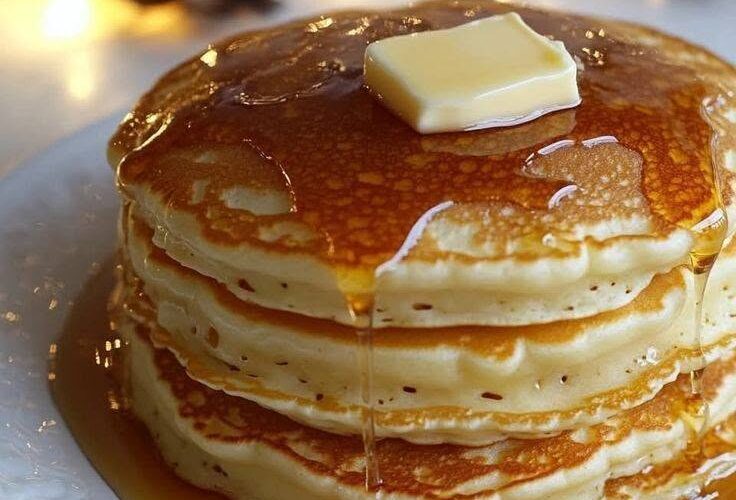
For a classic breakfast, add a small pat of butter and drizzle maple syrup over the top. The butter melts into the warm pancakes, while the syrup settles into the tiny pockets created during cooking.
Fresh strawberries, blueberries, raspberries, and sliced bananas provide natural sweetness and freshness. Chopped nuts add a pleasant crunch, while a spoonful of yogurt creates a creamy contrast.
You can also serve the pancakes with honey, fruit compote, cinnamon sugar, or a light dusting of powdered sugar.
The pancakes are delicious on their own, but a few thoughtfully chosen toppings can make them feel like a special breakfast from a favorite café.
The Secrets to Extra-Fluffy Buttermilk Pancakes
Achieving a light texture does not require complicated techniques. A few small details make a considerable difference.
Use Fresh Leavening Agents
Baking powder and baking soda help the batter rise. If either ingredient has lost its effectiveness, the pancakes may turn out flat and dense.
Store them in tightly sealed containers in a cool, dry place. Replace them when they are past their recommended freshness period or no longer perform properly.
Measure Flour Correctly
Too much flour is a common reason pancakes become heavy.
Instead of dipping a measuring cup directly into the flour bag and packing it tightly, gently spoon the flour into the cup and level it with a straight edge.
If you use a kitchen scale, approximately 240–260 grams of all-purpose flour is a reasonable range for 2 cups, depending on how the flour is measured and the product used.
Avoid Overmixing
Stir only until the ingredients come together. A perfectly smooth batter is not necessary.
Overmixing can make pancakes chewy and reduce the delicate texture that makes them enjoyable.
Do Not Skip the Resting Period
A short resting period helps the flour absorb liquid and gives the batter time to settle.
Five to ten minutes is generally enough. A very long rest is unnecessary because the leavening reaction has already begun.
Maintain the Correct Heat
Medium-low to medium heat is usually ideal.
The pancakes need enough time for their centers to cook before their surfaces become too dark. Adjust the temperature between batches if needed.
Flip at the Right Time
Wait for bubbles to appear and the edges to become slightly dry before flipping.
Flipping too early can cause the batter to spread or tear. Waiting too long can lead to excessive browning.
Avoid Flattening the Pancakes
Never press down on the pancakes after flipping. This pushes out air and can make the finished texture less fluffy.
Allow the batter to rise naturally as it cooks.
Common Mistakes and How to Fix Them
Pancakes Turn Out Flat
Flat pancakes can result from expired leavening agents, overly thin batter, or excessive stirring after the batter has rested.
Check the freshness of your baking powder and baking soda. Measure the flour carefully and avoid adding too much liquid.
Make sure the pan is properly heated before cooking.
Pancakes Are Dense or Chewy
Dense pancakes often result from overmixing or using too much flour.
Stir the batter gently and stop as soon as the dry ingredients are incorporated. Do not knead or beat pancake batter like bread dough.
Also, check that you are using the correct amount of buttermilk.
Pancakes Burn on the Outside
If the outside becomes dark while the middle remains undercooked, the pan is too hot.
Lower the heat and allow the pan to cool slightly before continuing. Cook the pancakes more slowly so that the heat can reach the center.
Pancakes Are Pale and Dry
A pan that is too cool can produce pancakes that take too long to cook and lose moisture.
Increase the heat slightly and ensure that the cooking surface is properly preheated.
Check that you have not added too much flour, since an overly thick batter can also create dry pancakes.
Pancakes Stick to the Pan
A damaged nonstick surface, insufficient preheating, or inadequate greasing can cause sticking.
Use a suitable nonstick skillet or well-seasoned griddle. Add a thin layer of butter or neutral oil and allow the pancake to set before attempting to flip it.
The Batter Is Too Thick
A thick batter may produce very tall pancakes that do not cook through easily.
Add milk one tablespoon at a time, folding gently after each addition. Stop when the batter can be poured from a spoon but still holds its shape.
The Batter Is Too Thin
Thin batter tends to spread widely and produce flatter pancakes.
Allow it to rest for several minutes first. If it remains too thin, gently mix in a small amount of flour, approximately one tablespoon at a time.
Avoid adding too much flour, which can make the pancakes heavy.
The Pancakes Have a Strong Baking Soda Taste
Too much baking soda or an inaccurate measurement can create an unpleasant taste.
Measure carefully and use the quantities specified in the recipe. The acidity of the buttermilk helps balance the baking soda, so do not replace it with ordinary milk without adjusting the recipe.
Delicious Variations of Homemade Buttermilk Pancakes
Once you have mastered the basic recipe, you can adapt it to create a variety of flavors.
Blueberry Buttermilk Pancakes
Blueberry pancakes are a classic breakfast favorite. Their juicy berries add bursts of sweetness that complement the tangy buttermilk batter.
Prepare the basic recipe as directed. Once you pour the batter into the pan, sprinkle a few fresh or frozen blueberries over each pancake.
Allow the first side to cook until bubbles appear, then flip carefully. Frozen blueberries can be added without thawing, although they may release more moisture and create purple streaks.
Serve with butter and maple syrup, or add a spoonful of yogurt for a fresh finish.
Chocolate Chip Buttermilk Pancakes
For a sweeter breakfast, add approximately 1/3 cup of chocolate chips to the prepared batter.
Fold them in gently, or sprinkle them over individual pancakes after pouring the batter into the pan.
Milk chocolate creates a sweet flavor, while semisweet or dark chocolate provides a richer contrast to the buttermilk.
Keep the cooking temperature moderate because chocolate chips near the surface can become very hot.
Serve with sliced strawberries or bananas for a delicious combination.
Banana Buttermilk Pancakes
Banana adds sweetness and a soft texture.
Mash one small ripe banana and whisk it into the wet ingredients before combining them with the dry mixture. Because banana adds moisture, the batter may become thicker or slightly heavier.
If necessary, add a tablespoon or two of milk to adjust the consistency.
You can also add a small pinch of cinnamon to complement the banana flavor.
Serve with chopped walnuts, a little honey, or plain yogurt.
Cinnamon Buttermilk Pancakes
For a warm, comforting flavor, add 1/2 teaspoon of ground cinnamon to the dry ingredients.
The cinnamon pairs beautifully with butter, maple syrup, apples, and pears.
You can also sprinkle a small amount of cinnamon sugar over the cooked pancakes before serving.
Lemon Blueberry Pancakes
For a bright, fruity variation, add 1 teaspoon of finely grated lemon zest to the wet ingredients and fold blueberries into the batter.
The lemon zest adds fragrance without making the batter overly acidic.
Serve with fresh blueberries and a light drizzle of maple syrup.
Whole-Wheat Buttermilk Pancakes
For a nuttier flavor, replace half the all-purpose flour with whole-wheat flour.
Whole-wheat flour absorbs more liquid and can produce a slightly denser texture. If the batter seems too thick, add a little extra buttermilk.
Mix gently and allow the batter to rest for several minutes before cooking.
Dairy-Free Buttermilk-Style Pancakes
You can make a dairy-free version using unsweetened plant-based milk and a suitable dairy-free butter alternative.
Add 1 tablespoon of lemon juice or vinegar to 1 3/4 cups of unsweetened plant-based milk and let it stand for 5–10 minutes.
Use the mixture in place of the buttermilk and replace the butter with melted dairy-free butter or a neutral oil.
The texture and flavor may differ from traditional buttermilk pancakes, particularly depending on the plant-based milk used.
Gluten-Free Buttermilk Pancakes
Use a reliable gluten-free all-purpose flour blend designed for pancakes or baking.
Some blends absorb more liquid than ordinary flour, so the batter may require a small adjustment in the amount of buttermilk.
Follow the flour manufacturer’s guidance where available, and allow the batter to rest before cooking.
Use clean utensils and verify that the ingredients are suitable for anyone who needs to avoid gluten.
How to Serve Homemade Buttermilk Pancakes
The serving possibilities are almost endless, making these pancakes suitable for different tastes and occasions.
Classic Butter and Maple Syrup
Place three warm pancakes on a plate and add a small pat of butter to the top pancake.
Pour maple syrup over the stack just before serving. The warmth helps the butter melt and allows the syrup to flow between the layers.
This simple combination highlights the pancakes’ buttery flavor without overpowering their delicate texture.
Fresh Fruit and Yogurt
Serve the pancakes with strawberries, blueberries, sliced bananas, or seasonal fruit.
Add a spoonful of plain or vanilla yogurt on the side. The cool, creamy yogurt balances the warm pancakes and creates a fresh breakfast.
Honey and Chopped Nuts
Drizzle honey over the pancakes and sprinkle with chopped walnuts, almonds, or pecans.
The honey adds floral sweetness, while the nuts contribute crunch and a deeper flavor.
If serving young children, use age-appropriate nut preparations to reduce choking risks.
Apple and Cinnamon Topping
Cook thinly sliced apples in a small pan with a little butter, cinnamon, and a splash of water until tender.
Spoon the warm apples over the pancakes and finish with a little maple syrup if desired.
This topping is especially appealing during cooler weather.
Homemade Berry Sauce
Add approximately 1 cup of berries to a saucepan with 1–2 tablespoons of sugar and a tablespoon of water.
Cook over low heat until the berries soften and release their juices, stirring occasionally.
For a thicker sauce, simmer for a few additional minutes. Let it cool slightly before spooning it over the pancakes.
You can use strawberries, blueberries, raspberries, or a mixture of berries.
Peanut Butter and Banana
Spread a thin layer of peanut butter over warm pancakes and add sliced bananas.
This combination offers a creamy texture and a satisfying flavor. If the peanut butter is very thick, warm it gently to make it easier to drizzle.
A Complete Breakfast Plate
For a more substantial meal, serve the pancakes with eggs, fresh fruit, and yogurt. You can also add other familiar breakfast foods according to your preferences.
A varied plate offers different flavors and textures while allowing the pancakes to remain the centerpiece.
How to Store Leftover Buttermilk Pancakes
If you prepare more pancakes than you can eat, allow the leftovers to cool before storing them.
Do not leave cooked pancakes at room temperature for more than two hours, or more than one hour when the surrounding temperature exceeds 90°F or 32°C.
Refrigeration
Place cooled pancakes in an airtight container. Separate layers with parchment paper if you want to prevent them from sticking together.
Refrigerate promptly and use within 3–4 days.
When reheating, make sure the pancakes become thoroughly hot throughout.
Freezing
Freezing is an excellent way to prepare pancakes in advance.
Arrange the cooled pancakes in a single layer on a tray and freeze until firm. Transfer them to a freezer-safe bag or container, separating layers with parchment paper.
Label the container with the date.
For best quality, use frozen pancakes within approximately two months, although they may remain safe longer if kept continuously frozen at 0°F or -18°C.
Reheating in a Toaster
For individual pancakes, a toaster can provide a convenient way to reheat them.
Use an appropriate toaster setting and ensure that the pancakes fit safely inside the appliance. Do not use this method if the pancakes are too large or if your toaster’s instructions prohibit them.
Reheating in a Microwave
Place one or two pancakes on a microwave-safe plate and cover them with a slightly damp paper towel.
Heat in short intervals until thoroughly warm. The exact time depends on the microwave’s power and the number of pancakes.
Microwaving makes pancakes soft, although it will not restore crisp edges.
Reheating in a Skillet
Place the pancakes in a lightly greased skillet over low to medium-low heat.
Warm each side for approximately 30–60 seconds, adjusting as necessary for thickness and temperature.
This method helps restore some of the original surface texture.
Reheating in the Oven
Preheat the oven to approximately 300°F or 150°C.
Place the pancakes in a single layer on an oven-safe tray and warm for several minutes, checking regularly until heated through.
Cover loosely with foil if you want to reduce surface drying.
Can You Prepare Buttermilk Pancake Batter Ahead of Time?
Pancake batter is best cooked shortly after mixing because baking powder and baking soda begin producing gas once the ingredients become wet.
If the batter sits for too long, some of the bubbles may escape, resulting in less fluffy pancakes.
For a more convenient morning routine, prepare the dry ingredients the night before. Store them in a covered bowl or airtight container.
You can also measure the wet ingredients separately and refrigerate them, provided the eggs and dairy remain properly chilled.
In the morning, combine the wet and dry mixtures gently, allow the batter to rest briefly, and cook as directed.
Another excellent option is to cook the pancakes completely in advance, refrigerate or freeze them, and reheat them when needed.
How to Make Pancakes for a Crowd
When serving a family or a group of guests, preparing several batches can take time. A little organization makes the process easier.
First, measure all the ingredients before beginning. If you are doubling the recipe, double the ingredients carefully and use a large enough bowl to mix the batter without spilling.
Avoid preparing an enormous batch of batter too far in advance. Instead, cook the pancakes in manageable batches and keep the finished pancakes warm in a low-temperature oven.
If using a large griddle, make sure the surface heats evenly. Some griddles have hotter areas, so you may need to rotate the position of the pancakes or adjust the temperature.
Serve toppings in separate bowls so that everyone can customize their own plate. Maple syrup, butter, fresh fruit, yogurt, and berry sauce are excellent choices.
For the best texture, avoid covering the pancakes tightly for a long period because steam can make them soft and damp.
Frequently Asked Questions
Why Is Buttermilk Better Than Regular Milk for Pancakes?
Buttermilk adds a mild tangy flavor and acidity that reacts with baking soda. This helps create a tender, fluffy texture.
Regular milk can make good pancakes too, but the recipe may need adjustment because ordinary milk does not have the same acidity.
Can I Make These Pancakes Without Baking Soda?
Yes, but the texture and rise may change. Baking powder can provide some of the leavening, but baking soda is useful in this recipe because it reacts with the buttermilk.
For the most reliable results, follow the ingredient quantities given in the recipe.
Should Pancake Batter Be Completely Smooth?
No. Small lumps are normal and usually indicate that the batter has not been overmixed.
Stir only until the dry ingredients are incorporated. A perfectly smooth batter is not necessary for good pancakes.
How Do I Know When to Flip a Pancake?
Look for bubbles on the surface and edges that begin to appear dry or set.
The underside should be golden brown. Slide a spatula underneath and flip the pancake gently.
Can I Use Salted Butter?
Yes. Salted butter works well, although the pancakes may taste slightly saltier.
If using salted butter, you can reduce the added salt slightly to suit your preference.
Can I Leave Out the Vanilla?
Yes. Vanilla adds flavor but is not essential to the structure of the recipe.
If you do not have vanilla extract, simply leave it out. The pancakes will still taste delicious.
Can I Make the Pancakes Less Sweet?
Yes. You can reduce the sugar from 2 tablespoons to 1 tablespoon or omit it if you prefer.
Keep in mind that sugar also contributes to browning, so pancakes made with less sugar may have a slightly different surface color.
Why Are My Pancakes Raw in the Middle?
The pan may be too hot, causing the outside to cook before the center has enough time to set.
Lower the heat and use a slightly smaller amount of batter per pancake. Allow each side to cook gradually.
Can I Make Smaller Pancakes?
Absolutely. Use approximately 1–2 tablespoons of batter for each mini pancake.
Smaller pancakes cook faster and are convenient for children, brunch platters, or serving alongside fruit.
Can I Make Larger Pancakes?
Yes. Use a larger portion of batter, but remember that larger pancakes take longer to cook and can be more difficult to flip.
A wide spatula and moderate heat will help you cook them evenly.
Are Buttermilk Pancakes Suitable for Meal Prep?
Yes. Cooked pancakes can be refrigerated or frozen and reheated when needed.
Freezing individual pancakes with parchment paper between them makes it easier to take out only the quantity you want.
What Is the Best Pan for Pancakes?
A good nonstick skillet or flat griddle works very well.
A heavy-bottomed pan can also produce excellent results because it distributes heat more evenly than a thin pan that develops hot spots.
Nutritional Information
The following is an approximate estimate for one pancake when the recipe makes 12 pancakes, excluding cooking fat and toppings.
Calories: Approximately 120–150
Protein: Approximately 3–5 grams
Carbohydrates: Approximately 16–22 grams
Fat: Approximately 4–6 grams
Sugar: Approximately 2–4 grams
Fiber: Approximately 0.5–1 gram
Actual values vary according to the flour used, pancake size, amount of butter, and specific ingredients. Adding maple syrup, chocolate chips, nuts, fruit sauce, or other toppings will change the nutritional content.
Final Thoughts on Homemade Buttermilk Pancakes
Homemade buttermilk pancakes are a wonderful example of how a few ordinary ingredients can create something truly delicious. Flour, eggs, buttermilk, butter, sugar, and leavening agents come together to form a soft, fluffy breakfast that feels both comforting and special.
The most important techniques are simple: measure the ingredients accurately, mix the batter gently, allow it to rest briefly, and cook the pancakes over moderate heat. Once you understand these steps, you can make consistently delicious pancakes without relying on a boxed mix.
You can keep the recipe classic with butter and maple syrup, add fresh blueberries for a fruity variation, or make chocolate chip pancakes when you want a sweeter treat. The batter also provides an excellent foundation for experimenting with cinnamon, bananas, lemon zest, and other favorite flavors.
These pancakes are best served warm, straight from the skillet, when their edges are lightly golden and their centers are tender. With a little preparation, they can also be frozen for busy mornings when you want a homemade breakfast without starting from scratch.
Whether you are preparing breakfast for yourself, cooking for your family, or serving a weekend brunch, this homemade buttermilk pancake recipe offers a dependable way to create a delicious meal. Once you have tried them, you may find that making pancakes from scratch becomes one of your favorite kitchen traditions.