admin1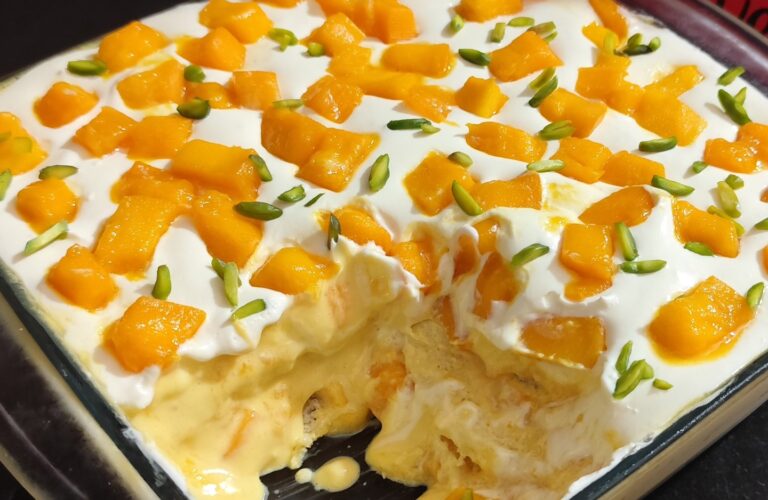
Whenever fresh mangoes are in season, this easy Mango Float becomes one of the first desserts I prepare. It requires no oven, no complicated techniques, and only a handful of ingredients, yet the finished dessert looks beautiful and tastes like something from a bakery. The combination of juicy mangoes, fluffy whipped cream, sweetened condensed milk, and crunchy cookies creates soft, creamy layers that become even more delicious after chilling overnight.
One of the reasons I enjoy making this dessert is that it comes together quickly. After whipping the cream and assembling the layers, the refrigerator does the rest of the work. By the next day, the cookies soften into a cake-like texture while the mangoes add natural sweetness and freshness in every bite.

Whether I’m serving it after dinner, bringing it to a family gathering, or making it for a summer celebration, this Mango Float is always one of the first desserts to disappear.
What Is Mango Float?
Mango Float is a chilled layered dessert made without baking. It is prepared by arranging cookies with a creamy whipped filling and plenty of ripe mangoes. As the dessert chills, the cookies absorb moisture from the cream, creating soft layers that resemble an icebox cake.
Instead of baking cake layers from scratch, the cookies do all the work. They become tender overnight while still holding enough structure to create beautiful slices. The fresh mangoes provide bright fruity flavor that balances the richness of the cream, making every bite light, refreshing, and satisfying.
Because it doesn’t require any baking, this dessert is especially popular during warmer months when turning on the oven isn’t appealing.
Why You’ll Love This Recipe
There are plenty of reasons this dessert deserves a place in your recipe collection.
- No baking required.
- Only four simple ingredients.
- Easy enough for beginners.
- Rich, creamy, and refreshing.
- Perfect for summer parties.
- Can be prepared a day ahead.
- Great for birthdays, family dinners, and potlucks.
- Easy to customize with different cookies.
- Beautiful presentation with very little effort.
The best part is that almost anyone can make it successfully on the first try.
Ingredients That Make This Dessert Special
Although the ingredient list is short, each one has an important role in creating the perfect texture and flavor.
Ripe Yellow Mangoes
Fresh ripe mangoes are the star of this dessert. Choose mangoes that are naturally sweet, fragrant, and slightly soft when gently pressed. Their juicy texture blends beautifully with the creamy filling.
Some of the mangoes can be diced for the inside layers while a couple can be sliced neatly for decorating the top before serving.
Heavy Cream
Heavy cream forms the rich base of the filling. Once whipped, it becomes light and airy while still holding enough structure to support the dessert layers.
For the best results, always use well-chilled heavy cream straight from the refrigerator.
Sweetened Condensed Milk
Sweetened condensed milk sweetens the whipped cream while giving it a silky texture. It also adds a rich dairy flavor that pairs perfectly with fresh mangoes.
Since mangoes naturally vary in sweetness, you can slightly adjust the amount according to your taste without affecting the recipe.
Biscoff Cookies
Biscoff cookies provide both flavor and structure. During chilling, they soften just enough to create delicate cake-like layers while keeping a pleasant texture.
If desired, graham crackers can also be used, but Biscoff cookies give the dessert a delicious caramelized flavor.
Equipment You’ll Need
One of the reasons this dessert is so simple is that only basic kitchen equipment is required.
- Large mixing bowl
- Electric hand mixer or stand mixer
- Rubber spatula
- Sharp knife
- Cutting board
- Measuring cups
- 9×9-inch baking pan
- Plastic wrap or cling film
Preparing the Mangoes
Start by washing and peeling the mangoes carefully.
I usually reserve two mangoes for decorating the top with thin slices and dice the remaining mangoes into small cubes for the filling.
Keeping the cubes fairly small makes it much easier to cut neat slices once the dessert has chilled overnight.
If your mangoes release a lot of juice after cutting, lightly drain them before layering so the dessert doesn’t become watery.
Making the Cream Filling
- Pour the chilled heavy cream into a large mixing bowl.
- Using an electric mixer, beat it on medium speed until it begins to thicken. At this stage, the cream should look smooth and slightly fluffy but not yet form peaks.
- Next, pour in the sweetened condensed milk.
- Continue beating until stiff peaks form. The cream should hold its shape without becoming grainy.
- Be careful not to overwhip because heavy cream can quickly become too thick and lose its smooth texture.
- The finished cream should be light, fluffy, and easy to spread.
Preparing the Baking Dish
If you’d like to lift the entire dessert out before slicing, line the pan with parchment paper, leaving extra paper hanging over two sides.
If you’re serving directly from the dish, simply use the baking pan without lining it.
Both methods work well.
Building the Layers
- The layering process is simple and enjoyable.
- Arrange the first layer of Biscoff cookies across the bottom of the pan, covering as much surface as possible.
- Spread about one-third of the whipped cream evenly over the cookies using a spatula.
- Scatter a generous amount of diced mangoes over the cream.
- Repeat the same process with another layer of cookies, another layer of cream, and another generous layer of mangoes.
- Finish with a final layer of cookies followed by the remaining whipped cream.
- Smooth the top evenly for a clean appearance.
- Finally, decorate with the sliced mangoes and sprinkle crushed Biscoff cookies over the surface.
The colorful topping makes the dessert look beautiful without requiring any special decorating skills.
Chilling Is the Secret
- Once assembled, cover the pan tightly with cling wrap.
- Place it in the refrigerator overnight.
- This resting time allows all the layers to come together perfectly.
- During chilling, the cookies soften into delicate cake-like layers while the cream becomes firm enough to slice neatly.
- Although it may be tempting to serve it after only a few hours, the overnight chill gives the best texture.
Serving Suggestions
Remove the Mango Float from the refrigerator just before serving.
Cut it into squares using a sharp knife.
For cleaner slices, wipe the knife clean between each cut.
This dessert is delicious on its own, but it also pairs wonderfully with:
- Fresh mango slices
- Extra crushed Biscoff cookies
- A drizzle of mango puree
- Fresh mint leaves
- Chilled iced coffee
- Cold milk
- Fresh fruit salad
Easy Ways to Customize
One of my favorite things about this recipe is how flexible it is.
Here are several easy variations:
Change the Cookies
While Biscoff cookies create a rich caramel flavor, graham crackers work equally well and create a more traditional version.
Add More Mangoes
If you love fruit-filled desserts, simply add extra chopped mangoes between each layer.
Adjust the Sweetness
Depending on how sweet your mangoes are, you can use slightly more or less sweetened condensed milk.
Freeze Instead of Refrigerating
For a texture similar to mango ice cream cake, freeze the dessert instead of chilling it in the refrigerator.
Allow it to sit for several minutes before slicing.
Flavor the Cream
A small amount of mango puree mixed into the whipped cream creates even more mango flavor while keeping the recipe simple.
Helpful Tips
- Use ripe, naturally sweet mangoes.
- Chill the heavy cream before whipping.
- Avoid overwhipping the cream.
- Dice mangoes into small pieces for easier slicing.
- Spread each cream layer evenly.
- Cover tightly while chilling.
- Refrigerate overnight for the best texture.
- Slice using a sharp knife.
- Store leftovers covered in the refrigerator.
Common Mistakes
- Even simple recipes can go wrong if a few details are overlooked.
- Using underripe mangoes can make the dessert taste sour.
- Warm heavy cream will not whip properly.
- Overmixing the cream can make it grainy.
- Skipping the overnight chilling time prevents the cookies from softening completely.
- Adding too much fruit juice from the mangoes may cause watery layers.
- Taking a little extra care during preparation helps create clean, creamy slices every time.
Storage Tips
Store Mango Float covered in the refrigerator for up to 3 days.
If freezing, wrap the dish well to prevent ice crystals from forming.
When serving from frozen, allow it to rest for about 10–15 minutes so it softens slightly before cutting.
Description
This Easy Mango Float is a refreshing no-bake dessert made with layers of whipped cream, sweetened condensed milk, fresh ripe mangoes, and Biscoff cookies. After chilling overnight, the cookies soften into delicate cake-like layers while the cream becomes light and fluffy. It’s a simple make-ahead dessert that’s perfect for summer gatherings, celebrations, or whenever you’re craving a cool and creamy treat.
Recipe Details
Prep Time: 20 minutes
Chill Time: 8 hours (or overnight)
Total Time: 8 hours 20 minutes
Servings: 12 servings
Course: Dessert
Cuisine: Filipino-Inspired
Difficulty: Easy
Ingredients
- 6 ripe yellow mangoes
- 3 cups chilled heavy cream (720 g)
- ½ can sweetened condensed milk (7 oz or 200 g), or adjust to taste
- 64 Biscoff cookies (about 2 packs), or substitute with graham crackers if preferred
Instructions
1. Prepare the Mangoes
Peel all of the mangoes. Slice two mangoes into thin slices for decorating the top of the dessert and cut the remaining four mangoes into small cubes for the filling.
2. Whip the Cream
Pour the chilled heavy cream into a large mixing bowl. Beat with an electric mixer on medium speed until it thickens and leaves soft ribbons.
3. Sweeten the Cream
Add the sweetened condensed milk to the cream and continue beating until stiff peaks form. Stop mixing once the cream holds its shape to avoid overwhipping.
4. Prepare the Pan
Use a 9×9-inch baking pan. If you want to lift the dessert out before serving, line the pan with parchment paper, leaving extra paper hanging over the sides. If serving directly from the pan, lining it is not necessary.
5. Make the First Layer
Arrange a single layer of Biscoff cookies across the bottom of the pan. Spread about one-third of the whipped cream evenly over the cookies, then add a generous layer of diced mangoes.
6. Repeat the Layers
Add another layer of cookies, followed by another layer of whipped cream and more diced mangoes.
7. Finish the Dessert
Place the final layer of Biscoff cookies on top and spread the remaining whipped cream evenly over the surface. Decorate with the sliced mangoes and sprinkle crushed Biscoff cookies over the top if desired.
8. Chill
Cover the pan tightly with plastic wrap or cling film and refrigerate overnight, or for at least 8 hours, to allow the cookies to soften and the dessert to set properly.
9. Serve
Slice into squares using a sharp knife and serve chilled. For cleaner slices, wipe the knife between each cut.
Notes
- Store leftovers covered in the refrigerator for up to 3 days or freeze for longer storage.
- Use fully ripe, sweet mangoes for the best flavor and natural sweetness.
- Make sure the heavy cream is well chilled before whipping.
- Do not overmix the whipped cream, as it can become grainy.
- Small mango cubes make the dessert easier to slice and serve neatly.
- Graham crackers can be used instead of Biscoff cookies if preferred.
- For a firmer, ice cream-like texture, freeze the dessert instead of refrigerating it. Let it sit for a few minutes before slicing.