admin1
Homemade Beetroot, Carrot, Celery and Ginger Detox Juice
A Complete Guide to Making Fresh, Vibrant Red Vegetable Juice at Home
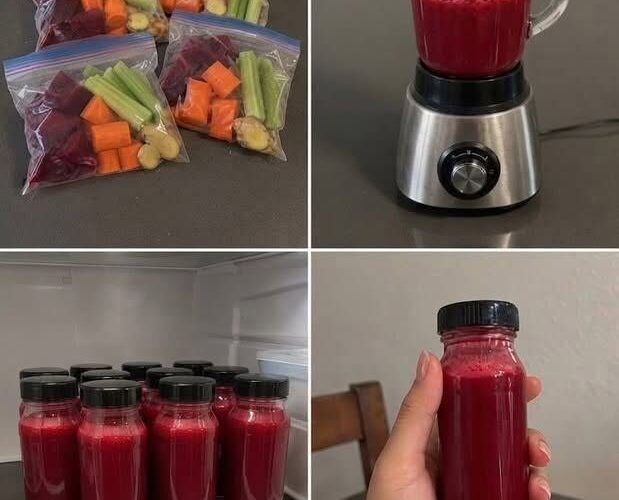
Homemade beetroot, carrot, celery and ginger juice is a colorful, refreshing vegetable drink made with simple, wholesome ingredients. Its deep ruby-red color, naturally earthy sweetness, mild vegetable flavor and gentle hint of ginger make it a wonderful addition to a balanced daily routine. The juice shown in the picture is prepared by blending chopped vegetables into a rich red drink and portioning it into small bottles for convenient serving.
One of the best things about this recipe is that you can prepare several servings at once. By washing and chopping the vegetables in advance, you can save time during busy mornings and make the preparation process much easier. You can also freeze prepared vegetable portions for future use, allowing you to blend a fresh batch whenever you want a homemade drink.
This recipe combines beetroot, carrots, celery, fresh ginger and water with optional lemon juice for a balanced flavor. Beetroot contributes the beautiful red color, carrots provide natural sweetness, celery adds a fresh vegetable taste, and ginger gives the mixture a pleasantly warm finish. Lemon juice brightens the overall flavor and helps balance the earthiness of the beetroot.
Although this drink is often called detox juice, it is important to understand that your liver and kidneys already perform the body’s natural waste-removal functions. This juice does not cleanse the body of toxins or provide a special detox effect. Instead, it can be enjoyed as a flavorful way to include more vegetables in your diet.
Recipe Overview
Preparation time: 20 minutes
Blending time: 5–10 minutes
Total time: Approximately 25–30 minutes
Servings: 4–6 small servings, depending on bottle size
Recipe type: Homemade vegetable juice
Main ingredients: Beetroot, carrots, celery and ginger
Flavor profile: Earthy, naturally sweet, fresh and mildly spicy
Texture: Smooth when strained, or thicker when blended with the vegetable fiber
Serving temperature: Chilled or freshly prepared
Difficulty level: Easy
Equipment needed: A blender, knife, chopping board, measuring cup, fine-mesh strainer if desired, and clean storage bottles
Ingredients
Main Ingredients
- 2 medium fresh beetroots, peeled and chopped
- 3 medium carrots, washed, peeled if desired, and chopped
- 3 celery stalks, washed and cut into smaller pieces
- 1 small piece of fresh ginger, approximately 1–2 teaspoons when grated
- 1 medium lemon, juiced
- 2–3 cups cold drinking water, adjusted according to the blender and desired consistency
Optional Ingredients
- 1 small apple, cored and chopped, for additional natural sweetness
- ½ cucumber, peeled or unpeeled, for a fresher flavor
- A few fresh mint leaves for a cooling taste
- A small pinch of ground black pepper for a more savory flavor
- Additional lemon juice if you prefer a tangier drink
- A little extra cold water if the mixture is too thick
The optional ingredients are not necessary for the original recipe. Start with beetroot, carrots, celery, ginger, lemon and water, then adjust the flavor according to your preferences.
Understanding the Main Ingredients
Beetroot
Beetroot is the ingredient responsible for the drink’s rich red color. It has an earthy flavor that becomes more noticeable when used in larger quantities. When combined with carrots and lemon juice, its flavor becomes more balanced and pleasant.
Choose firm beetroots with smooth skin and no soft or moldy areas. Smaller or medium-sized beetroots are convenient for blending because they can be cut into manageable pieces.
Wash the beetroot thoroughly before peeling. If you are using a powerful blender, cut it into small cubes to help the blades process it more evenly. Avoid adding large, hard chunks to a blender that is not designed to handle them.
Beetroot contains folate, potassium and naturally occurring dietary nitrates. However, the amount of these nutrients in your finished drink depends on the size of the vegetables, the preparation method and whether you strain away the pulp.
Carrots
Carrots add natural sweetness and help balance the earthy taste of beetroot. They also contribute to the juice’s orange-red color, although beetroot usually dominates the final appearance.
Choose fresh carrots that are firm and brightly colored. Wash them carefully under running water and remove any damaged areas. Peeling is optional when the carrots are thoroughly washed.
Cut the carrots into small pieces before blending. If your blender struggles with raw carrots, chop them more finely and add sufficient water to help the mixture circulate.
Carrots contain beta-carotene, which the body can convert into vitamin A. Vitamin A supports normal vision, immune function and other important bodily processes.
Celery
Celery provides a fresh, slightly salty vegetable flavor. It also contributes water and fiber when the vegetable pulp is retained.
Wash celery stalks thoroughly, paying particular attention to the grooves where dirt may collect. Trim the dry ends and cut the stalks into short pieces.
If the celery stalks have particularly tough strings, you can remove some of them before blending. This may help create a smoother texture.
Celery works especially well in this recipe because its fresh flavor contrasts with the sweetness of carrots and the earthiness of beetroot.
Fresh Ginger
Ginger adds warmth and a little natural sharpness to the drink. Even a small piece can make a noticeable difference, so it is best to start with a modest amount.
Choose a firm piece of ginger with smooth skin. Wash it well and peel it if desired. Slice it into small pieces before adding it to the blender.
If you prefer a mild drink, use approximately one teaspoon of grated ginger. If you enjoy a stronger ginger flavor, you can use a little more.
Avoid adding too much ginger at the beginning. You can always blend in another small piece after tasting the first batch.
Lemon Juice
Fresh lemon juice provides acidity that balances the sweetness of carrots and the earthy flavor of beetroot.
Roll the lemon gently on the countertop before cutting it. This can make it easier to squeeze. Remove any seeds that fall into the juice.
Add the lemon juice after the vegetables have been blended, then mix and taste. If the drink seems too earthy, a little additional lemon juice may help improve the flavor.
Lemon juice is optional, but it makes the finished drink taste brighter and fresher.
Cold Water
Water helps the ingredients move around the blender and makes the mixture easier to pour.
Begin with two cups of water for the quantities listed above. If the blender struggles or the mixture becomes too thick, add more water gradually.
For a concentrated, smoothie-like drink, use less water. For a lighter drink that pours easily into small bottles, add more.
The amount of water also affects the final yield, so the number of bottles will depend on the bottle size and how much water you use.
How to Prepare the Vegetables in Advance
The picture shows several bags of pre-cut vegetables arranged into individual portions. This is a practical way to make preparation easier, especially if you want to prepare juice regularly.
Step 1: Wash Everything Thoroughly
Rinse the beetroot, carrots, celery, ginger and any optional produce under running water before cutting.
Use a clean vegetable brush for firm vegetables if necessary. Remove visible dirt and discard any spoiled or moldy pieces.
Wash your hands, clean the chopping board and use a clean knife. Because the drink is not cooked, good food hygiene is particularly important.
Step 2: Peel and Chop the Beetroot
Peel the beetroot if desired and cut it into small cubes.
Beetroot juice can stain cutting boards, countertops and clothing. Use a suitable chopping board and clean any splashes promptly.
Place the chopped beetroot in a clean container while preparing the remaining ingredients.
Step 3: Prepare the Carrots
Trim the carrot ends and cut the carrots into small chunks.
Try to make the pieces approximately similar in size so that they blend more evenly.
Step 4: Cut the Celery
Trim the ends of the celery stalks and slice them into small sections.
Check between the stalks for dirt and rinse again if needed.
Step 5: Prepare the Ginger
Wash the ginger, remove the skin if desired, and slice it into small pieces.
Because ginger has a strong flavor, you do not need to prepare a large quantity for each serving.
Step 6: Divide the Ingredients Into Portions
Divide the chopped vegetables into four individual portions.
Each portion can contain approximately one-quarter of the prepared beetroot, carrots, celery and ginger.
Place the portions into separate freezer-safe bags or suitable food containers. Keep the pieces loosely arranged rather than compressing them into one solid block.
Label each portion with the preparation date so that you can keep track of storage time.
Step 7: Refrigerate or Freeze
If you plan to blend the vegetables soon, refrigerate the prepared portions in clean, airtight containers and use them promptly, ideally within one to two days.
For longer storage, freeze the chopped vegetables. Frozen vegetable portions are convenient because they can be prepared ahead of time and used as needed.
Do not leave prepared vegetables at room temperature for extended periods. If frozen portions are thawed, keep them refrigerated and use them promptly.
For the best texture, add frozen vegetable pieces gradually to a blender capable of processing them. Do not assume every blender can safely handle frozen, hard vegetables.
Step-by-Step Instructions for Making the Juice
Step 1: Prepare Your Blender
Place the blender on a stable, dry countertop.
Check that the blender jar is clean and that the blade assembly and lid are correctly fitted. Make sure the appliance is suitable for blending raw vegetables.
If your blender has a smaller capacity, work in two batches instead of filling the jar beyond its recommended maximum level.
Step 2: Add the Water
Pour approximately two cups of cold drinking water into the blender.
Adding water first can help the blades circulate the ingredients more easily and reduce the chance of dry vegetable pieces becoming trapped around the bottom.
Step 3: Add the Beetroot
Add the chopped beetroot to the blender.
Try to distribute the pieces evenly rather than dropping a large quantity into one corner of the jar.
The beetroot provides the foundation of the drink’s deep red color.
Step 4: Add the Carrots
Add the chopped carrots over the beetroot.
The carrots help balance the earthy taste and create a naturally sweeter flavor.
If your blender is not very powerful, make sure the carrot pieces are small before adding them.
Step 5: Add the Celery
Place the celery pieces into the blender.
Celery can sometimes create fibrous strands, so cutting it into short pieces before blending is helpful.
Step 6: Add the Ginger
Add a small amount of fresh ginger.
If you are preparing the drink for the first time, begin with approximately one teaspoon of grated ginger. This gives the juice a gentle warmth without overwhelming the other ingredients.
Step 7: Blend Gradually
Secure the lid firmly and begin blending at a low speed.
Increase the speed gradually as the vegetables begin to break down. Blend for approximately one to three minutes, depending on your blender’s power and the size of the vegetable pieces.
Stop the blender before removing the lid if you need to scrape down the sides. Use a suitable spatula and never place your fingers or utensils near moving blades.
If the mixture is too thick to circulate, add another small amount of water and continue blending.
The finished mixture should have a consistent red color with no large vegetable pieces remaining.
Step 8: Check the Consistency
Turn off the blender and inspect the mixture.
If you prefer a thick drink that retains most of the vegetable fiber, serve it without straining.
If you prefer a smoother, thinner juice, pour the mixture through a clean fine-mesh strainer. Pressing the pulp gently with a spoon can help release more liquid.
Remember that straining removes some of the fiber. Keeping the pulp produces a thicker drink and retains more of the vegetables’ original fiber.
Step 9: Add Lemon Juice
Add the freshly squeezed lemon juice and blend briefly, or stir it into the finished mixture.
Taste a small amount. If the flavor is too earthy, add a little more lemon juice or a small piece of apple and blend again.
If the drink tastes too strong, add more water.
Step 10: Blend Until Smooth
Blend for another 10–20 seconds to combine everything evenly.
Avoid running the blender unnecessarily long if the mixture is already smooth. Excessive blending can warm the drink and introduce more foam.
Step 11: Taste and Adjust
Pour a small amount into a clean glass.
The flavor should be earthy from the beetroot, sweet from the carrots, fresh from the celery and gently spicy from the ginger.
Adjust the ingredients according to your taste. You can add more lemon juice for brightness, more water for a lighter texture, or a little apple for extra sweetness.
Step 12: Pour Into Clean Bottles
Pour the finished drink into clean, food-safe bottles.
Leave a small amount of space at the top so that the liquid is easy to handle without spilling.
Use bottles that are suitable for refrigerated beverages and have clean, well-fitting lids.
Avoid touching the inside of the bottle or lid while filling them.
Step 13: Chill and Serve
Place the bottles in the refrigerator promptly.
For the freshest flavor, drink the juice soon after preparation. Homemade raw vegetable juice is perishable, so it should not be left sitting on the counter for hours.
Shake the bottle gently before drinking because natural separation may occur.
How to Make the Juice Without a Blender
If you do not have a blender, you can still prepare a similar drink using a juicer.
Wash the vegetables thoroughly and cut them into pieces that fit your juicer’s feeding chute. Feed the beetroot, carrots, celery and ginger through the machine according to its instructions.
Collect the juice in a clean container and stir in the lemon juice.
A juicer separates much of the vegetable pulp from the liquid automatically. As a result, the drink may have a thinner texture and less fiber than the blended version.
Do not put large pieces of hard vegetables into equipment that is not designed to process them.
If you have neither a blender nor a juicer, finely grate the vegetables and squeeze them through a clean, suitable cloth or strainer. This method requires more effort and may produce a smaller quantity of juice.
How to Make the Juice Taste Better
The best vegetable juice is one that you enjoy drinking. You do not need to force yourself to use large amounts of any ingredient if you dislike its flavor.
For a Sweeter Flavor
Add one small apple to the mixture.
Apples complement beetroot and carrots naturally. Remove the core and seeds before blending.
You can also increase the carrot quantity slightly while reducing the amount of celery.
For a Fresher Flavor
Add cucumber and a little extra lemon juice.
Cucumber creates a lighter, more refreshing flavor that can make the earthy beetroot less prominent.
Fresh mint is another optional addition for a cooling taste.
For a Stronger Ginger Flavor
Increase the ginger gradually.
A small increase can make the drink noticeably warmer and more aromatic. Add it in stages so that it does not overpower the vegetables.
For a Thinner Juice
Add cold water a little at a time.
Blend briefly after each addition until the mixture reaches the consistency you prefer.
For a Thicker Drink
Use less water and avoid straining.
The result will be closer to a vegetable smoothie than a traditional clear juice. This can be a useful option if you prefer to retain more of the vegetable pulp.
Five Delicious Variations
1. Beetroot, Carrot and Apple Juice
This variation is ideal for people who prefer a sweeter drink.
Ingredients:
- 1 medium beetroot
- 2 medium carrots
- 1 small apple
- 1 teaspoon fresh lemon juice
- 1–1½ cups cold water
Wash and chop the ingredients. Remove the apple core and seeds, then blend everything with the water until smooth.
Add lemon juice and adjust the consistency.
The apple adds natural sweetness and helps balance the earthy flavor of beetroot.
2. Beetroot, Celery, Cucumber and Ginger Juice
This version has a fresher, more vegetable-forward flavor.
Ingredients:
- 1 medium beetroot
- 2 celery stalks
- ½ cucumber
- 1 small piece of ginger
- 1 tablespoon lemon juice
- 1½–2 cups cold water
Blend the prepared ingredients until smooth.
Add more water if needed and strain if you prefer a thinner consistency.
This variation works well chilled, especially when you want a refreshing drink alongside a meal.
3. Beetroot, Carrot and Orange Juice
Orange provides a bright citrus flavor that complements beetroot.
Ingredients:
- 1 medium beetroot
- 2 medium carrots
- 1 peeled orange
- 1 cup cold water
- A small squeeze of lemon juice, if desired
Blend the ingredients until smooth, then adjust the water according to the desired consistency.
Remove orange peel and seeds before blending. The orange adds sweetness and citrus flavor without requiring added sugar.
4. Beetroot, Carrot and Pineapple Juice
Pineapple provides a sweet, tangy taste that pairs well with carrots and beetroot.
Ingredients:
- 1 small beetroot
- 2 carrots
- ½ cup pineapple pieces
- 1 small piece of ginger
- 1–1½ cups water
Blend until smooth.
Taste before adding lemon juice because pineapple already provides acidity.
This variation has a fruitier flavor than the original vegetable combination.
5. Beetroot, Carrot and Lemon Ginger Juice
This is a simple version for people who prefer a tangy drink.
Ingredients:
- 1 medium beetroot
- 3 carrots
- 1 small piece of ginger
- Juice of ½ lemon
- 1½–2 cups cold water
Blend the vegetables with the water, then add lemon juice.
Adjust the ginger carefully so that the drink remains balanced.
This variation keeps the ingredient list simple while highlighting the earthy, sweet and citrus flavors.
How to Prepare a Week of Vegetable Portions
Preparing ingredients ahead of time can make this recipe easier to fit into a busy routine. However, it is important to distinguish between storing chopped vegetables and storing finished juice.
For four portions, prepare:
- 2 medium beetroots
- 3 medium carrots
- 3 celery stalks
- A small piece of ginger
Wash, trim and chop the vegetables. Divide them into four reasonably equal portions and place them in separate food-safe containers or freezer bags.
Refrigerate the portions that you intend to use within the next day or two. Freeze the remaining portions promptly.
For best quality, use frozen portions within a few months, while following the storage guidance for your freezer and containers. Discard any portions that show signs of spoilage or have been stored under unsuitable conditions.
When you are ready to make a drink, blend one portion with water and lemon juice.
This approach saves preparation time without requiring you to make a large quantity of finished juice in advance.
How to Store Homemade Juice Safely
Fresh homemade juice does not contain the same preservatives or processing controls as many commercially packaged drinks.
For this reason, careful handling and prompt refrigeration are important.
Refrigeration
Transfer the juice to clean, airtight bottles and refrigerate it immediately.
For the best quality and a conservative home-storage approach, consume it the same day, preferably soon after preparation. If you need to keep it longer, aim to use it within 24 hours and keep it continuously refrigerated at 4°C or below.
Discard the juice if it develops an unusual smell, unexpected changes in appearance, visible mold or other signs of spoilage. Do not taste a questionable drink to determine whether it is safe.
Remember that a normal smell and appearance do not guarantee that raw juice is free of harmful microorganisms.
Freezing
You can freeze freshly prepared juice in suitable freezer-safe containers if you want to preserve it for longer.
Leave room for expansion because liquids expand as they freeze. Thaw the juice in the refrigerator rather than on the counter.
Shake well after thawing, as the ingredients may separate.
For the best taste and texture, use frozen juice within approximately one to two months. Freezing can preserve quality for longer under suitable conditions, but the texture and flavor may gradually change.
Avoid Repeated Temperature Changes
Do not repeatedly leave the juice at room temperature and return it to the refrigerator.
If you are taking a bottle to school, work or another location, use an insulated cooler bag with sufficient ice packs to keep it cold.
Do not rely on the bottle’s appearance or the fact that it is tightly closed as proof that the drink has remained safe.
Use Clean Bottles
Wash bottles, lids and other equipment thoroughly with hot water and dishwashing detergent, then rinse and dry them properly.
Follow the manufacturer’s instructions if the bottles are dishwasher-safe.
Glass bottles can be useful for home storage, but choose bottles designed for beverages and handle them carefully. Food-safe plastic bottles are another option.
Never pour fresh juice into a bottle that still contains residue from an earlier batch.
Can You Drink This Juice Every Day?
This juice can be part of a balanced diet, but drinking it every day is not necessary to obtain the benefits of vegetables.
The most important consideration is your overall eating pattern. Whole vegetables and fruits provide fiber, and eating them regularly can help support digestive health and general nutrition.
Blending the vegetables and retaining the pulp preserves more of their fiber than straining the mixture. If you strain the drink, you may find it easier to consume quickly, but you will lose some of the fiber.
A small glass can be a reasonable serving, depending on the amount of vegetables used and your individual nutritional needs.
You can also alternate this recipe with other foods and drinks rather than relying on one particular juice for nutrition.
Nutritional Information
The precise nutritional content depends on the sizes of the vegetables, the amount of water, whether you add fruit and whether you strain the mixture.
The following is a general description rather than a laboratory-tested nutrition label.
Carbohydrates: Beetroot and carrots naturally contain carbohydrates, including naturally occurring sugars.
Fiber: A blended drink that retains its pulp contains more fiber than a strained juice.
Vitamin A precursors: Carrots provide beta-carotene, which the body can convert into vitamin A.
Folate: Beetroot contributes folate, a vitamin involved in normal cell function.
Potassium: Beetroot, carrots and celery contribute potassium, which supports normal muscle and nerve function.
Vitamin C: Lemon juice contributes some vitamin C, although the quantity depends on how much you use.
Dietary nitrates: Beetroot naturally contains nitrates, which the body can convert into other compounds involved in normal physiological processes.
This drink should not be considered a complete meal. It does not provide the same balance of protein, fats and other nutrients as a meal containing foods such as eggs, yogurt, beans, nuts, whole grains or other protein sources.
Important Considerations Before Drinking Beetroot Juice
Although the ingredients are common vegetables, this recipe is not suitable for every person in every circumstance.
Kidney stones: Beetroot contains oxalates. People who have been advised to limit oxalate because of certain types of kidney stones should ask their healthcare professional whether frequent beetroot juice is appropriate.
Blood pressure: Beetroot contains dietary nitrates that may influence blood pressure. If you take medication for low blood pressure or blood pressure control, ask a healthcare professional whether concentrated beetroot juice is suitable for you.
Blood sugar: Carrots, beetroot and optional fruit contain natural carbohydrates. People who need to monitor blood glucose may prefer smaller portions and may benefit from keeping the vegetable pulp rather than straining the mixture.
Digestive sensitivity: Raw vegetables and ginger can cause discomfort in some people, particularly in large amounts. Start with a small serving if you are not accustomed to drinking blended raw vegetables.
Stomach irritation: Lemon juice and ginger may irritate the stomach or worsen reflux symptoms in some people. Reduce or omit them if they cause discomfort.
Changes in urine or stool color: Beetroot can temporarily cause pink or reddish discoloration of urine or stool in some people. If discoloration is unexpected, persistent or accompanied by other symptoms, seek medical advice rather than automatically attributing it to beetroot.
Food safety: Homemade raw juice is not pasteurized. People at higher risk of foodborne illness, including those with weakened immune systems, should be particularly cautious with unpasteurized drinks and seek appropriate medical or food-safety guidance.
Frequently Asked Questions
1. Can I make this juice without adding sugar?
Yes. Beetroot and carrots already provide natural sweetness. You can also add a small apple if you prefer a sweeter taste.
There is no need to add table sugar, syrup or honey to make the recipe enjoyable.
2. Can I use frozen vegetables?
Yes, provided the vegetables were handled and frozen appropriately.
Use a blender that is suitable for processing frozen ingredients. If necessary, allow the vegetables to soften slightly in the refrigerator before blending.
3. Why is my juice separating?
Separation is normal in homemade blended vegetable drinks.
The liquid and the vegetable pulp have different densities, so they can separate while standing. Stir or shake the drink before serving.
Separation by itself does not mean the drink has spoiled.
4. Why does my juice taste earthy?
Beetroot naturally has an earthy flavor, and some people notice it more strongly than others.
Try reducing the beetroot slightly, increasing the carrots, adding a little apple or including lemon juice.
You can also use cucumber for a fresher flavor.
5. Can I skip the ginger?
Yes. Ginger is optional and can be omitted entirely.
The recipe will still work with beetroot, carrots, celery, water and lemon juice.
6. Can I skip the celery?
Yes. If you dislike celery, replace it with cucumber or simply increase the amount of carrot.
The final flavor and texture will change slightly, but the recipe does not depend on celery alone.
7. Do I have to peel the carrots?
No. Thoroughly washed carrots can be blended with their skins on if they are in good condition.
Peeling is a matter of preference and may help if the skins are rough or damaged.
8. Should I strain the juice?
That depends on your preferred texture.
Straining produces a thinner drink, while leaving the pulp creates a thicker mixture that retains more fiber.
Neither method is universally better for everyone.
9. Can I prepare the juice the night before?
You can prepare it in advance, but fresh preparation is preferable for quality.
If you make it the night before, place it in a clean, sealed bottle and refrigerate it immediately. Consume it within about 24 hours and keep it continuously cold.
10. Can I use this juice as a meal replacement?
It is generally better to enjoy this drink alongside a balanced meal or snack rather than using it as a complete meal replacement.
The recipe is relatively low in protein and fat, and it may not provide enough energy or nutrients to replace a full meal.
11. Does this juice remove toxins from the body?
No special detox effect has been established for this recipe.
The liver and kidneys already carry out the body’s natural processes for handling and eliminating waste. The juice can contribute vegetables and nutrients to your diet, but it does not replace those organs’ functions.
12. How many bottles will this recipe make?
The recipe usually produces approximately 700 ml to 1 litre of drink, depending on the vegetable sizes, amount of water and whether you strain it.
That could fill four to six small bottles, but the exact number depends on the capacity of each bottle.
13. Can I make a larger batch for the entire week?
You can prepare and freeze individual portions of chopped vegetables for the week.
For quality and food-safety reasons, it is preferable to blend each portion when needed rather than keeping a full week’s supply of finished raw juice in the refrigerator.
14. Can children drink this juice?
The ingredients are ordinary foods, but portion size and individual dietary needs matter. The drink should not replace regular meals, and children should continue to eat a variety of whole foods.
For very young children or anyone with a relevant medical condition, ask a healthcare professional for age-appropriate guidance.
15. Why is the juice so dark red?
Beetroot contains natural pigments called betalains, which give it its distinctive red-purple color.
The final shade depends on the beetroot variety, the proportions of the ingredients and the amount of water added.
Serving Suggestions
This vibrant vegetable drink can be served at breakfast, alongside lunch or as a refreshing drink with a snack.
For breakfast, pair a small glass with eggs and whole-grain toast, oatmeal with yogurt, or another balanced meal.
For lunch, serve it alongside a sandwich, a vegetable wrap or a meal containing beans, chicken, fish or another protein source.
If you prefer it cold, refrigerate the drink before serving. You can also blend it with a few ice cubes if your blender is designed for that purpose, although ice may dilute the flavor as it melts.
For a simple presentation, pour the juice into a small clear glass or a clean reusable bottle. Shake gently before serving to redistribute the vegetable pulp.
Final Thoughts
Homemade beetroot, carrot, celery and ginger juice is a practical recipe for anyone who enjoys fresh vegetable drinks and wants to make preparation easier.
The deep red beetroot creates its striking color, carrots add natural sweetness, celery provides freshness, ginger contributes a mild warmth, and lemon juice brings everything together.
The method is straightforward: wash the vegetables, chop them into small pieces, blend with cold water, adjust the flavor, and pour the finished drink into clean containers. If you want to save time, prepare individual portions of chopped vegetables and freeze them for later use.
For the best balance of convenience, flavor and nutrition, prepare small batches, retain the vegetable pulp if you enjoy a thicker drink, refrigerate the juice promptly and consume it while fresh.
Most importantly, treat this recipe as one enjoyable way to include vegetables in a varied, balanced diet rather than as a detox treatment or a substitute for meals.