admin1
Juicy Air Fryer Steak Recipe: Tender, Buttery, Flavorful, and Perfectly Cooked Every Time
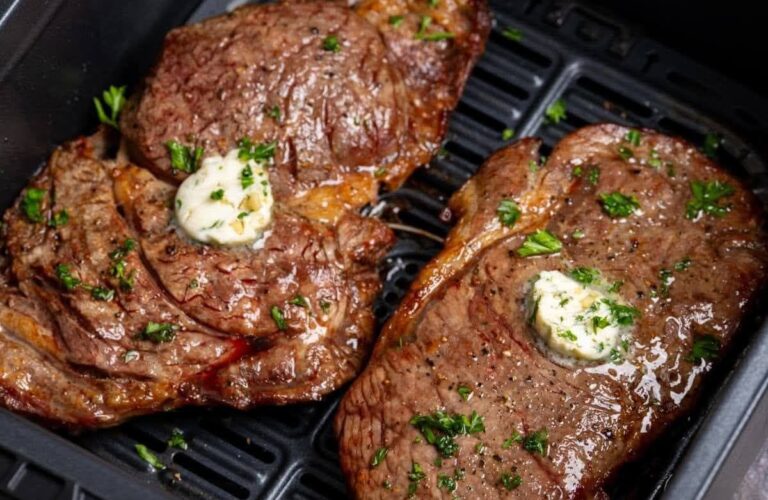
Juicy air fryer steak is one of the easiest and most delicious ways to enjoy a steakhouse-style meal at home. With a beautifully browned exterior, a tender center, rich buttery flavor, and a delicious blend of garlic and herbs, this recipe transforms a simple cut of beef into a satisfying meal without the need for a grill or complicated cooking equipment.
The air fryer makes cooking steak convenient because it circulates hot air around the meat, helping the outside develop a delicious crust while the inside stays tender and juicy when cooked to the desired temperature. A little olive oil, freshly ground black pepper, garlic, salt, butter, and herbs are all you need to create a flavorful steak that tastes special enough for a weekend dinner but is easy enough for an ordinary evening.
The secret to making excellent air fryer steak is choosing a suitable cut, drying the surface thoroughly, seasoning generously, preheating the air fryer, and allowing the meat to rest after cooking. These small steps make a noticeable difference in the final result.
Why You Will Love This Juicy Air Fryer Steak
This recipe is perfect for anyone who loves tender beef with a rich, savory flavor and minimal preparation. It does not require a complicated marinade, and most of the ingredients are simple pantry staples.
The air fryer provides convenient, relatively hands-off cooking. You do not need to stand over a hot frying pan or constantly turn the meat. Once the steak is seasoned and placed in the basket, you can monitor its temperature and prepare your favorite side dishes.
The garlic butter adds a wonderful finishing touch. As the butter melts over the warm steak, it combines with the juices released during resting and creates a rich, flavorful coating. Fresh rosemary or thyme adds a pleasant herbal aroma without overpowering the natural flavor of the beef.
Another advantage is that you can easily customize the seasoning. Keep it simple with salt and pepper, add smoked paprika for a deeper flavor, or use a little onion powder for extra savory character.
Preparation Time and Cooking Time
Preparation time: 10 minutes
Cooking time: approximately 8–15 minutes, depending on steak thickness, cut, air fryer model, and desired doneness
Resting time: 5–10 minutes
Total time: approximately 25–35 minutes
Servings: 2
Difficulty: Easy
Cooking method: Air frying
Ingredients for Juicy Air Fryer Steak
For the steak
- 2 beef steaks, approximately 8–12 ounces each
- 1 tablespoon olive oil
- 1 teaspoon kosher salt, adjusted to taste
- ½ teaspoon freshly ground black pepper
- 1 teaspoon garlic powder
- ½ teaspoon onion powder
- ½ teaspoon smoked paprika, optional
- ¼ teaspoon dried thyme, optional
Ribeye, New York strip, and sirloin are all suitable choices. Ribeye is particularly flavorful because its marbling contributes richness, while New York strip offers a satisfying balance of tenderness and beefy flavor. Sirloin is another excellent option when you want a flavorful steak with a leaner texture.
For the most reliable results, choose steaks that are reasonably uniform in thickness, ideally around 1–1½ inches thick. Very thin steaks cook quickly and are easier to overcook, while unusually thick steaks require more time and careful temperature monitoring.
For the garlic butter
- 2 tablespoons unsalted butter, softened
- 2 garlic cloves, finely minced
- 1 teaspoon freshly chopped parsley
- ½ teaspoon fresh rosemary, finely chopped
- ¼ teaspoon freshly ground black pepper
- A small pinch of salt, if needed
- A little lemon zest, optional
The garlic butter is optional, but it gives the steak a restaurant-style finish. If you prefer a simpler flavor, use plain butter with freshly ground black pepper and a small amount of chopped parsley.
Optional seasoning additions
You can customize the steak with a small pinch of cayenne pepper for gentle heat, ground coriander for a warm aroma, or a little dried oregano for a Mediterranean-inspired flavor.
Avoid adding too many seasonings at once. The goal is to complement the beef rather than cover up its natural taste.
Choosing the Best Steak for the Air Fryer
The cut of beef makes a difference in both flavor and texture.
Ribeye steak is an excellent choice for a rich, juicy result. Its marbling melts during cooking, giving the meat a buttery flavor. It is particularly good when finished with garlic butter.
New York strip steak has a firmer texture and a pronounced beefy flavor. It is a good option for people who enjoy a tender steak with a little more bite.
Sirloin steak offers a flavorful, versatile option. It is often leaner than ribeye, so careful temperature monitoring and resting are especially important.
Filet mignon is prized for its tenderness and mild flavor. Because it is often thick and relatively lean, use a thermometer rather than relying entirely on cooking time.
For this recipe, ribeye or New York strip is recommended if you want a classic steakhouse-style experience.
Step 1: Prepare the Steak Properly
Remove the steaks from their packaging and place them on a clean plate or cutting board.
Pat both sides thoroughly with paper towels. Removing surface moisture is important because a dry surface browns more effectively than a wet one. If the exterior is damp, the steak may take longer to develop a browned crust.
Inspect the steaks for any unusually thick pieces of external fat. You do not need to remove all the fat, especially from ribeye, because some fat contributes to flavor. If there is a very large, firm strip of fat around the edge, you can trim a little of it.
There is no need to wash raw beef. Washing it can spread raw-meat juices around the sink and nearby surfaces.
Brush the steaks lightly with olive oil. You only need a thin coating on both sides. Too much oil is unnecessary and may cause excess smoking in some air fryers.
Step 2: Season the Steak Generously
In a small bowl, combine the salt, black pepper, garlic powder, onion powder, smoked paprika, and dried thyme.
Sprinkle the seasoning mixture evenly over both sides of each steak. Gently press the seasonings onto the surface so they adhere.
Make sure the edges receive some seasoning as well. This is especially useful for thicker steaks, where the outer edge contributes to every bite.
For a deeper flavor, you can season the steaks about 30–45 minutes before cooking and keep them refrigerated if your preparation schedule requires it. Alternatively, season them shortly before cooking.
If you season in advance, do not leave raw steak sitting at room temperature for an extended period. Keep it refrigerated until you are ready to cook.
The seasoning should enhance the beef, not overwhelm it. Salt and pepper form the foundation, while garlic and onion powder add savory depth.
Step 3: Preheat the Air Fryer
Preheat the air fryer to 400°F, or approximately 200°C, for about 3–5 minutes if your appliance recommends preheating.
Preheating helps the steak begin cooking immediately and encourages more even browning.
Air fryers differ in their heating strength, basket design, and airflow. Your particular appliance may cook faster or slower than another model, so treat the suggested times as a starting point rather than a guarantee.
Make sure the basket is clean and dry. If your air fryer has a nonstick basket, avoid using metal utensils that could scratch the coating.
Step 4: Arrange the Steaks in the Basket
Place the seasoned steaks in the air fryer basket in a single layer.
Leave some space between the pieces so hot air can circulate around them. If the steaks touch or overlap substantially, they may cook less evenly.
For the best results, cook in batches if necessary rather than overcrowding the basket.
You generally do not need to line the entire basket with foil or parchment. Doing so can interfere with airflow, and loose parchment should never be placed in a preheating air fryer without food weighing it down.
Close the basket and begin cooking.
Step 5: Air Fry the Steak
Cook at 400°F, approximately 200°C, using the following ranges as a general guide for steaks around 1 inch thick.
- For a less-cooked center, begin checking at approximately 6–8 minutes.
- For a medium center, begin checking at approximately 8–10 minutes.
- For a more thoroughly cooked steak, expect approximately 10–14 minutes or longer, depending on thickness.
These are estimates, not guaranteed timings. A thick steak may need considerably longer, and a thin steak may finish sooner.
Turn the steaks halfway through cooking to encourage even browning on both sides.
If you are cooking steaks that are 1½ inches thick or more, start checking their internal temperature early and continue cooking in short intervals until they reach the desired doneness and food-safe temperature.
Avoid repeatedly opening the basket for long periods because the air fryer loses heat each time.
Step 6: Check the Internal Temperature
The most dependable way to determine doneness is to use an instant-read food thermometer.
Insert the thermometer into the thickest part of the steak, approaching from the side if necessary to place the tip in the center.
For food safety, the USDA recommends cooking whole cuts of beef to an internal temperature of at least 145°F (63°C), followed by a resting period of at least 3 minutes.
Here are common steak doneness temperatures for reference:
| Doneness | Approximate internal temperature |
|---|---|
| Rare | 120–125°F |
| Medium-rare | 130–135°F |
| Medium | 140–145°F |
| Medium-well | 150–155°F |
| Well-done | 160°F or higher |
These are common culinary doneness ranges, not all food-safety recommendations. For the USDA’s recommended safe minimum for whole cuts of beef, aim for at least 145°F followed by a rest of at least 3 minutes. Ground beef requires a higher minimum temperature of 160°F.
Remember that the steak’s temperature can rise a little during resting, but the amount varies. For food safety, do not rely on an assumed temperature increase to make an undercooked steak safe.
Step 7: Prepare the Garlic Herb Butter
While the steaks cook, prepare the finishing butter.
Place the softened butter in a small bowl. Add the minced garlic, chopped parsley, rosemary, black pepper, and optional lemon zest.
Stir until everything is evenly combined.
For a more intense garlic flavor, keep the garlic raw in the butter. For a milder, sweeter flavor, gently cook the garlic in a small pan with a little butter until fragrant, then allow it to cool before mixing it with the remaining ingredients.
Avoid browning the garlic too much because burnt garlic can taste bitter.
If the butter is too firm, leave it at room temperature for a few minutes. You want it soft enough to spread easily over the warm steak.
You can prepare this butter ahead of time and refrigerate it in a covered container. Let it soften slightly before serving.
Step 8: Rest the Steak Before Cutting
When the steaks have reached the appropriate internal temperature, remove them carefully from the air fryer.
Transfer them to a clean plate or cutting board. Add a small amount of garlic herb butter to each steak while it is hot.
Allow the meat to rest for approximately 5–10 minutes, depending on its thickness.
Resting gives the temperature time to settle and helps the juices redistribute through the meat. If you cut into the steak immediately, more juices may run onto the plate instead of remaining in the meat.
Do not wrap the steak tightly in foil for a long time, as trapped steam can soften the browned exterior.
A loose cover is fine if you need to keep the meat warm briefly.
Step 9: Finish and Serve
After resting, spoon any flavorful butter from the plate over the steak.
If you like, add a little freshly chopped parsley, a pinch of black pepper, or a few drops of lemon juice.
Slice the steak against the grain when serving it in strips. Cutting against the grain shortens the muscle fibers and can make each bite feel more tender.
For a steak served whole, simply place it on a warm plate with the garlic butter on top.
Serve immediately while the meat is warm and the butter is soft.
The Secret to Extra-Juicy Air Fryer Steak
The most important secret is to avoid overcooking the meat. Steak can lose moisture as its internal temperature rises, particularly when it is relatively lean.
Start checking the temperature earlier than you think you need to. You can always return the steak to the air fryer for another minute or two, but you cannot reverse overcooking.
A second important factor is thickness. A steak that is around 1–1½ inches thick is generally easier to cook evenly than a very thin piece.
A third factor is resting. A short resting period allows the steak to settle before you cut it.
Finally, do not forget the seasoning. Salt enhances the natural flavor of beef, while black pepper, garlic, and herbs make the finished dish taste more complex without requiring an elaborate marinade.
How to Make the Steak Taste Like a Restaurant Steak
A steakhouse-style result begins with a good cut of beef and proper preparation.
Choose steaks with a little marbling, particularly if you enjoy a rich flavor. Dry the exterior well and apply a balanced seasoning mixture.
Preheat the air fryer before cooking and avoid overcrowding the basket.
Once the steak is cooked to the appropriate temperature, finish it with garlic herb butter. The butter adds richness, while the herbs contribute freshness.
For a more luxurious presentation, serve the steak with roasted potatoes, steamed green beans, sautéed mushrooms, or a fresh salad.
If you prefer a stronger savory flavor, add a small amount of Worcestershire sauce to the butter mixture. Use it sparingly so the sauce does not overpower the steak.
Keep in mind that an air fryer may not create exactly the same crust as a very hot cast-iron skillet or grill. It can still produce a flavorful, browned steak with much less hands-on work.
Delicious Side Dishes to Serve With Air Fryer Steak
Garlic roasted potatoes
Cut potatoes into small, evenly sized pieces. Toss them with olive oil, garlic powder, black pepper, and a little salt. Roast or air fry them until golden and tender.
If you want both the steak and potatoes to be ready at the same time, cook the potatoes first because they may require longer than the steak. Keep them warm while you cook the meat.
Steamed green beans
Steam fresh green beans until tender but still slightly crisp. Toss them with a little butter, black pepper, and lemon juice.
Their fresh flavor balances the richness of the steak.
Sautéed mushrooms
Slice mushrooms and cook them in a skillet with a small amount of olive oil or butter. Add minced garlic, black pepper, and chopped parsley.
Cook until the mushrooms soften and release their moisture, then allow the liquid to reduce. Spoon them beside the steak or serve them on top.
Creamy mashed potatoes
Boil peeled potato chunks until tender. Drain them well and mash with warm milk, butter, and seasoning.
For a lighter texture, add the milk gradually instead of pouring it all in at once.
Fresh garden salad
Combine lettuce, cucumber, tomatoes, and thinly sliced onions. Dress with olive oil, lemon juice, black pepper, and a pinch of salt.
A fresh salad gives the meal a refreshing contrast to the warm, buttery beef.
Corn on the cob
Cook corn until tender and finish with a small amount of butter and black pepper. A little paprika or chopped parsley also works well.
Flavor Variations
Garlic Parmesan Steak
Prepare the steak using the main recipe. During the resting period, sprinkle a small amount of finely grated Parmesan over the hot meat and finish with garlic butter.
Parmesan contributes a salty, savory flavor, so taste before adding extra salt.
Smoky Paprika Steak
Increase the smoked paprika slightly and add a small pinch of ground cumin.
This variation gives the steak a warm, smoky flavor that works especially well with roasted potatoes and grilled vegetables.
Peppercorn Steak
Use freshly cracked black pepper instead of finely ground pepper. Press it gently onto the surface of the meat before cooking.
The coarser pepper creates a stronger peppery flavor. Avoid using so much that it overwhelms the beef.
Lemon Herb Steak
Prepare the garlic butter with parsley, thyme, lemon zest, and a small squeeze of lemon juice.
This combination creates a fresh, aromatic finish that works well with sirloin and other leaner cuts.
Spicy Steak
Add a small pinch of cayenne pepper or chili powder to the seasoning mixture.
You can also serve the steak with a spicy yogurt sauce made by combining plain yogurt, lemon juice, garlic, and a little chili powder.
Onion Butter Steak
Mix softened butter with finely minced cooked onion, black pepper, and parsley.
The onion adds sweetness and savory depth. Make sure cooked onion is cool enough before combining it with softened butter.
Common Mistakes to Avoid
Using wet steak. Excess surface moisture can interfere with browning. Pat the meat dry before seasoning.
Skipping preheating when your air fryer requires it. Starting with a hot cooking chamber helps the steak cook more consistently.
Overcrowding the basket. Crowding reduces airflow and can lead to uneven cooking. Leave space around the steaks.
Relying only on the clock. Cooking times vary between appliances, steak thicknesses, and cuts. Check the internal temperature with a thermometer.
Cooking for too long. Overcooking can make steak dry and firm. Monitor the temperature carefully.
Cutting the steak immediately. Rest the steak before slicing to allow the juices and temperature to settle.
Adding too much oil. A thin coating is enough. Excess oil can drip into the bottom of the air fryer and may create smoke.
Using too much garlic powder or paprika. Strong seasoning should complement the beef, not cover its flavor.
Forgetting the edges. Seasoning the sides helps create a more balanced flavor, especially with thicker cuts.
How to Store Leftover Steak
Allow leftover steak to cool slightly, then place it in a clean, airtight container and refrigerate it within 2 hours of cooking.
For best quality, use refrigerated leftovers within 3–4 days.
Keep the garlic butter in a separate covered container if you have extra.
To reheat steak, use a relatively low air fryer temperature, such as 300–325°F (150–165°C), and heat it in short intervals until it is warmed through. The exact time depends on the thickness of the slices and your appliance.
Avoid reheating it for too long because the meat can become dry.
You can also slice leftover steak thinly and use it in sandwiches, wraps, salads, quesadillas, or rice bowls.
For food safety, reheat leftovers to 165°F (74°C). If the steak has been left at room temperature for more than 2 hours, discard it rather than refrigerating it for later.
Frequently Asked Questions
Can I cook frozen steak in the air fryer?
Yes, but frozen steak requires a different cooking approach and usually takes longer. The outside may cook before the center reaches the desired temperature.
For the most consistent results, thaw the steak safely in the refrigerator before cooking. If you cook it from frozen, follow reliable instructions for your particular air fryer and use a food thermometer to verify the internal temperature.
Should I flip steak in the air fryer?
Yes, flipping it approximately halfway through cooking can help both sides cook and brown more evenly.
Some air fryers circulate heat particularly well, but turning the steak is a useful general practice.
Do I need to marinate steak first?
No. A good-quality steak can be delicious with olive oil, salt, pepper, and a few simple seasonings.
A marinade is optional, especially if you want to add flavors such as soy sauce, garlic, or herbs. Avoid leaving the steak in an acidic marinade for too long, as it can affect the surface texture.
Why is my air fryer steak tough?
Several factors can contribute to toughness, including the cut of beef, overcooking, insufficient resting, and slicing with the grain.
Choose a suitable steak, monitor the temperature, rest it after cooking, and slice against the grain when appropriate.
Can I use butter instead of olive oil?
You can use a small amount of butter for flavor, but butter can brown or burn more easily than olive oil because it contains milk solids. Using olive oil before cooking and adding garlic butter after cooking is a convenient way to achieve a rich flavor.
Can I cook two steaks at once?
Yes, provided they fit in a single layer with enough space for hot air to circulate.
If the basket is crowded, cook them in batches. The cooking time may also vary depending on their thickness.
Is ribeye or sirloin better for this recipe?
Ribeye is a good choice for a rich, juicy result because of its marbling. Sirloin is a flavorful alternative that is generally leaner.
Both can work well when cooked carefully to the desired temperature.
How can I tell if the steak is done without cutting it?
A thermometer is the most reliable method. Pressing the meat with a finger or comparing firmness is less dependable, particularly for beginners.
Avoid cutting into the steak repeatedly just to inspect the center because doing so releases juices and still does not provide a reliable safety check.
Final Serving Suggestions
For a complete meal, serve one juicy air fryer steak with roasted potatoes, green beans, and a spoonful of homemade garlic herb butter.
For a simpler dinner, pair the steak with a fresh salad and toasted bread. If you want a more filling meal, add mashed potatoes, mushrooms, and corn on the cob.
The best part of this recipe is its flexibility. You can keep the seasoning simple, experiment with different herbs, or prepare a richer garlic butter depending on your taste.
With a suitable cut of beef, careful temperature monitoring, and a short resting period, air fryer steak can become a dependable favorite for quick family dinners and special meals alike.
The most important tip: Pat the steak dry, avoid overcrowding the air fryer, use a thermometer to check doneness, follow the recommended safe cooking temperature, and let the meat rest before serving. These simple steps will help you make a flavorful, tender, and satisfying steak every time.