admin1
Oatmeal Apple Carrot Cake: A Very Detailed, Moist, and Healthy Homemade Recipe
Oatmeal apple carrot cake is a delicious homemade cake that combines the natural sweetness of apples, the freshness of carrots, the wholesome texture of oats, and the comforting flavors of cinnamon and vanilla. It is a wonderful choice for breakfast, an afternoon snack, a lunchbox treat, or a simple homemade dessert. The cake has a soft, moist center, a lightly golden exterior, and a naturally sweet flavor that makes every slice enjoyable.
This recipe is designed to create a tender cake without relying entirely on refined flour. Rolled oats provide a hearty base, grated apples contribute moisture, and freshly grated carrots add sweetness, color, and a delicate texture. Cinnamon brings warmth, vanilla adds fragrance, and a small amount of baking powder helps the cake rise into a soft and satisfying treat.
The best part of this oatmeal apple carrot cake is that it uses familiar ingredients that are easy to find in most kitchens. You do not need complicated baking equipment, special techniques, or expensive ingredients. With careful preparation, accurate measurements, and enough time for the cake to cool, you can make a beautiful homemade cake with a delicious balance of apple, carrot, and oatmeal flavors.
Recipe Overview
Preparation time: 25 minutes
Cooking time: 35–50 minutes
Cooling time: 30–45 minutes
Total time: Approximately 1 hour and 40 minutes
Servings: 10–12 slices
Recipe type: Homemade oatmeal cake
Texture: Moist, soft, tender, and slightly hearty
Flavor: Sweet apple, fresh carrot, cinnamon, and vanilla
Difficulty level: Easy to moderate
Recommended baking temperature: 175°C in a conventional oven
Recommended pan: An 8-inch round cake pan or an approximately 8-inch square baking pan
Ingredients for the Oatmeal Apple Carrot Cake
Dry ingredients
Rolled oats — 2 cups
Use old-fashioned rolled oats for the best texture. They provide the cake with a hearty structure and a pleasant, slightly chewy consistency. You can blend the oats into a coarse flour if you prefer a smoother cake, or use a combination of whole rolled oats and oat flour.
Oat flour — 1 cup
Oat flour helps create a more uniform cake texture. You can purchase oat flour or make your own by blending rolled oats in a food processor or blender until finely ground. Measure the flour after grinding.
Baking powder — 2 teaspoons
Baking powder helps the cake rise and keeps the center from becoming too dense. Make sure it is fresh for the best results.
Baking soda — ½ teaspoon
Baking soda supports browning and works with the natural acidity of the apples and yogurt, if yogurt is used.
Ground cinnamon — 2 teaspoons
Cinnamon is one of the most important flavorings in this recipe. It complements the sweetness of apples and carrots and gives the cake a warm, bakery-style aroma.
Ground nutmeg — ¼ teaspoon
Nutmeg adds a gentle, warm flavor. Use it sparingly so that it does not overpower the apple and carrot.
Salt — ¼ teaspoon
A little salt balances the sweetness and enhances the other flavors.
Ground ginger — ¼ teaspoon, optional
Ginger adds a mild warmth that works particularly well with apples and carrots.
Wet ingredients
Eggs — 2 large
Eggs help bind the ingredients together and provide structure. They also help the cake rise and maintain a tender texture.
Plain yogurt — ½ cup
Plain yogurt adds moisture and tenderness. Unsweetened Greek yogurt or regular plain yogurt can both work. If using thick Greek yogurt, the batter may need a little extra milk.
Milk — ¼ cup
Milk helps soften the oats and brings the batter to the correct consistency. Dairy milk or an unsweetened plant-based alternative can be used.
Neutral oil — ⅓ cup
A neutral oil, such as sunflower or canola oil, helps keep the cake moist even after refrigeration. You can use melted butter instead, although the texture may be slightly different.
Honey or maple syrup — ⅓ to ½ cup
Use the amount that suits your preferred sweetness. A third of a cup gives a mildly sweet cake, while half a cup creates a sweeter dessert-style result. You may also use ordinary granulated sugar.
Vanilla extract — 2 teaspoons
Vanilla adds a pleasant fragrance and makes the apple, carrot, and cinnamon flavors taste more rounded.
Finely grated apple — 1 cup, lightly packed
Choose a sweet apple, such as Gala, Fuji, or Golden Delicious, or use a slightly tart apple for a more balanced flavor. Peel the apple if you prefer a smoother cake. Grate it finely and avoid adding excessive free liquid.
Finely grated carrot — 1 cup, lightly packed
Fresh carrots provide sweetness, color, and moisture. Use the fine side of a grater so that the carrot softens properly during baking.
Chopped walnuts — ½ cup, optional
Walnuts provide a pleasant crunch and pair beautifully with the cinnamon and apple. Pecans are another suitable option.
Raisins — ⅓ cup, optional
Raisins add little pockets of sweetness throughout the cake. If you prefer a less sweet cake, leave them out.
Chopped dates — ¼ cup, optional
Dates provide a deeper caramel-like sweetness and work especially well in a rustic oatmeal cake.
Optional topping
Rolled oats — 2 tablespoons
These create a simple rustic topping.
Finely chopped walnuts — 2 tablespoons
Walnuts add texture and make the top of the cake look attractive.
Ground cinnamon — a small pinch
A little cinnamon sprinkled over the topping enhances the aroma.
Apple slices — a few thin slices
Thin apple slices can be arranged on top before baking for a decorative finish. Keep the slices thin so that they soften during baking.
Choosing the Best Apples and Carrots
The quality of the fruit and vegetables has a noticeable effect on the finished cake.
For apples, choose fruit that is fresh, firm, and naturally flavorful. Sweet apples create a gentle dessert-like flavor, while tart apples add a pleasant contrast. Avoid using apples that are excessively watery or have a fermented smell.
For carrots, choose firm carrots with a fresh appearance. Very large carrots can sometimes have a woody center, so medium-sized carrots are often a convenient choice. Wash them thoroughly, peel them if desired, and grate them just before preparing the batter.
Both ingredients should be grated rather than chopped into large pieces. Large chunks may remain firm after baking and can create uneven pockets of moisture. Fine grating distributes the apple and carrot throughout the cake and helps produce a softer crumb.
If your grated apple releases a large amount of juice, lightly drain the excess liquid. Do not squeeze it completely dry, because some of the apple’s moisture is essential for a moist cake.
Equipment Needed
You will need a mixing bowl, a second bowl for dry ingredients, a whisk, a spatula, a grater, measuring cups and spoons, a cake pan, baking paper, and an oven.
A food processor or blender is useful if you want to make your own oat flour, but it is not essential if you already have oat flour.
A kitchen scale is helpful for accurate measurements, particularly when measuring oats and flour. Measuring cups can vary in size, so try to use the same set for all ingredients.
A toothpick or thin wooden skewer is useful for checking whether the cake has finished baking.
Step 1: Prepare the Oven and Cake Pan
Begin by preheating your oven to 175°C. Allow it to heat fully before placing the cake inside. A properly preheated oven helps the cake begin rising as soon as the batter starts cooking.
Take an 8-inch round cake pan or an approximately 8-inch square pan. Lightly grease the base and sides with oil or butter.
Line the base with baking paper. If you do not have baking paper, grease the pan carefully and dust it lightly with oat flour.
Make sure the pan is suitable for oven use. A pan that is too small may cause the batter to rise excessively and bake unevenly, while a pan that is too large can produce a thinner cake that finishes cooking sooner.
Place the prepared pan near your mixing area so that the batter can be transferred immediately after mixing.
Step 2: Prepare the Oats
Measure 2 cups of rolled oats.
For a cake with a rustic texture, leave the oats whole. This creates a hearty crumb with a noticeable oatmeal character.
For a softer cake, place the oats in a blender and pulse until they resemble coarse flour. You do not need to grind every oat into a perfectly fine powder if you want a little texture.
Measure 1 cup of oat flour separately. If you are making all the oat flour yourself, grind enough additional oats to obtain the required measured quantity after blending.
For the best texture, allow the whole oats to soak in the milk for approximately 10 minutes before adding them to the batter. This helps soften the oats and reduces the chance of a dry or overly chewy cake.
If you prefer to use the entire oat quantity as flour, you can skip the soaking stage, although you may need to adjust the milk slightly.
Step 3: Grate the Apple
Wash the apple under running water and dry it with a clean towel.
Peel it if you prefer a smoother texture. Leaving the peel on is also acceptable and adds a little more texture.
Cut the apple into manageable pieces and remove the core and seeds.
Use the fine side of a grater to grate the apple into a bowl. Measure approximately 1 cup of lightly packed grated apple.
Check the bottom of the bowl for excess juice. If the apple is especially juicy, pour off a small amount of the liquid, but do not remove all of it.
Add the grated apple to the wet ingredients when instructed. Do not leave the grated apple exposed for too long, because it may darken slightly when exposed to air. This color change is normal and does not usually affect the taste.
Step 4: Grate the Carrots
Wash the carrots thoroughly and peel them if desired.
Trim the ends and grate the carrots finely. Measure 1 cup of lightly packed grated carrot.
Avoid using large carrot shreds because they may remain firm in the finished cake. Fine shreds soften more easily and distribute their sweetness evenly.
If the carrots are extremely wet, gently blot them with a paper towel. Do not dry them completely, because their moisture contributes to the cake’s soft texture.
Set the grated carrots aside while you prepare the batter.
Step 5: Mix the Dry Ingredients
Take a large mixing bowl and add the oat flour, rolled oats, baking powder, baking soda, cinnamon, nutmeg, salt, and optional ground ginger.
Whisk the ingredients together for approximately 30–45 seconds.
This step is important because baking powder and baking soda must be distributed evenly. If they remain concentrated in one area, the cake may rise unevenly or develop an unpleasant taste in certain spots.
Break up any lumps in the oat flour with the back of a spoon.
If you are using walnuts or raisins, you can stir them into the dry ingredients at this stage. Lightly coating the additions with flour may help distribute them throughout the batter.
Set the bowl aside while you prepare the wet ingredients.
Step 6: Combine the Wet Ingredients
In a separate large bowl, crack the two eggs.
Whisk until the yolks and whites are fully combined. There is no need to beat them until fluffy, but they should look uniform.
Add the yogurt, milk, oil, honey or maple syrup, and vanilla extract.
Whisk everything together until the mixture is smooth.
The oil may take a little time to combine completely with the other ingredients. Continue whisking until there are no obvious streaks of oil.
If you are using melted butter instead of oil, allow it to cool slightly before adding it. Very hot butter could partially cook the eggs.
Taste the mixture only if it is safe to do so without consuming raw egg; otherwise, adjust sweetness based on your measurements. Remember that the apple, carrot, and optional dried fruit will also contribute sweetness.
Step 7: Add the Apple and Carrot
Add the grated apple and grated carrot to the wet mixture.
Use a spatula or spoon to fold them through until they are evenly distributed.
The mixture will become thicker and more textured. This is normal.
Make sure there are no large clumps of grated carrot stuck together. Break them apart gently with the spatula.
The apple provides moisture, while the carrot adds structure and a mild sweetness. Together, they help create the cake’s characteristic soft center.
If you soaked the oats in milk, add the soaked oats now and mix them in thoroughly.
Step 8: Combine the Wet and Dry Mixtures
Add the dry ingredients to the wet mixture in two or three additions.
Use a spatula to fold the mixture together. Start around the edges of the bowl and move toward the center, turning the batter gently until no large pockets of dry flour remain.
Avoid beating the batter aggressively. Oat-based cakes can become dense if they are mixed excessively, and vigorous mixing is unnecessary.
The finished batter should be thick but spoonable. It should not resemble a dry dough, and it should not be so thin that it pours like water.
If the batter looks excessively dry, add milk one tablespoon at a time. If it seems unusually thin, allow it to stand for 5–10 minutes so the oats can absorb some of the liquid before deciding whether it needs adjustment.
The precise consistency depends on the moisture in the apples and carrots, the type of yogurt, and how finely the oats have been ground.
Step 9: Rest the Batter
Allow the batter to rest for approximately 10 minutes.
This short resting period gives the oats time to absorb moisture and helps the ingredients combine more evenly.
During this time, the batter may become slightly thicker. That is expected.
After resting, stir the batter gently once or twice. Do not add extra flour automatically simply because the batter has thickened.
If you notice that the batter has become too stiff to spread, add a small splash of milk and fold it in gently.
This stage is particularly useful when using whole rolled oats because they need time to soften before baking.
Step 10: Transfer the Batter to the Pan
Spoon the batter into the prepared cake pan.
Use a spatula to spread it evenly toward the edges. Smooth the top gently without pressing down too firmly.
Tap the pan lightly against the countertop once or twice to release any unusually large air pockets.
If you are using the optional topping, scatter the extra oats and chopped walnuts over the surface. Add a light pinch of cinnamon.
You can arrange a few thin apple slices on top if desired. Keep them in a single layer and avoid covering the entire cake with thick pieces of fruit, which can interfere with even baking.
The batter is now ready for the oven.
Step 11: Bake the Cake
Place the pan on the middle rack of the preheated oven.
Bake at 175°C for approximately 35–50 minutes. The exact time depends on the pan, the oven, the moisture content of the fruit, and whether you used whole oats or oat flour.
Avoid opening the oven during the first 25 minutes unless there is a clear reason to do so. Opening the door too early can lower the temperature and interfere with the cake’s rise.
After approximately 35 minutes, begin checking for doneness.
Look for these signs:
The edges should appear set and lightly golden.
The center should look firm rather than wet or liquid.
The top should spring back slightly when touched gently.
A toothpick inserted into the center should come out without wet batter. A few moist crumbs are acceptable, but raw batter indicates that the cake needs more time.
If the top becomes golden before the center is cooked, loosely cover it with a piece of foil and continue baking. Take care not to let the foil touch any heating element.
If the center is still wet after 50 minutes, continue baking in short intervals of approximately 5 minutes, checking each time.
Do not rely on color alone. Because this cake contains oats, apple, and carrot, the interior may remain moist even when properly baked.
Step 12: Cool the Cake Properly
Remove the pan from the oven once the cake is fully baked.
Place it on a heat-safe rack or another stable surface and allow it to rest in the pan for approximately 15–20 minutes.
This is an important step. The cake is delicate when hot, and cutting it immediately may cause the center to crumble or appear undercooked.
After the initial cooling period, carefully loosen the edges with a thin spatula or knife.
Turn the cake out onto a cooling rack if the pan allows it, then remove the baking paper.
Let the cake cool for another 20–30 minutes, or until it reaches room temperature.
The texture will become more stable as it cools. The oats will continue to settle, and the apple and carrot moisture will distribute more evenly throughout the crumb.
For particularly neat slices, wait until the cake is completely cool before cutting it.
Step 13: Slice and Serve
Place the cooled cake on a clean cutting board.
Use a sharp knife to cut it into 10–12 slices, depending on the size you prefer.
Wipe the knife between cuts if you want clean edges.
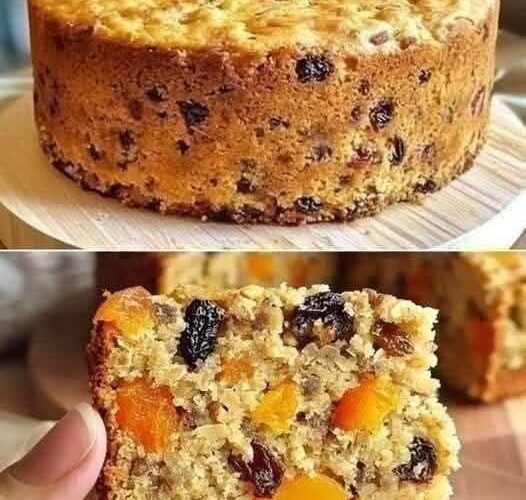
The finished cake should have a warm golden-brown surface, a moist interior, visible flecks of carrot, and small pieces of apple throughout. The oats provide a hearty texture, while the cinnamon and vanilla create a pleasant aroma.
Serve the cake plain for a simple snack or pair it with plain yogurt for a more substantial breakfast.
You can also serve a slice with fresh apple pieces, a small spoonful of yogurt, or a light drizzle of honey if you want a sweeter dessert.
How to Make the Cake Naturally Sweeter
The apple and carrot already contribute natural sweetness, so this cake does not need an excessive amount of added sweetener.
Choose a ripe, naturally sweet apple and grate the carrot finely. Raisins or chopped dates can provide extra sweetness without changing the basic recipe.
If you use honey or maple syrup, start with one-third of a cup. If you prefer a more dessert-like cake, increase it to half a cup.
Remember that reducing liquid sweeteners changes the moisture balance slightly. If you make a substantial reduction, check the batter before baking and add a little milk if it becomes too thick.
Do not assume that a recipe is sugar-free simply because it contains honey or maple syrup. Both are sources of sugar, even though they are often used in less-refined homemade recipes.
How to Make the Cake Without Refined Flour
This recipe uses oat flour rather than conventional wheat flour, so it can be made without refined wheat flour.
If you grind rolled oats at home, use a clean blender and process the oats until they reach a flour-like consistency.
For the most consistent results, measure the oat flour after grinding rather than relying only on the original volume of whole oats.
Oat flour behaves differently from wheat flour because it does not form the same gluten network. As a result, the cake may be slightly more delicate and moist.
Allowing it to cool fully is particularly important. Cutting it while hot may cause it to break apart even when it is completely baked.
If you need the cake to be gluten-free, choose oats that are specifically labeled gluten-free, because ordinary oats can be contaminated with gluten-containing grains during processing.
How to Make a Dairy-Free Version
You can make this cake without dairy products by replacing the yogurt with an unsweetened plant-based yogurt and replacing the milk with oat milk, soy milk, or almond milk.
Use a neutral vegetable oil instead of butter.
Choose unsweetened alternatives if you want to control the sweetness of the cake. Some plant-based yogurts contain added sugar, which may make the finished cake sweeter than expected.
The texture can vary slightly depending on the yogurt alternative. A thick plant-based yogurt generally gives a more substantial batter than a very thin one.
Keep the baking temperature the same, but begin checking the cake near the earlier end of the baking window because different ingredients may affect how quickly it sets.
How to Make an Egg-Free Version
For an egg-free version, replace the two eggs with two flax eggs.
To make them, combine 2 tablespoons of ground flaxseed with 6 tablespoons of water. Stir well and let the mixture stand for approximately 10–15 minutes until it becomes thick and gel-like.
Use this mixture in place of the eggs when combining the wet ingredients.
The resulting cake may be slightly denser and more delicate, but the oats, apple, carrot, and yogurt help provide moisture and structure.
Because egg-free batters can behave differently, allow the cake to cool completely before slicing.
How to Make a More Rustic Oatmeal Cake
If you enjoy a hearty texture, keep the rolled oats whole and use the oat flour only for part of the mixture.
You can also add chopped walnuts, raisins, and a small amount of extra cinnamon.
Avoid adding too many dry ingredients at once, because the cake needs enough moisture to soften the oats and cook the grated vegetables properly.
A rustic oatmeal cake is not expected to have exactly the same texture as a light sponge cake. Its crumb will be more substantial, and the oats will provide a pleasant chew.
For a softer result, grind more of the oats into flour and grate the apple and carrot very finely.
How to Make a Softer, More Tender Cake
For a softer texture, use finely ground oat flour, finely grated carrot, and a sweet apple that releases a moderate amount of moisture.
Use the yogurt listed in the recipe and avoid overmixing once the wet and dry ingredients have been combined.
Do not pack the oat flour too tightly into measuring cups. Excess flour can make the batter dry and heavy.
Check the cake as it approaches the end of the baking time. Leaving it in the oven for too long can dry out the edges, especially if the pan is dark or the oven runs hot.
Finally, allow the cake to cool naturally. Cutting it too early can make the center appear gummy because the moisture has not yet settled.
Optional Creamy Yogurt Topping
If you would like a simple topping, combine the following ingredients in a small bowl.
Plain Greek yogurt — ½ cup
Vanilla extract — ¼ teaspoon
Honey or maple syrup — 1–2 teaspoons, optional
Ground cinnamon — a small pinch, optional
Stir until smooth and creamy.
Spread a thin layer over each slice just before serving. Alternatively, serve the yogurt on the side.
Do not spread the yogurt topping over a warm cake, because it may become runny. Wait until the cake is completely cool.
If you plan to store the cake with yogurt topping already applied, keep it refrigerated and consume it promptly.
Optional Apple Cinnamon Topping
For a more dessert-like presentation, cook one small diced apple in a saucepan with one teaspoon of butter or oil, a pinch of cinnamon, and one or two teaspoons of water.
Cook over medium-low heat for approximately 5–8 minutes, stirring occasionally, until the apple softens.
Allow the mixture to cool before spooning it over the cake.
If you prefer not to add extra sweetener, choose a sweet apple and let its natural flavor provide the sweetness.
This topping adds a soft fruit layer and reinforces the apple flavor without requiring a complicated frosting.
Optional Walnut and Cinnamon Topping
Combine two tablespoons of chopped walnuts with one tablespoon of rolled oats and a small pinch of cinnamon.
Sprinkle the mixture over the batter before baking.
The nuts and oats become lightly toasted in the oven, creating a pleasant contrast with the moist cake underneath.
Keep the topping relatively thin so that it does not prevent the center from baking properly.
If you prefer a nut-free cake, simply use extra rolled oats instead of walnuts.
Troubleshooting: Why Is My Cake Too Wet?
A wet or gummy center can have several causes.
The cake may need more baking time. The apples may have released too much juice, or the batter may contain more liquid than the oats can absorb.
The cake may also have been cut before it had enough time to cool.
To prevent this, measure the ingredients carefully, drain excessive apple juice, and check the center with a toothpick before removing the cake from the oven.
If the cake has already cooled and you discover that the center is genuinely underbaked, return individual slices to a suitable oven-safe dish and bake them until thoroughly heated and cooked through. Do not eat raw batter or an undercooked center containing eggs.
Troubleshooting: Why Is My Cake Too Dry?
A dry cake often results from too much oat flour, too little moisture, or excessive baking.
Make sure you measure the flour correctly. If using measuring cups, lightly spoon the flour into the cup and level it rather than pressing it down firmly.
Check that the apple and carrot quantities are correct.
If your oat flour is especially absorbent, you may need an extra tablespoon or two of milk to achieve a thick but spoonable batter.
Finally, check the cake before the maximum baking time. Different ovens can vary considerably, so the suggested time should be treated as a guide rather than an absolute rule.
Troubleshooting: Why Did My Cake Fall in the Middle?
A cake may sink in the middle if it is removed from the oven before the center has set.
Too much baking powder or baking soda can also cause the batter to rise quickly and then collapse. Opening the oven door too early can contribute to uneven baking.
Measure the raising agents carefully and make sure the oven is fully preheated.
Avoid moving the cake unnecessarily during baking. Before removing it from the oven, check the center rather than relying on the appearance of the edges alone.
Troubleshooting: Why Is the Cake Crumbly?
Oat-based cakes can be more delicate than wheat-flour cakes because oat flour behaves differently from conventional wheat flour.
The cake may crumble if it contains too little binding ingredient, too much dry flour, or insufficient moisture. Cutting it while warm can also cause it to break apart.
Use the two eggs or the suggested egg substitute, measure the ingredients carefully, and allow the cake to cool completely.
For particularly neat slices, refrigerate the cooled cake for approximately 30–60 minutes before cutting it. This helps firm up the crumb without changing the basic recipe.
Storage Instructions
Once the cake has cooled completely, place it in an airtight container.
Because this cake contains moist fruit and vegetables, refrigeration is a sensible choice for longer storage.
In the refrigerator, it will generally keep well for approximately 4–5 days when handled properly and stored at 4°C or below.
For the best texture, allow an individual slice to stand at room temperature briefly before serving, or warm it gently in a microwave for a few seconds. Make sure it is not left out for extended periods.
Do not store the cake while it is still warm, because trapped steam can create condensation and make the surface damp.
If you add yogurt topping, keep the cake refrigerated.
Discard the cake if it develops an unusual smell, visible mold, or other signs of spoilage.
Freezing Instructions
This cake freezes well when stored properly.
First, allow it to cool completely. Cut it into individual portions so that you can thaw only the amount you need.
Wrap each slice in baking paper or suitable food wrap, then place the wrapped slices in a freezer-safe container or bag.
Label the container with the date.
For best quality, use the frozen cake within approximately 2–3 months.
To thaw, place a slice in the refrigerator for several hours or overnight. You can also thaw it at room temperature for a short period and then warm it gently if desired.
Avoid freezing the cake with a fresh yogurt topping. Add the topping after thawing for a better texture.
Serving Ideas for Breakfast
Oatmeal apple carrot cake can be served as part of a balanced breakfast.
Pair a slice with plain yogurt and fresh fruit. You could also serve it alongside a glass of milk or a suitable fortified plant-based drink.
If you want a more filling breakfast, add a source of protein such as yogurt, milk, or eggs on the side.
Although oats, apples, and carrots contribute useful nutrients and fiber, this cake is still a baked food containing energy from oats, oil, and any added sweetener. Its nutritional value depends on the exact ingredients and serving size.
Serving Ideas for Dessert
For dessert, serve a slice with warm cinnamon apples, plain yogurt, or a small spoonful of nut butter.
A light dusting of cinnamon can make the cake look attractive without adding much sweetness.
You can also serve it slightly warm with a spoonful of yogurt on the side.
If you prefer a more traditional dessert, a small amount of cream cheese frosting can work, although it will make the recipe richer and sweeter.
For a simple everyday version, the cake is delicious without any topping at all.
Estimated Nutritional Information
The following values are only approximate. They assume the main recipe is divided into 12 slices and exclude optional walnuts, raisins, dates, and toppings. The exact nutritional values depend on the products used, the size of the apple and carrot, and the amount of sweetener.
| Nutrient | Approximate amount per slice |
|---|---|
| Calories | 190–230 |
| Protein | 4–6 g |
| Carbohydrates | 27–34 g |
| Fat | 7–10 g |
| Fiber | 3–5 g |
| Added or liquid sweetener sugars | Varies by ingredient and amount |
The cake provides carbohydrates from oats and fruit, while the oats and carrots contribute dietary fiber. Eggs and yogurt provide some protein. The oil contributes fat and helps maintain a moist texture.
These figures should not be treated as laboratory-tested nutritional values. For a more accurate estimate, calculate the ingredients using the nutrition labels of the specific products you use.
Frequently Asked Questions
Can I make this cake without a blender?
Yes. You can use ready-made oat flour and whole rolled oats. If you do not have oat flour, you can use finely ground oats prepared with a suitable grinder, or use a different flour with an appropriate adjustment to the recipe.
Can I use instant oats instead of rolled oats?
Yes, instant oats can be used, although they absorb moisture differently and may create a softer, less textured cake. Check the batter consistency before baking.
Can I use only rolled oats?
You can grind all the oats into flour if you have a blender or grinder. However, using only whole rolled oats may produce a denser cake, so allowing them to soak first is helpful.
Can I replace the apple with banana?
Banana can be used, but it changes the flavor and moisture balance. Mashed banana is thicker than grated apple, so the batter may need a small amount of additional milk. The cake will have a more noticeable banana flavor.
Can I replace the carrot with zucchini?
Yes, but zucchini contains a considerable amount of water. Grate it finely and gently squeeze out excess liquid before measuring. The resulting cake will taste milder and less sweet.
Can I make the cake without nuts?
Yes. Simply leave out the walnuts or pecans. The recipe will still work well.
Can I make it without raisins?
Yes. Raisins are optional and are not required for the structure of the cake.
Can I use brown sugar instead of honey?
Yes. Use approximately ⅓–½ cup of brown sugar, according to your preferred sweetness. Since brown sugar is not a liquid, the batter may need a small adjustment to the milk.
Can I bake this recipe in a loaf pan?
Yes. A standard loaf pan can be used, but the cake may require a longer baking time because the batter will be deeper. Begin checking the center after approximately 40–45 minutes and continue until fully baked.
Can I make muffins from this batter?
Yes. Divide the batter among lined muffin cups, filling each approximately two-thirds to three-quarters full. Bake at 175°C and begin checking after 18–22 minutes. The exact baking time depends on the size of the muffins.
Why should the cake cool before slicing?
The oats and fruit retain moisture after baking. Cooling allows the structure to become firmer and makes the slices easier to handle. A warm slice may appear softer and crumble more easily.
Final Recipe Summary
To make this oatmeal apple carrot cake, combine 2 cups of rolled oats, 1 cup of oat flour, baking powder, baking soda, cinnamon, nutmeg, and salt. In a separate bowl, whisk two eggs with yogurt, milk, oil, honey or maple syrup, and vanilla. Fold in one cup of finely grated apple and one cup of finely grated carrot.
Combine the wet and dry ingredients, rest the batter for 10 minutes, and transfer it to a greased and lined 8-inch cake pan. Bake at 175°C for approximately 35–50 minutes, checking that the center is fully cooked before removing it from the oven.
Allow the cake to cool for at least 30–45 minutes before slicing. Serve it plain, with yogurt, or with a simple cinnamon apple topping.
The result is a moist, hearty, homemade oatmeal apple carrot cake with a soft crumb, natural fruit sweetness, warm cinnamon flavor, and a satisfying oat texture. It is adaptable enough for breakfast, snacks, and dessert, and you can customize it with nuts, raisins, dairy-free ingredients, or your preferred level of sweetness while keeping the basic recipe simple and approachable.