admin1
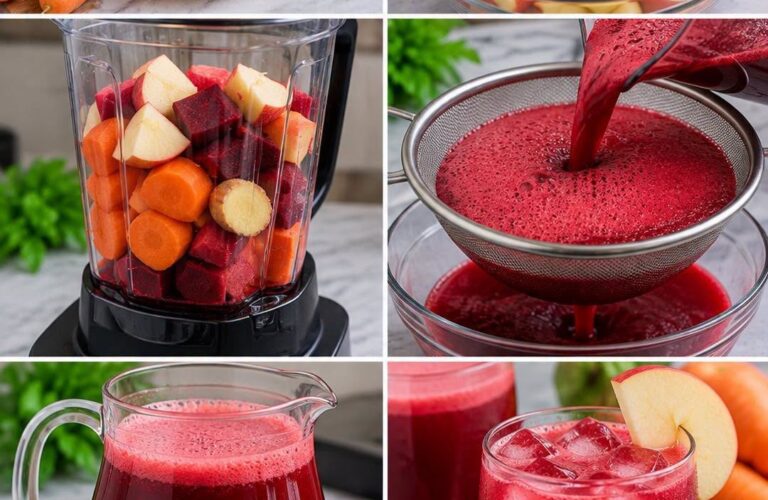
Beetroot, Carrot, and Apple Juice: The Ultimate Homemade Recipe
Introduction
Beetroot, carrot, and apple juice is a refreshing homemade drink made with three naturally colorful ingredients that combine to create a beautiful ruby-red beverage. The earthy flavor of beetroot, the natural sweetness of carrots, and the crisp, fruity taste of apples work together to create a balanced juice that is enjoyable at breakfast, during a warm afternoon, or whenever you want a freshly prepared drink.
This juice is especially appealing because it can be prepared with simple ingredients that are readily available in most grocery stores and local markets. Fresh ginger adds a gentle warmth and a pleasant aroma, while a little lemon juice can brighten the overall flavor. You can prepare the drink using a juicer or a regular household blender, depending on the equipment available in your kitchen.
The finished juice has an attractive deep-red color, a naturally sweet flavor, and a refreshing taste that can be enjoyed chilled or over ice. Although the drink is sometimes described as a detox juice, it is important to understand that the body already has its own natural systems for processing waste. This recipe is best enjoyed as a delicious way to include some fruit and vegetables in your day rather than as a special detox treatment.
Recipe Overview
Preparation time: 15 minutes
Cooking time: None
Total time: Approximately 15–20 minutes
Servings: 2–3 glasses
Difficulty level: Easy
Main ingredients: Beetroot, carrots, apples, and fresh ginger
Equipment: A vegetable peeler, chopping board, sharp knife, blender or juicer, fine-mesh strainer if desired, and serving glasses
Serving temperature: Chilled or over ice
Ingredients
Main Ingredients
2 medium fresh beetroots, approximately 250–300 grams in total
3 medium carrots, approximately 200–250 grams in total
2 medium apples, preferably sweet or sweet-tart varieties
1 small piece of fresh ginger, approximately 1–2 centimeters long
1/2 cup cold water if using a blender, adding more as needed
1–2 teaspoons fresh lemon juice, optional
4–6 ice cubes, optional, for serving
Optional Ingredients for Extra Flavor
A small squeeze of fresh orange juice for a citrusy finish
A few fresh mint leaves for serving
A small pinch of ground cinnamon for a warm aromatic note
Additional cold water to adjust the consistency
One small pear instead of one apple for a softer, sweeter flavor
These additions are entirely optional. The basic combination of beetroot, carrot, apple, and ginger already produces a flavorful juice without the need for added sugar.
Choosing the Best Ingredients
Beetroot
Choose firm, fresh beetroots that feel heavy for their size and have smooth, unspoiled skin. Smaller and medium-sized beetroots are often convenient for juicing because they are easier to cut and handle.
Fresh beetroot provides the drink with its deep-red color and distinctive earthy flavor. When selecting beetroot, avoid vegetables that are excessively soft, shriveled, or damaged.
Both red and deep-purple beetroot varieties can work in this recipe, although the final color may vary slightly.
Carrots
Choose firm carrots with a bright orange color. They should not feel rubbery or appear excessively dry.
Carrots contribute natural sweetness and help balance the earthy flavor of beetroot. They also provide beta-carotene, which the body can convert into vitamin A.
Regular orange carrots are ideal, but other carrot varieties can be used if they are available.
Apples
Apples bring freshness, sweetness, and a pleasant fruity aroma to the drink.
Sweet varieties create a smoother, sweeter juice, while tart varieties provide a sharper taste. You can use whichever apples you already have at home.
Red apples can contribute a mild sweetness, while green apples create a more tart and refreshing flavor.
If your beetroot tastes particularly earthy, adding an extra half apple can help balance the flavor without requiring additional sweeteners.
Fresh Ginger
Fresh ginger gives the juice a gentle spicy note that complements both the sweetness of the apples and the earthiness of the beetroot.
A small piece is usually sufficient. If you are unfamiliar with ginger in fresh juice, begin with a very small amount and increase it in future batches according to your taste.
Ginger is optional, so you can leave it out if you prefer a milder drink.
Lemon Juice
Lemon juice adds acidity and makes the juice taste brighter. It is particularly useful when the apples are very sweet or the beetroot has a strong earthy flavor.
Freshly squeezed lemon juice is preferable for its clean, citrusy taste, but you can omit it entirely if you prefer the original combination.
Preparing the Ingredients
Step 1: Wash Everything Thoroughly
Begin by washing your hands and cleaning the kitchen work surface.
Place the beetroots, carrots, and apples under cool running water. Rub the surfaces gently to remove dirt and other visible residue. Use a clean vegetable brush for root vegetables if necessary.
Pay particular attention to the areas around the stems and the natural grooves in the vegetables.
Wash the ginger as well, especially if you intend to peel it with a knife or grater.
Clean your cutting board, knife, blender jar, and any strainer you plan to use.
Step 2: Peel the Beetroot
Cut away the beetroot stems and any damaged areas.
Peel the beetroots with a vegetable peeler or a small knife. If the skins are thin and the beetroots have been scrubbed thoroughly, peeling is not always necessary, but removing the skin can produce a milder flavor and a smoother result.
Beetroot juice can stain clothing, cutting boards, and hands. Consider using an apron and a cutting board that is easy to clean.
Cut each beetroot into small cubes, approximately 2–3 centimeters across.
Smaller pieces are easier for a blender to process and can help prevent large chunks from remaining in the mixture.
Step 3: Prepare the Carrots
Trim the ends of the carrots and peel them if desired.
Wash them again after peeling if any dirt remains on the surface.
Cut the carrots into small pieces. If you are using a blender with limited power, make the pieces smaller to help the blades process them evenly.
Fresh carrots should be firm and crisp. If a carrot has soft or damaged sections, remove those parts before using it.
Step 4: Prepare the Apples
Wash the apples carefully and remove their stems.
Cut each apple into quarters, then remove the core and seeds.
You may leave the peel on if the apples are clean and in good condition. Apple skin contributes color, flavor, and fiber when the juice is blended and not strained.
Cut the apple quarters into smaller pieces.
Use fresh apples rather than fruit that has become mushy or spoiled. Slightly bruised areas can be cut away, but fruit showing signs of mold should be discarded.
Step 5: Prepare the Ginger
Peel the ginger using a small spoon or vegetable peeler.
Cut a small piece into thin slices.
Ginger can have a strong flavor, so there is no need to add a large amount. Starting with a small piece allows the other ingredients to remain noticeable.
Once all the ingredients are prepared, they are ready for blending or juicing.
Method One: Making Beetroot, Carrot, and Apple Juice in a Blender
A blender is a convenient option for people who do not own a juicer. It processes the ingredients with water to produce a thick mixture that can be enjoyed as a fiber-rich drink or strained for a smoother juice.
Step 1: Add the Harder Ingredients
Place the chopped beetroot and carrots into the blender jar.
Add the sliced ginger and approximately half a cup of cold water.
The water helps the blades move through the ingredients and reduces the chance of the mixture becoming too thick.
If your blender has a smaller capacity, work in batches instead of filling the jar too full.
Step 2: Blend the Beetroot and Carrots
Secure the blender lid and begin blending at a low speed.
Gradually increase the speed as the vegetables break down.
Blend for approximately 30–60 seconds, depending on the power of your appliance. Stop the blender if necessary and use a spatula to move the mixture toward the blades, making sure the appliance is switched off before doing so.
If the mixture is too thick to circulate, add a little more water.
Continue blending until the vegetables are broken into very small pieces.
Step 3: Add the Apples
Add the chopped apples to the blender.
Blend again until the mixture becomes evenly colored and no large pieces remain.
The apple adds moisture and natural sweetness, helping balance the stronger flavor of the beetroot.
If the mixture is still very thick, add cold water gradually. Avoid adding too much water at once, as excessive dilution can make the flavor weak.
Step 4: Taste the Mixture
Switch off the blender and carefully taste a small amount with a clean spoon.
If the flavor is too earthy, add a little more apple or a teaspoon of lemon juice.
If the ginger is too strong, add a little more apple or water.
If the mixture is already pleasant, there is no need to add anything else.
Avoid adding large quantities of sugar or syrup. The apples and carrots provide natural sweetness, and the drink is often flavorful enough without additional sweeteners.
Step 5: Decide Whether to Strain
At this stage, you can choose between a thicker blended drink and a smoother juice.
For a thicker drink, pour the mixture directly into glasses. It will contain more of the fruit and vegetable pulp, including fiber.
For a smoother juice, place a fine-mesh strainer over a clean bowl or jug.
Pour the blended mixture through the strainer in manageable portions. Use a clean spoon to gently move the mixture around and help the liquid pass through.
Allow the juice to drain naturally, then discard or compost the remaining pulp according to your local options.
Avoid forcing the pulp through the strainer if you want a clear, smooth texture.
Remember that straining removes much of the insoluble fiber, while blending and drinking the entire mixture retains more of it.
Step 6: Add Lemon Juice
If you have not already added lemon juice, stir in one or two teaspoons now.
Mix thoroughly so the citrus flavor is evenly distributed.
Taste again and adjust with a little water if needed.
Step 7: Serve Immediately
Pour the finished drink into clean glasses.
Add ice cubes if desired and garnish with a thin apple slice or a small mint leaf.
Serve immediately for the freshest flavor and best texture.
Method Two: Making the Juice with a Juicer
A juicer produces a thinner drink with less pulp and usually does not require added water.
Step 1: Prepare the Juicer
Set up the juicer according to the manufacturer’s instructions.
Make sure the juice container and pulp collector are properly positioned.
Wash and cut the ingredients into pieces that fit comfortably into the juicer’s feeding chute.
Never push ingredients into the machine with your fingers. Use the pusher supplied with the appliance.
Step 2: Juice the Beetroot
Feed the beetroot pieces through the juicer gradually.
Allow the machine to extract the juice before adding the next pieces.
The liquid will begin to develop its deep-red color almost immediately.
Step 3: Juice the Carrots
Add the carrot pieces gradually.
Carrots contribute a naturally sweet flavor that helps balance the beetroot.
Alternate between beetroot and carrot pieces if your juicer handles mixed ingredients more effectively that way.
Step 4: Juice the Apples
Add the apple pieces after removing their cores and seeds.
The apples add freshness and can make the finished juice taste lighter and fruitier.
Step 5: Add the Ginger
Feed the ginger through the juicer according to the manufacturer’s instructions.
Because ginger is strongly flavored, use a small piece at first.
If your appliance does not handle ginger well, you can omit it or add a little finely grated ginger to the finished juice and strain it carefully.
Step 6: Stir the Juice
Collect the juice in a clean jug and stir it thoroughly.
Natural separation can occur, so mixing helps distribute the flavors evenly.
Add lemon juice if desired.
Step 7: Serve
Pour the juice into glasses and serve immediately.
The drink may have a thin layer of foam on the surface. This is normal and can be stirred back into the liquid or removed with a spoon if preferred.
Method Three: A Smooth, Restaurant-Style Version
For a drink that looks especially attractive when served to guests, use the blender method and strain the mixture carefully.
Begin with the same quantities of beetroot, carrots, apples, and ginger.
Blend the ingredients thoroughly with enough cold water to allow the mixture to circulate.
Pour the mixture through a fine-mesh strainer into a glass jug. Allow the liquid to drain until the remaining pulp is relatively dry, without forcing excessive pulp into the juice.
Chill the strained juice briefly in the refrigerator.
Before serving, stir it gently and pour it into clear glasses.
The finished drink should have a deep-red appearance, a smooth consistency, and a thin layer of foam if freshly blended.
For presentation, add one thin apple slice to the rim of each glass. You can also place a small piece of carrot beside the jug as a simple visual garnish.
Keep garnishes clean and remove apple seeds and cores before preparation.
How to Adjust the Flavor
If the Juice Tastes Too Earthy
Beetroot has a distinctive earthy taste, and some people notice it more strongly than others.
Add another half apple, a small amount of lemon juice, or a little orange juice.
You can also reduce the amount of beetroot in your next batch and increase the carrots or apples.
If the Juice Tastes Too Sweet
Add a little lemon juice to provide more acidity.
You can also use a tart apple in your next batch.
Avoid adding extra carrots or sweet fruit if you are trying to make the overall flavor less sweet.
If the Juice Tastes Too Strong
Dilute it with a little cold water.
Add the water gradually, stirring after each addition.
A small squeeze of lemon can also help balance the flavor without requiring a large quantity of additional ingredients.
If the Ginger Is Overpowering
Add more apple juice or a small amount of water.
For future batches, use a thinner slice of ginger or leave it out completely.
Ginger is meant to complement the other ingredients rather than dominate the drink.
If the Juice Is Too Thick
This usually happens when a blender is used and little water has been added.
Stir in cold water one tablespoon at a time until the consistency is comfortable to drink.
If you prefer a thinner drink, strain it through a fine-mesh strainer.
If the Juice Separates
Natural ingredients often separate after blending or standing.
Simply stir the juice before serving.
Separation by itself is not a sign that the drink has spoiled.
Nutritional Information
The nutritional value of this recipe depends on the size of the vegetables and fruit, the amount of water used, and whether the mixture is strained.
Beetroot contributes folate and other nutrients. Carrots provide beta-carotene, which the body can convert into vitamin A. Apples provide natural carbohydrates and plant compounds.
Ginger contributes flavor, while lemon juice adds acidity and a small amount of vitamin C.
The drink can contribute to fruit and vegetable intake, but it should not replace regular meals or a varied diet.
What Happens When You Strain the Juice?
Straining removes much of the insoluble fiber found in the fruit and vegetables.
This produces a thinner, smoother beverage but leaves some of the pulp behind.
Blending and drinking the entire mixture retains more fiber, which helps support normal digestion and can make the drink more filling.
Neither method is automatically best for everyone. The choice depends on your preferred texture, taste, and nutritional goals.
Does This Juice Contain Added Sugar?
The basic recipe contains no added sugar.
However, apples and carrots naturally contain sugars, and removing the fiber through juicing or straining changes how the drink is consumed compared with eating the whole ingredients.
For this reason, it is sensible to enjoy the juice in a moderate serving rather than drinking large quantities throughout the day.
Health and Food Safety Considerations
This homemade juice can be part of a balanced diet, but it should not be treated as a medicine or a treatment for any medical condition.
There is no need to drink it on an empty stomach, and there is no special time of day that guarantees better results.
People who have been advised to limit potassium, oxalates, or certain other dietary components for a medical reason should ask their healthcare professional whether this combination is appropriate for them.
Beetroot can temporarily turn urine or stool pink or reddish in some people. This can be harmless, but unexplained or persistent changes should not automatically be attributed to food.
Freshly prepared juice can also support the growth of harmful microorganisms if contaminated or stored improperly. Wash the ingredients thoroughly, use clean equipment, and refrigerate leftovers promptly.
Storage Instructions
Fresh juice is best enjoyed soon after preparation, when its flavor and texture are at their freshest.
If you need to store it, pour it into a clean, airtight container and place it in the refrigerator promptly.
For best quality, consume it within 24 hours. Keep the refrigerator at 4°C or below.
Shake or stir the juice before serving because natural separation may occur.
Discard juice that has been left at room temperature for more than two hours, or sooner in very hot conditions. Do not drink it if it develops an unusual smell, visible mold, or other signs of spoilage.
Freezing is possible, although the texture and flavor may change after thawing. Leave some space in the container for expansion, freeze promptly, and thaw in the refrigerator.
Do not refreeze juice after it has thawed.
Frequently Asked Questions
Can I make beetroot, carrot, and apple juice without a juicer?
Yes. A blender works well. Blend the chopped ingredients with a little cold water, then strain the mixture if you want a thinner drink.
Do I need to peel the apples?
No. You can leave the skin on after washing the apples thoroughly. Remove the cores and seeds before blending or juicing.
Should I cook the beetroot first?
No. This recipe uses raw beetroot. Cooking is unnecessary, provided the beetroot is fresh, properly washed, and handled safely.
Can I leave out the ginger?
Yes. The drink will still taste delicious without ginger. You can also replace it with a little lemon juice or leave out both ingredients for a milder flavor.
Can I prepare the juice the night before?
You can prepare it ahead of time, but fresh juice generally tastes best soon after preparation. If making it the night before, refrigerate it promptly in a clean, airtight container and consume it within 24 hours.
Can I drink the juice every day?
It may fit into your regular diet if you enjoy it and tolerate the ingredients well. However, juice should not replace whole fruits, vegetables, water, or balanced meals. Smaller servings are sensible because juicing makes it easy to consume the sugars from several ingredients quickly.
Can I make this recipe without adding water?
Yes. A juicer generally extracts the liquid without additional water. A blender usually needs some water to help the ingredients move around the blades.
Can I use green apples?
Yes. Green apples give the juice a sharper, more tart flavor. If the result tastes too sour, use a sweeter apple next time.
Can I add oranges?
Yes. A small orange, peeled and deseeded, can be blended with the other ingredients. Alternatively, add a little freshly squeezed orange juice after blending.
Why is my juice bright red?
Beetroot contains natural pigments that produce its characteristic deep-red color. The final shade can range from bright crimson to dark burgundy, depending on the ingredients and the amount of water used.
Why does the juice have foam?
Foam can form when air becomes incorporated during blending or juicing. This is generally normal. Let the juice rest briefly or stir it gently before serving.
Can I make this juice without apples?
Yes. You can increase the carrots and add a little lemon juice for balance. The result will have a less fruity flavor and may taste more earthy.
Is the pulp useful?
Yes. The pulp contains fiber and some nutrients that remain after blending or juicing. You can mix suitable leftover pulp into soups, vegetable patties, or other recipes, provided it has been handled safely and used promptly.
Serving Suggestions
Serve the juice alongside breakfast foods such as eggs, toast, oatmeal, or a simple sandwich.
For a refreshing afternoon drink, pour it over ice and garnish with an apple slice.
If serving guests, prepare the juice shortly before they arrive and keep it refrigerated until needed.
You can also serve small portions as part of a brunch spread with fresh fruit and other nonalcoholic beverages.
Avoid leaving a large jug sitting out for an extended period. Keep it chilled and pour individual servings as required.
Final Thoughts
Beetroot, carrot, and apple juice is a simple, colorful recipe that brings together earthy vegetables, naturally sweet fruit, and the gentle warmth of fresh ginger. It requires no cooking, no complicated equipment, and no added sugar to produce a flavorful homemade drink.
For the smoothest result, use a juicer or strain the blended mixture. For a thicker drink with more fiber, blend the ingredients with water and enjoy the mixture without straining.
Adjust the quantities to suit your taste, experiment with a little lemon or orange, and serve the juice fresh and chilled.
The best version is the one you enjoy as part of a varied, balanced diet. With fresh ingredients and a few minutes of preparation, this ruby-red juice can become a pleasant addition to your everyday kitchen routine.
Make the recipe shorter and less repetitiveAdd a clear printable recipe card