admin1
Crispy Air Fryer Tandoori Chicken Recipe
Crispy Air Fryer Tandoori Chicken is a flavorful, juicy, and beautifully spiced chicken dish inspired by traditional Indian and Pakistani tandoori cooking. This recipe combines tender chicken pieces with a rich yogurt marinade, aromatic spices, fresh ginger, garlic, lemon juice, and a little oil to create a delicious coating that becomes wonderfully roasted in the air fryer. The chicken develops a deep orange-red color, a lightly crisp exterior, and a juicy interior while requiring much less oil than traditional deep-frying.
The recipe is perfect for family dinners, weekend lunches, gatherings, meal preparation, and special occasions when you want restaurant-style tandoori chicken without using a traditional clay oven. Cooking the chicken in an air fryer allows hot air to circulate around the pieces, helping the marinade develop a roasted finish while keeping the meat tender when cooked correctly. Although traditional tandoori chicken is often prepared at extremely high temperatures in a clay oven, this air fryer version captures many of the same flavors using convenient kitchen equipment.
Introduction to Air Fryer Tandoori Chicken
Tandoori chicken is one of the most recognizable dishes in South Asian cuisine. It is traditionally prepared by marinating chicken in yogurt, lemon juice, and a mixture of spices before cooking it in a tandoor, a cylindrical clay oven that produces intense heat and distinctive roasted flavors. The marinade seasons the meat, adds moisture, and creates a delicious coating that becomes slightly charred during cooking.
This air fryer version adapts the traditional preparation method for a modern kitchen. Instead of placing the chicken in a clay oven, you arrange the marinated pieces in an air fryer basket and cook them with circulating hot air. The result is tender chicken with a rich spice coating, a roasted appearance, and a satisfying texture.
The secret to delicious tandoori chicken is not simply the spices. The yogurt must be thick enough to cling to the chicken, the marinade needs enough time to develop its flavor, and the chicken should be cooked without overcrowding the basket. Turning the pieces during cooking also helps them brown more evenly.
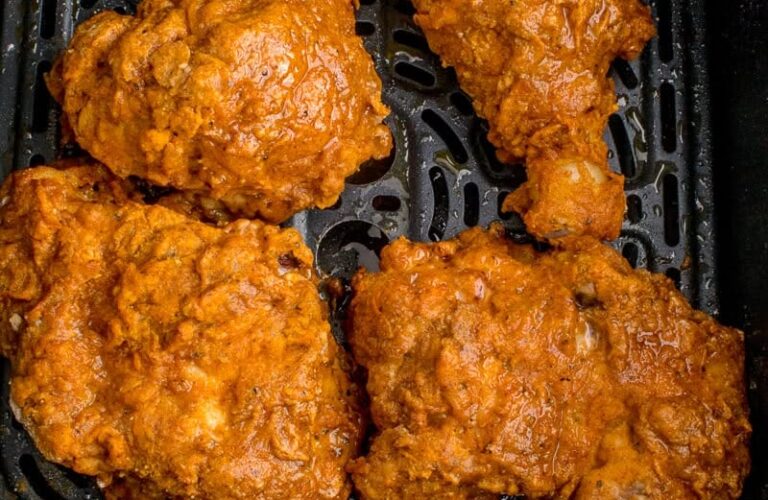
For the best results, use bone-in chicken legs and thighs, similar to the pieces shown in the photograph. These cuts contain enough natural fat and connective tissue to remain juicy while the outside becomes beautifully roasted. You can also use boneless chicken thighs or drumsticks, adjusting the cooking time according to their size.
Recipe Overview
Preparation time: 20 minutes
Marinating time: 2 to 8 hours, preferably overnight for deeper flavor
Cooking time: Approximately 25 to 35 minutes, depending on the size of the chicken pieces
Total time: Approximately 3 to 9 hours, including a practical marinating period
Servings: 4
Cooking method: Air fryer
Cuisine: South Asian inspired
Difficulty: Easy to moderate
Flavor profile: Smoky, savory, tangy, aromatic, and mildly spicy to hot, depending on your seasoning
Texture: Juicy and tender inside with a richly coated, roasted exterior
Ingredients for the Chicken
You will need four medium bone-in chicken pieces, preferably a mixture of chicken legs and thighs. The pieces should be approximately similar in size so that they cook at a similar rate. If you use particularly large pieces, allow additional cooking time and check their internal temperature carefully.
Use approximately 1 kilogram, or 2.2 pounds, of chicken.
You will also need 1 tablespoon of fresh lemon juice for the initial preparation. Lemon juice helps freshen the flavor of the meat and contributes a pleasant tanginess to the finished dish.
Prepare 1 teaspoon of salt for seasoning the chicken. The precise amount can be adjusted slightly according to your taste and whether your spice blend already contains salt.
Use 1 teaspoon of ginger-garlic paste to begin seasoning the chicken. This first layer of flavor helps the aromatic ingredients reach the surface of the meat before the yogurt marinade is added.
If the chicken has excess moisture on its surface, pat it dry with paper towels before applying the seasonings. Removing excess surface water helps the marinade adhere better and makes it easier to develop a roasted exterior.
Ingredients for the Tandoori Marinade
The marinade is the heart of this recipe. It provides the characteristic color, tanginess, aromatic flavor, and rich coating that make tandoori chicken so appealing.
Use ¾ cup of thick plain yogurt. Greek yogurt is particularly convenient because it contains less liquid and clings well to the chicken. If you use regular plain yogurt, strain it through a clean cloth or fine sieve for approximately 20 to 30 minutes if it is very watery.
Add 1 tablespoon of ginger-garlic paste. Freshly prepared paste offers a lively aroma and gives the chicken a savory foundation.
Use 1 tablespoon of lemon juice for brightness. Lemon balances the richness of the yogurt and helps create the familiar tangy taste of tandoori chicken.
Add 1 tablespoon of neutral cooking oil, such as canola, sunflower, or vegetable oil. The oil helps distribute the spices and supports browning during air frying.
For the distinctive red-orange color, use 1 teaspoon of Kashmiri red chili powder or mild paprika. Kashmiri chili powder is especially useful because it gives the marinade an attractive color without necessarily making the dish extremely hot. If you prefer a stronger color, you can increase the amount slightly, but avoid adding so much that it overwhelms the other seasonings.
Add ½ teaspoon of hot red chili powder if you enjoy a spicier preparation. This ingredient is optional and can be reduced or omitted entirely.
Use 1 teaspoon of ground coriander. It contributes a warm, earthy flavor that complements the chicken.
Add 1 teaspoon of ground cumin. Cumin provides a deep, savory aroma and is an important component of many South Asian spice mixtures.
Use 1 teaspoon of garam masala. This aromatic blend typically contains spices such as cardamom, cinnamon, cloves, cumin, and coriander, although the exact mixture varies by brand and recipe.
Add ½ teaspoon of turmeric powder. Turmeric contributes a warm background flavor and helps deepen the golden-orange color.
Use ½ teaspoon of freshly ground black pepper. It provides gentle warmth and balances the other spices.
Add ½ teaspoon of dried fenugreek leaves, also known as kasuri methi, if available. Crush the leaves between your fingers before adding them to release their fragrance. This ingredient is optional but gives the marinade a restaurant-style aroma.
Add ½ teaspoon of onion powder if you enjoy a slightly sweeter, savory background flavor. You may omit it if you prefer a simpler traditional spice profile.
Use ½ teaspoon of garlic powder only if you want a stronger garlic flavor. Because the recipe already contains ginger-garlic paste, this ingredient is entirely optional.
Finally, prepare ½ teaspoon of salt for the marinade, adjusting the total salt according to your preference.
Optional Ingredients for Extra Flavor
You can customize the marinade with a few additional ingredients while maintaining the essential character of the dish.
One tablespoon of finely chopped fresh coriander can be added to the marinade or reserved for garnishing. Its fresh, herbal flavor contrasts nicely with the warm spices.
A small pinch of ground cardamom gives the chicken a subtle fragrance. Use it sparingly because too much can make the flavor overly perfumed.
A pinch of ground cinnamon provides warmth and depth, especially if your garam masala is relatively mild.
For a richer restaurant-inspired finish, prepare 1 teaspoon of melted butter or ghee. You can brush a small amount over the cooked chicken just before serving. This is optional, and the recipe is already flavorful without it.
For a brighter finishing flavor, keep a few lemon wedges ready. Fresh lemon juice added immediately before eating brings out the flavor of the spices.
If you enjoy a smoky aroma, a small amount of smoked paprika can be used in place of part of the mild paprika. However, it should be used carefully because traditional tandoori flavor does not depend entirely on smoked paprika.
Equipment You Will Need
An air fryer with a basket large enough to hold the chicken pieces in a single layer is the most important piece of equipment.
You will also need a large mixing bowl for preparing the marinade, a small bowl for measuring the spices, measuring spoons, a spoon or whisk for mixing, and clean tongs for turning the chicken.
A kitchen thermometer is strongly recommended because chicken can look browned on the outside before the center has finished cooking. The thickest part of each piece should reach an internal temperature of 165°F, or 74°C, without the thermometer touching the bone.
Paper towels are useful for drying the chicken before marinating. A small brush can help distribute any remaining marinade or a little oil over the chicken before cooking.
Use a separate plate and clean utensils for cooked chicken. Do not put fully cooked chicken back onto a plate that previously held raw chicken unless the plate has been thoroughly washed.
Step 1: Prepare the Chicken Properly
Begin by examining the chicken pieces and removing any loose pieces of fat or unwanted skin, according to your preference. You can leave the skin on if you enjoy it, although the marinade may adhere differently and the final texture will depend on the amount of moisture and fat present.
Pat the chicken dry using paper towels. This is an important step because a wet surface can dilute the marinade and make it more difficult for the spices to form a concentrated coating.
Place the chicken on a clean cutting board. Using a sharp knife, make two or three shallow cuts through the thickest areas of each piece. These cuts should penetrate the surface without cutting the pieces apart.
The slits help the marinade reach more of the chicken’s surface and allow the heat to reach the meat more evenly. They are especially useful for thick, bone-in drumsticks and thighs.
Avoid making the cuts excessively deep. The aim is to create openings for the marinade rather than damage the structure of the meat.
Transfer the prepared chicken to a large bowl.
Add the initial tablespoon of lemon juice, 1 teaspoon of ginger-garlic paste, and a portion of the salt. Rub these ingredients over every piece, making sure that the mixture reaches the shallow cuts.
Allow the chicken to rest for approximately 10 minutes while you prepare the yogurt marinade. Keep the bowl refrigerated if the preparation takes longer than a short period.
Step 2: Prepare the Yogurt Marinade
Place the thick yogurt in a separate mixing bowl. Stir it until smooth and creamy, breaking up any lumps.
Add the ginger-garlic paste, lemon juice, cooking oil, Kashmiri chili powder, coriander, cumin, garam masala, turmeric, black pepper, fenugreek leaves, and the remaining salt.
If you want additional heat, add the optional hot red chili powder.
Mix thoroughly until the spices are evenly distributed throughout the yogurt. The mixture should have a rich orange-red color, although the precise shade will depend on the chili powder, paprika, and yogurt you use.
Taste a small amount of the marinade before it touches the raw chicken. It should taste slightly tangy, savory, and aromatic, with enough salt to bring out the spices. Remember that the raw marinade should never be tasted after it has contacted uncooked chicken.
If the marinade seems too thin, add a little more thick yogurt. If it is too thick to spread easily, mix in a teaspoon of lemon juice or water, but avoid making it watery.
The goal is a thick, smooth marinade that coats the chicken rather than running off immediately.
Step 3: Coat the Chicken Thoroughly
Add the prepared chicken pieces to the marinade.
Using clean hands or a large spoon, turn each piece until it is covered on all sides. Work the marinade into the shallow cuts and around the joints, where the flavor can otherwise be uneven.
Pay particular attention to the underside of the thighs and the thicker areas around the drumsticks. These parts need the same seasoning as the exposed surfaces.
Lift each piece slightly and check that there are no large bare patches. A thin, even coating is better than a thick layer that collects in heavy clumps.
Once all the pieces are coated, cover the bowl or transfer the chicken to a covered food-safe container.
Refrigerate the chicken while it marinates. A minimum of 2 hours provides a useful amount of flavor, while 4 to 8 hours is excellent for a more developed taste. You can prepare it the previous evening and cook it the following day.
For food safety, do not leave raw chicken marinating on the kitchen counter for hours. Keep it refrigerated at 40°F, or 4°C, or below.
Although overnight marinating can be convenient, avoid extending a highly acidic marinade unnecessarily. Excessive marinating can change the texture of the outer layer of the meat.
Step 4: Bring Out the Flavor Before Cooking
When you are ready to cook, remove the chicken from the refrigerator and prepare the air fryer.
You do not need to bring raw chicken fully to room temperature. A brief period while the air fryer preheats is sufficient.
If the marinade has collected heavily in the bottom of the container, gently lift each piece and allow excess marinade to drip back into the bowl. Do not scrape the chicken completely clean; the coating is essential to the final flavor.
However, remove any exceptionally thick clumps of yogurt. Large pools of wet marinade can remain soft instead of developing a roasted finish.
If you want a slightly richer exterior, brush the chicken lightly with a little oil. You do not need to pour oil into the basket or cover the chicken with a heavy layer of fat.
The aim is to keep the spice coating attached while allowing the circulating hot air to brown the outside.
Step 5: Preheat the Air Fryer
Preheat your air fryer to 380°F, or approximately 193°C, for 3 to 5 minutes, following the manufacturer’s instructions.
Preheating helps the chicken begin cooking immediately when placed in the basket and can improve the consistency of the finished texture.
While the appliance heats, inspect the basket and make sure it is clean. A clean basket helps prevent old food residue from affecting the flavor of the marinade.
If your air fryer manufacturer recommends a different preheating procedure, follow that guidance.
Some air fryers run hotter than others, so the exact cooking time may vary. The thickness of the chicken pieces, the amount of marinade, and whether the chicken contains bones will all influence how long it takes to cook.
Step 6: Arrange the Chicken in the Basket
Carefully place the marinated chicken pieces into the preheated air fryer basket.
Arrange them in a single layer with a little space between each piece. Air needs to circulate around the chicken to cook it evenly and encourage browning.
Do not stack the chicken or squeeze too many pieces into a small basket. Overcrowding traps moisture and can cause the coating to steam instead of roast.
If you have more chicken than will fit comfortably, cook it in batches. This takes a little longer but usually produces a better result.
Position the thicker pieces where your particular air fryer tends to cook most evenly. If the appliance has known hot spots, you can rotate the pieces during cooking.
The chicken should have its own space, and the marinade should remain mainly attached to the meat rather than covering the entire basket in a thick layer.
Step 7: Air Fry the Chicken
Cook the chicken at 380°F, or 193°C, for approximately 12 to 15 minutes for the first stage.
During this time, the exterior begins to set, the spices become fragrant, and the chicken starts developing its characteristic orange-brown appearance.
After the first stage, carefully open the basket and turn each piece using clean tongs.
The underside may appear darker or more cooked than the top, depending on the air fryer. Turning the chicken allows the other side to brown and helps prevent one area from becoming excessively dark.
If there is a substantial amount of liquid in the basket, you can carefully remove excess accumulated liquid if your appliance’s instructions allow it and it is safe to do so. Be cautious because the basket and its contents will be hot.
Return the basket to the air fryer and continue cooking for another 10 to 15 minutes, checking the progress as the chicken approaches doneness.
For particularly large bone-in thighs or drumsticks, additional cooking time may be necessary. Smaller pieces may finish sooner.
Do not rely exclusively on a fixed number of minutes. Check the internal temperature of each piece in the thickest area, avoiding contact with the bone. Chicken must reach at least 165°F, or 74°C, to be considered safely cooked.
If the chicken has reached the correct temperature but the exterior is not as browned as you would like, you can cook it for another 2 to 3 minutes at approximately 400°F, or 204°C, while watching carefully to prevent the spices from burning.
Because yogurt and ground spices can darken quickly, do not leave the chicken unattended during this final stage.
Step 8: Create a Beautiful Roasted Exterior
The chicken shown in the photograph has a rich, orange-brown coating with a slightly textured, roasted appearance. You can achieve a similar finish by managing the moisture in the marinade and giving the chicken enough room in the air fryer.
The first important factor is thick yogurt. Thin yogurt produces a wetter coating that can drip away during cooking.
The second factor is avoiding excess marinade. A thick, uneven layer can stay soft in some places while becoming too dark in others.
The third factor is adequate air circulation. When the pieces are separated, hot air can reach more of the surface.
The fourth factor is the finishing temperature. Once the chicken is cooked through, a short period at a slightly higher temperature can encourage additional browning.
However, the goal is a flavorful roasted surface, not a burnt coating. Chili powder, garlic, and other ground spices can develop a bitter flavor if exposed to excessive heat for too long.
If you prefer a slightly softer finish, stop cooking as soon as the chicken is safely cooked and the coating looks well roasted.
If you enjoy a more intensely browned exterior, use a short finishing period and check the chicken frequently.
Step 9: Rest the Chicken Before Serving
Once the chicken has reached a safe internal temperature, transfer it to a clean serving plate.
Allow it to rest for approximately 5 minutes before serving. This gives the juices time to redistribute and makes the chicken more pleasant to eat.
Avoid covering it tightly with foil if you want to preserve the roasted exterior, because trapped steam can soften the coating.
If desired, brush the chicken with a small amount of melted butter or ghee immediately before serving.
Sprinkle over a little chopped fresh coriander and serve with lemon wedges.
The chicken should have a richly seasoned exterior, tender meat, and a pleasant balance of tanginess, warmth, and aromatic spice.
How to Serve Air Fryer Tandoori Chicken
Tandoori chicken is versatile enough to be served as a main dish, a starter, or part of a larger South Asian meal.
For a traditional-style meal, serve it with warm naan, roti, or chapati. The bread can be used to enjoy the yogurt-based marinade and the juices released by the chicken.
Steamed basmati rice is another excellent accompaniment. Its mild fragrance and fluffy texture balance the bold seasoning of the chicken.
A simple cucumber and tomato salad adds freshness and crunch. Combine chopped cucumber, tomato, red onion, coriander, lemon juice, and a small pinch of salt for an easy side dish.
Mint yogurt chutney is particularly suitable. Combine thick yogurt with fresh mint, coriander, lemon juice, a little salt, and green chili if desired. Blend or finely chop the ingredients until the sauce reaches your preferred consistency.
You can also serve the chicken with sliced onions tossed with lemon juice and fresh coriander. This simple accompaniment provides a sharp, refreshing contrast to the rich spices.
For a complete dinner, add roasted vegetables such as cauliflower, carrots, bell peppers, or potatoes. Season the vegetables separately and cook them according to their own requirements.
If you want a lighter meal, serve one piece of chicken with salad, yogurt sauce, and a portion of rice or flatbread. There is no need to remove entire food groups to enjoy a balanced meal.
Homemade Mint Yogurt Sauce
This refreshing sauce complements the spicy chicken and can be prepared while the chicken cooks.
Use ½ cup of plain yogurt, 2 tablespoons of chopped fresh mint, 1 tablespoon of chopped coriander, 1 teaspoon of lemon juice, and a small pinch of salt.
If you prefer a slightly sharper flavor, add a little finely chopped green chili. For a milder sauce, omit the chili and add a small amount of grated cucumber.
Place the ingredients in a bowl and mix thoroughly. If you want a smoother consistency, blend them briefly.
Taste and adjust the lemon juice and salt until the flavor is balanced.
Refrigerate the sauce until serving time. It should be cool, creamy, and refreshing, providing a pleasant contrast to the warm spices in the chicken.
For the best flavor, prepare the sauce shortly before serving or a few hours ahead of time. Keep it covered and refrigerated.
Tips for the Most Flavorful Chicken
Use thick yogurt whenever possible. Thick yogurt clings to the chicken and forms a more concentrated coating during cooking.
Choose chicken pieces of similar size. This makes it easier for all the pieces to finish cooking at approximately the same time.
Make shallow cuts in thick pieces. The cuts expose more surface area to the marinade and help season the meat more evenly.
Allow enough marinating time. Two hours is a practical minimum, while several hours usually produce a more developed flavor.
Measure the hot chili powder according to your preference. Kashmiri chili powder or mild paprika can provide attractive color without making the dish overwhelmingly hot.
Avoid excessive liquid. A watery marinade can drip into the basket and prevent the coating from browning properly.
Preheat the air fryer when recommended by the manufacturer. This helps create more consistent cooking conditions.
Leave space between the chicken pieces. Air circulation is essential for an evenly cooked exterior.
Turn the chicken during cooking. This helps expose different surfaces to the circulating heat.
Check the internal temperature rather than judging doneness by color. A richly browned exterior does not guarantee that the center has cooked safely.
Use a thermometer in the thickest part of each piece. For bone-in chicken, ensure the probe does not touch the bone.
Let the chicken rest briefly before serving. This improves the eating experience and gives you time to prepare the accompaniments.
Common Mistakes and How to Avoid Them
One common mistake is using yogurt that is too thin. Excess liquid can cause the marinade to slide off the chicken. Strain watery yogurt before adding the spices.
Another mistake is adding too much marinade to the basket. A heavy pool of yogurt and spice mixture can prevent the coating from roasting evenly. Let excess marinade drip away before arranging the chicken.
Overcrowding the air fryer is also a problem. When chicken pieces touch extensively or overlap, the hot air cannot circulate properly. Cook in batches if necessary.
Cooking at an excessively high temperature from the beginning may cause the spice coating to darken before the center of the chicken is ready. A moderate cooking temperature followed by a brief finishing stage is often easier to control.
Turning the chicken too frequently can disturb the coating before it has set. Allow the first side to cook sufficiently before turning it once.
Relying on appearance alone is another mistake. Tandoori chicken naturally develops a strong orange-brown color, but the inside must still reach a safe temperature.
Finally, avoid adding too much lemon juice or other acidic ingredients. The marinade should be tangy, but excessive acidity can affect the texture of the chicken during a long marinating period.
Variations to Try
Spicy Air Fryer Tandoori Chicken
For a hotter version, increase the hot red chili powder slightly and add a small amount of finely chopped green chili to the marinade.
You can also add a pinch of cayenne pepper if you enjoy a sharper heat. Keep the other spices balanced so that the chili does not overpower the cumin, coriander, and garam masala.
Serve this version with plain yogurt sauce, rice, or flatbread to balance the heat.
Mild Family-Friendly Tandoori Chicken
For a milder version, omit the hot red chili powder and use Kashmiri chili powder or mild paprika for color.
Keep the ginger, garlic, coriander, cumin, and garam masala because these ingredients contribute flavor without necessarily making the chicken very hot.
Serve the chicken with plain yogurt, rice, or soft flatbread.
Boneless Tandoori Chicken
Boneless chicken thighs work very well in this recipe. Cut them into large, evenly sized pieces and coat them thoroughly with the marinade.
Because boneless pieces are usually smaller and have no bone to slow heat transfer, they often cook faster than bone-in chicken. Begin checking them earlier and ensure they reach 165°F, or 74°C, internally.
Boneless tandoori chicken is especially useful for wraps, rice bowls, and salads.
Tandoori Chicken Drumsticks
If you prefer drumsticks, use approximately 8 medium drumsticks instead of four large pieces.
Make shallow cuts in the thickest parts, apply the marinade, and arrange them in a single layer. Depending on their size and your air fryer, cooking may take approximately 20 to 30 minutes or longer.
Turn them during cooking and check the internal temperature before serving.
Creamy Restaurant-Style Tandoori Chicken
For a richer flavor, add 1 to 2 tablespoons of cream to the yogurt marinade and use a little melted butter or ghee as a finishing brush.
The additional richness softens the sharpness of the spices and gives the chicken a more luxurious taste.
Use the cream sparingly because the marinade should still cling to the chicken and roast effectively.
Smoky-Inspired Tandoori Chicken
Traditional tandoori chicken obtains much of its characteristic roasted flavor from the high heat of a tandoor. An air fryer can produce a delicious result, although the flavor will not be identical.
For a smoky-inspired variation, use a small amount of smoked paprika in the marinade.
Avoid adding too much, as the flavor can become noticeably different from traditional tandoori seasoning.
Lemon and Herb Tandoori Chicken
For a fresher variation, add extra lemon zest and a little chopped coriander to the marinade.
The lemon zest contributes a bright citrus aroma, while the herbs give the chicken a fresher finish.
Keep the amount of lemon juice moderate, especially if you plan to marinate the chicken for several hours.
How to Store Leftovers
Allow leftover chicken to cool slightly after cooking, then place it in a clean, airtight container and refrigerate it within 2 hours of cooking.
Store cooked chicken in the refrigerator at 40°F, or 4°C, or below. Properly refrigerated leftovers should generally be used within 3 to 4 days.
For longer storage, freeze the chicken in a freezer-safe container or bag. Label the container with the date so that you can keep track of how long it has been stored.
For better results, divide large portions into smaller containers before refrigerating. This helps them cool more quickly.
Avoid leaving cooked chicken at room temperature for extended periods. If it has been left out for more than 2 hours, or more than 1 hour in temperatures above 90°F, or 32°C, it should be discarded.
Do not store leftover chicken together with unused raw marinade unless that marinade has been cooked thoroughly and handled safely.
How to Reheat Tandoori Chicken
The air fryer is an excellent option for reheating this dish because it can help restore some of the roasted texture.
Preheat the air fryer to approximately 350°F, or 177°C, if recommended for your appliance.
Arrange the refrigerated chicken pieces in the basket without stacking them. Reheat until the chicken is thoroughly hot, turning the pieces if needed.
The time will depend on the size and thickness of the pieces. Smaller pieces may heat within several minutes, while large bone-in portions will take longer.
Check that the center reaches 165°F, or 74°C, when reheating leftovers.
If the chicken looks dry, brush the surface lightly with a little oil or add a spoonful of yogurt sauce after reheating rather than pouring extra liquid over the coating before air frying.
You can also reheat the chicken in a covered oven-safe dish in a conventional oven, although the exterior may be softer.
Avoid repeatedly cooling and reheating the same portion. Reheat only the amount you intend to eat.
Frequently Asked Questions
Can I make tandoori chicken without yogurt?
Yes. Yogurt is a traditional and useful ingredient because it creates a thick coating and contributes tanginess. If you cannot use dairy, you can try an unsweetened, thick plant-based yogurt alternative. Choose one with a neutral flavor and a consistency that will cling to the chicken.
The flavor and browning may differ slightly, but the spices can still produce a delicious result.
Can I use regular paprika instead of Kashmiri chili powder?
Yes. Mild paprika is a convenient substitute for color and a gentle pepper flavor. It may not have exactly the same flavor as Kashmiri chili powder, but it works well in an air fryer marinade.
If you use hot paprika, reduce or omit the additional chili powder to avoid making the chicken too spicy.
Do I need to add oil?
A small amount of oil helps the spices distribute evenly and encourages browning. The yogurt marinade also provides moisture and helps the spices adhere.
You can reduce the oil if you prefer, but a little oil generally improves the finished texture. Avoid spraying excessive oil into an air fryer basket if the manufacturer warns against it.
Why is my chicken not becoming crispy?
The coating may be too wet, the basket may be overcrowded, or the chicken may need a short finishing period at a higher temperature.
Use thick yogurt, allow excess marinade to drip off, leave space between the pieces, and check the chicken toward the end of cooking.
Remember that tandoori chicken is not meant to have the same hard, crunchy crust as deep-fried breaded chicken. Its exterior is typically roasted, richly seasoned, and slightly firm.
Can I prepare the chicken the night before?
Yes. Marinating the chicken overnight in the refrigerator is a convenient way to prepare ahead.
Keep the chicken covered and refrigerated, and cook it the following day. Avoid leaving it at room temperature during preparation.
Can I cook frozen chicken directly in the air fryer?
For this recipe, it is preferable to thaw the chicken safely in the refrigerator before marinating it. This allows the yogurt and spices to coat the meat properly.
Cooking chicken directly from frozen without first thawing and marinating it will not produce the same flavor or coating. Never thaw raw chicken on the kitchen counter.
What should I do if the outside becomes dark too quickly?
Reduce the cooking temperature slightly and continue cooking until the center reaches the safe internal temperature.
Ground spices can darken rapidly, especially when the marinade contains chili powder, garlic, or other fine seasonings. Check the chicken frequently near the end of cooking.
Is air fryer tandoori chicken suitable for meal preparation?
Yes. You can cook several portions, refrigerate them promptly, and serve them with different accompaniments throughout the next few days.
For example, serve the chicken with rice on the first day, use sliced leftovers in a wrap on the next day, or add reheated pieces to a salad.
Keep the chicken refrigerated and reheat each portion thoroughly.
Serving Presentation
To present the chicken beautifully, arrange the cooked pieces on a large serving platter.
Place fresh lemon wedges around the edges and sprinkle a small amount of chopped coriander over the top. A side bowl of mint yogurt sauce adds color and gives everyone the option of adding a cool, creamy accompaniment.
You can serve the chicken with sliced red onions, cucumber, tomato, naan, chapati, or basmati rice.
For a restaurant-inspired presentation, arrange the pieces so that the richly colored surfaces face upward. Keep the garnish simple, allowing the deep orange-brown coating to remain the main visual feature.
If serving guests, bring the chicken to the table soon after cooking while the exterior is still warm and the meat is juicy.
Final Recipe Summary
Crispy Air Fryer Tandoori Chicken is a practical way to enjoy the bold, aromatic flavors of traditional tandoori cooking at home. Thick yogurt, ginger-garlic paste, lemon juice, Kashmiri chili powder, cumin, coriander, garam masala, and a little oil create a richly seasoned coating that clings to the chicken and develops a beautiful roasted appearance in the air fryer.
The most important steps are to prepare the chicken properly, make a thick and flavorful marinade, allow sufficient marinating time, avoid overcrowding the basket, turn the pieces during cooking, and check the internal temperature carefully.
Use 380°F, or 193°C, as a starting cooking temperature, adjusting the time to suit your air fryer and the size of your chicken pieces. A brief hotter finishing stage can provide additional browning once the chicken is nearly done.
Always make sure the thickest part of each piece reaches at least 165°F, or 74°C, before serving.
Serve the finished chicken with fresh lemon, mint yogurt sauce, naan, rice, or a crisp salad for a satisfying meal. With its tangy marinade, warming spices, juicy interior, and deeply colored exterior, this air fryer version is an excellent addition to your collection of homemade chicken recipes.