 admin1
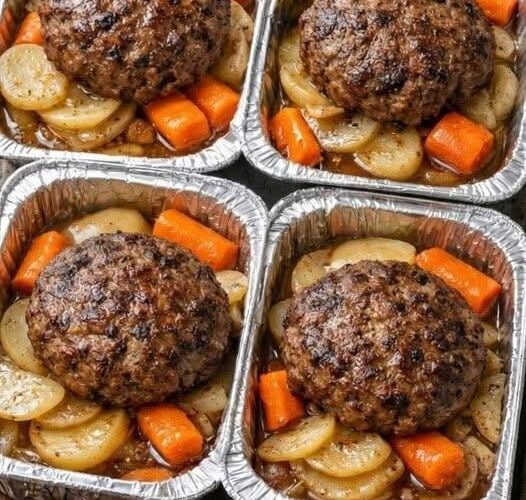
Homemade Hamburger Steaks with Potatoes and Carrots in Foil Pans
These homemade hamburger steaks with potatoes and carrots are a comforting, hearty meal made with seasoned ground beef patties, tender sliced potatoes, sweet carrots, and a rich, savory gravy. Everything cooks together in individual foil pans, allowing the vegetables to absorb the delicious juices from the beef while the patties become beautifully browned and flavorful.
Inspired by the dish in the picture, this recipe is perfect for family dinners, meal preparation, make-ahead lunches, and easy oven-baked comfort food. Each pan contains a complete serving of meat and vegetables, making it convenient to prepare individual portions without needing to cook several separate dishes.
The combination of juicy hamburger steaks, buttery potatoes, tender carrots, and homemade onion gravy creates a satisfying meal that tastes like traditional home cooking. The ingredients are simple, affordable, and easy to find at most grocery stores.
Recipe Overview
Recipe name: Hamburger Steaks with Potatoes and Carrots
Preparation time: 25 minutes
Cooking time: 45–60 minutes
Total time: Approximately 1 hour and 25 minutes
Servings: 4 individual portions
Cooking method: Oven baking
Oven temperature: 375°F (190°C)
Difficulty level: Easy to moderate
Best for: Family dinners, meal prep, busy weeknights, and comforting weekend meals
Why You Will Love This Recipe
One of the best things about this recipe is that it combines a protein-rich main dish with flavorful vegetables in the same pan. Instead of preparing hamburger steaks, potatoes, carrots, and gravy separately, you can arrange everything together and let the oven do most of the work.
The ground beef patties develop a delicious browned exterior and remain moist when prepared correctly. The potatoes absorb the savory cooking liquid, while the carrots become tender and slightly sweet. The gravy brings all the ingredients together, creating a rich sauce that can be spooned over the beef and vegetables just before serving.
Another advantage is portion control. Preparing four individual foil pans makes it easy to serve each person their own meal. It also helps with meal preparation because the ingredients are already divided into portions.
This recipe is flexible, too. You can add mushrooms, onions, green beans, or other vegetables according to your preferences. You can also adjust the seasonings to make the dish more peppery, garlicky, or herbaceous.
Ingredients
The following ingredients make four generous individual servings.
For the Hamburger Steaks
- 1 1/2 pounds ground beef, preferably 80–85% lean
- 1 small yellow onion, finely grated or minced
- 2 cloves garlic, minced
- 1 large egg
- 1/3 cup plain breadcrumbs
- 2 tablespoons milk
- 1 tablespoon Worcestershire sauce
- 1 teaspoon salt, or to taste
- 1/2 teaspoon freshly ground black pepper
- 1 teaspoon onion powder
- 1 teaspoon garlic powder
- 1 teaspoon smoked or regular paprika
- 1 tablespoon chopped fresh parsley, optional
- 1 tablespoon olive oil, for browning if desired
For the Potatoes and Carrots
- 4 medium potatoes, approximately 1 1/2 pounds
- 4 medium carrots
- 1 medium yellow onion, thinly sliced
- 2 tablespoons olive oil or melted butter
- 1 teaspoon salt, adjusted to taste
- 1/2 teaspoon black pepper
- 1 teaspoon garlic powder
- 1 teaspoon dried thyme
- 1/2 teaspoon paprika
- 1 tablespoon chopped fresh parsley, optional
For the Homemade Gravy
- 2 tablespoons butter
- 2 tablespoons all-purpose flour
- 1 1/2 cups beef broth
- 1 tablespoon Worcestershire sauce
- 1 teaspoon onion powder
- 1/2 teaspoon garlic powder
- 1/4 teaspoon black pepper
- Salt, as needed
- 1 teaspoon Dijon mustard, optional
- 1 teaspoon cornstarch mixed with 1 tablespoon cold water, optional for additional thickening
You can also use approximately 1 to 1 1/2 cups of prepared beef gravy instead of making it from scratch. Homemade gravy provides excellent flavor, but a good-quality prepared gravy can make the recipe quicker on busy days.
Equipment Needed
You will need four small oven-safe foil baking pans, approximately 7 by 5 inches or another size that comfortably holds one hamburger steak and its vegetables.
You will also need a large mixing bowl, a cutting board, a sharp knife, measuring cups and spoons, a whisk, a small saucepan, a baking sheet, aluminum foil, and an instant-read food thermometer.
The foil pans should be placed on a sturdy baking sheet before filling and baking. This makes them easier to move and helps prevent the pans from bending under the weight of the food.
Make sure the foil pans are labeled oven-safe. Disposable foil pans are convenient, but they can be flimsy, so always support them from underneath when handling.
Choosing the Best Ground Beef
Ground beef is the foundation of this recipe, so selecting the right type makes a difference.
Ground beef containing approximately 80–85% lean meat is a good choice because it provides enough fat to keep the hamburger steaks moist without producing excessive grease. Very lean ground beef can also work, but the patties may become dry if overcooked.
Fresh ground beef should have a clean, mild smell and be properly refrigerated before use. Keep it cold until you are ready to prepare the patties.
If you prefer a richer flavor, you can use ground chuck. Ground chuck typically works well for hamburger steaks because it has a good balance of meat and fat.
Avoid mixing the beef too aggressively. Overmixing compresses the meat and can create dense, firm patties. The goal is to combine the ingredients just enough to distribute the seasonings evenly.
Preparing the Potatoes
Potatoes are an important part of this dish because they soak up the beef juices and gravy as everything cooks.
Yukon Gold potatoes are an excellent option because they have a naturally buttery flavor and tend to hold their shape during baking. Russet potatoes can also be used, although they become softer and may break apart more easily. Red potatoes are another good choice if you prefer potatoes that retain their shape.
Wash the potatoes thoroughly under running water. Peel them if desired, or leave the skins on for a more rustic texture.
Cut each potato into slices approximately 1/4 inch thick. Try to keep the slices relatively uniform so they cook evenly.
Very thick slices may remain firm in the center while the carrots and hamburger steaks finish cooking. Extremely thin slices may become too soft and fall apart. Aim for consistent slices that are thick enough to hold their shape but thin enough to become tender in the oven.
If you prepare the potatoes ahead of time, place the slices in a bowl of cold water to prevent discoloration. Drain and pat them dry before seasoning.
Preparing the Carrots
Carrots add natural sweetness, color, and texture to the dish.
Wash and peel the carrots, then cut them into chunks approximately 1 inch long. Cutting the carrots into similarly sized pieces helps them cook at the same rate.
If your carrots are particularly thick, cut the larger pieces lengthwise before chopping them into chunks.
Baby carrots can also be used. Leave small baby carrots whole, or cut larger ones in half lengthwise.
For the best results, avoid cutting the carrots into extremely small pieces. Small pieces cook quickly and may become too soft during the time needed for the hamburger steaks and potatoes to finish.
Fresh carrots provide the best texture, but frozen carrots can work in a pinch. If using frozen carrots, add them while still frozen and allow for some variation in the cooking time.
Step-by-Step Instructions
Step 1: Preheat the Oven
Preheat your oven to 375°F (190°C).
Position a rack in the center of the oven so the heat circulates evenly around the foil pans.
Place the four foil pans on a sturdy rimmed baking sheet. If you are preparing only one or two servings, you can use a smaller baking sheet as long as there is enough room around each pan for the heat to circulate.
Do not place the filled pans directly on an unstable oven rack. A baking sheet makes them easier and safer to handle.
Step 2: Prepare the Hamburger Mixture
Place the ground beef in a large mixing bowl.
Add the grated onion, minced garlic, egg, breadcrumbs, milk, Worcestershire sauce, salt, black pepper, onion powder, garlic powder, paprika, and parsley if using.
Using clean hands or a fork, gently mix the ingredients until they are evenly distributed throughout the beef.
The mixture should hold together when shaped but should not feel excessively compact.
If the mixture seems unusually wet, add another tablespoon of breadcrumbs. If it feels too dry, add a small splash of milk.
Avoid adding too many breadcrumbs because they can make the hamburger steaks taste more like meatloaf than traditional hamburger patties.
Step 3: Shape the Hamburger Steaks
Divide the mixture into four equal portions.
Shape each portion into a thick, oval or round patty approximately 4–5 inches wide and around 3/4 to 1 inch thick.
The patties should be large enough to serve as the centerpiece of each foil pan while leaving space around the edges for the vegetables.
Press a small, shallow indentation into the center of each patty with your thumb. This can help reduce excessive doming during cooking.
Place the shaped patties on a clean plate while you prepare the vegetables.
Wash your hands and any utensils that have touched raw ground beef before handling other ingredients.
Step 4: Brown the Hamburger Steaks
Browning the patties before baking is optional, but it adds a deeper, roasted flavor and improves the color of the finished dish.
Heat the olive oil in a large skillet over medium-high heat.
When the skillet is hot, add the patties in batches if necessary. Avoid crowding the skillet because crowded patties tend to steam instead of brown.
Cook for approximately 2–3 minutes on the first side, until a brown crust develops. Carefully turn each patty and brown the other side for another 2 minutes.
The patties do not need to cook completely at this stage. They will finish cooking in the oven.
Transfer the browned patties to a clean plate.
If you skip this step, simply place the uncooked patties over the prepared vegetables and bake them until they reach a safe internal temperature. The finished patties may have a softer exterior and a less pronounced browned flavor.
Step 5: Season the Potatoes and Carrots
Place the sliced potatoes, carrot chunks, and sliced onion in a large bowl.
Add the olive oil or melted butter, salt, black pepper, garlic powder, thyme, and paprika.
Toss everything together until the vegetables are lightly coated.
Make sure the seasonings are distributed evenly. The potatoes should have a light coating of oil, while the carrots and onions should be mixed throughout the bowl.
If you enjoy a stronger herb flavor, add a little rosemary or Italian seasoning.
For a more traditional hamburger-steak flavor, keep the seasoning simple with salt, pepper, onion, garlic, and thyme.
Step 6: Divide the Vegetables Between the Foil Pans
Arrange the seasoned vegetables evenly among the four foil pans.
Spread the potato slices across the bottom of each pan, overlapping them slightly if necessary.
Place the carrots and sliced onions around and between the potatoes.
Try to keep the vegetables in a reasonably even layer. If the vegetables are piled too high, they may cook unevenly.
The onions are particularly useful because they release moisture and flavor as they cook, helping create a delicious base for the gravy.
Step 7: Make the Homemade Beef Gravy
Place a small saucepan over medium heat and add the butter.
Allow the butter to melt, then whisk in the flour.
Cook the mixture for approximately 1–2 minutes, stirring continuously. This creates a roux, which thickens the gravy and gives it a smooth texture.
Gradually pour in the beef broth while whisking constantly.
Adding the broth slowly helps prevent lumps from forming.
Once all the broth has been incorporated, add the Worcestershire sauce, onion powder, garlic powder, black pepper, and Dijon mustard if desired.
Bring the mixture to a gentle simmer.
Cook for approximately 3–5 minutes, stirring regularly, until the gravy begins to thicken. It should coat the back of a spoon but still be pourable.
Taste the gravy before adding extra salt because beef broth and Worcestershire sauce can already contain a substantial amount of sodium.
The gravy does not need to be extremely thick at this stage. It will continue to develop flavor as it cooks with the beef and vegetables.
Step 8: Add the Gravy to the Foil Pans
Carefully divide the gravy among the four pans.
Pour it over the potatoes, carrots, and onions, allowing some of the liquid to settle at the bottom of each pan.
Do not completely submerge the vegetables. You want enough gravy to keep them moist and provide a flavorful sauce, but the ingredients should not be swimming in liquid.
If the gravy is very thick, stir in a little additional beef broth before pouring it into the pans.
If you are using prepared gravy, warm it slightly so it pours easily.
Step 9: Place the Hamburger Steaks on Top
Place one hamburger steak in the center of each foil pan.
Arrange the vegetables around the sides so that the patties remain mostly exposed.
This arrangement resembles the meal shown in the photograph, with a large hamburger steak surrounded by sliced potatoes and orange carrot chunks.
Spoon a small amount of gravy over each patty, if desired.
Avoid pouring all the gravy directly over the tops because a little exposed surface helps preserve the browned appearance.
Step 10: Cover the Foil Pans
Cover each pan with aluminum foil.
Seal the foil loosely around the edges, leaving enough space above the food so it does not press directly against the hamburger steaks.
Covering the pans traps steam, which helps soften the potatoes and carrots and prevents the beef from drying out too quickly.
For a more browned finish, you will uncover the pans near the end of cooking.
If you prefer a slightly firmer potato texture and a more roasted flavor, you can leave the pans uncovered for part of the cooking time, but watch the liquid level carefully.
Step 11: Bake Until the Vegetables Are Tender
Place the baking sheet in the preheated oven.
Bake the covered pans for approximately 30–35 minutes.
The exact time will depend on the thickness of the hamburger steaks, the size of the vegetable pieces, and the material and depth of your pans.
After the first 30 minutes, carefully remove the baking sheet from the oven and lift a corner of the foil away from your face to release the steam.
Check the potatoes by piercing one of the thicker slices with a fork. They should be beginning to soften.
Check the carrots as well. They should be tender enough for a fork to enter with some resistance.
If the vegetables are still firm, cover the pans and return them to the oven for another 10–15 minutes.
Step 12: Uncover and Finish Baking
Once the vegetables have started to become tender, remove the foil covers.
Return the pans to the oven and continue baking for approximately 10–20 minutes, or until the hamburger steaks are cooked through and the vegetables are tender.
The exposed tops of the patties should develop a deeper brown color.
If the gravy has reduced too much, add a small amount of hot beef broth to each pan.
If there is more liquid than you prefer, continue baking uncovered for a few additional minutes, keeping a close eye on the food.
The finished dish should have tender vegetables, browned hamburger steaks, and enough savory gravy to spoon over the entire serving.
Step 13: Check the Internal Temperature
Ground beef should reach an internal temperature of 160°F (71°C) for food safety.
Insert an instant-read thermometer into the thickest part of each hamburger steak without touching the bottom of the pan.
Check each patty individually because they may not all cook at exactly the same rate.
If a patty has not reached 160°F, return the pan to the oven and continue cooking until it reaches the required temperature.
The potatoes should be fork-tender, and the carrots should be soft enough to eat comfortably.
Do not rely on the color of the meat alone to determine whether it is safely cooked.
Step 14: Rest and Finish the Dish
Remove the baking sheet from the oven and allow the hamburger steaks to rest for approximately 5 minutes.
Resting gives the juices time to settle and allows the gravy to cool slightly before serving.
Be careful when handling the foil pans because the edges will be hot. Place them on a heat-resistant surface, and avoid moving them by the foil rims alone.
Sprinkle freshly chopped parsley over the top if desired.
Spoon the gravy over the hamburger steaks and vegetables just before serving.
The dish is now ready to enjoy.
Tips for the Best Hamburger Steaks
Do Not Overmix the Beef
One of the most important steps is mixing the ground beef gently.
Overworking the mixture compresses the meat and can produce dense patties. Combine the ingredients only until the seasonings and binders are evenly incorporated.
Use Consistent Patty Sizes
Try to make all four patties similar in thickness.
If one patty is much thicker than the others, it may require additional cooking time. Consistent portions make the cooking process more predictable and help ensure that all servings finish at approximately the same time.
Slice the Potatoes Evenly
Uniform potato slices cook more consistently than a mixture of thick and thin pieces.
If the potatoes are cut too thickly, they may remain firm when the meat is ready. If they are too thin, they may become overly soft.
A thickness of approximately 1/4 inch works well for this recipe.
Do Not Skimp on the Gravy
The gravy is an important part of the finished dish because it flavors the vegetables and helps keep the meal moist.
Use enough gravy to coat the bottom of the pans and lightly cover the vegetables, but avoid filling the pans so high that the liquid spills during baking.
Brown the Patties for Extra Flavor
Although browning is optional, it creates a more savory flavor through the browning reactions that occur when meat is cooked over relatively high heat.
This step also gives the hamburger steaks a more appetizing appearance.
If you are short on time, you can skip browning and bake the patties directly over the vegetables.
Avoid Overcrowding
Leave a little space between the vegetables and around the patties whenever possible.
Overcrowding can prevent moisture from circulating evenly and may cause the vegetables to cook at different rates.
If your pans are small, use slightly fewer vegetables or divide the ingredients among additional pans.
Variations You Can Try
Hamburger Steaks with Mushrooms
For a richer, earthier version, add 8 ounces of sliced mushrooms to the vegetables.
Cremini mushrooms provide a deeper flavor, while white button mushrooms offer a milder taste.
Mix the mushrooms with the potatoes and carrots before dividing everything among the pans.
As the mushrooms cook, they release moisture and contribute additional flavor to the gravy.
Cheesy Hamburger Steaks
If you enjoy cheese, sprinkle approximately 1/2 cup of shredded cheddar or mozzarella over the hamburger steaks during the final 5 minutes of baking.
Allow the cheese to melt before removing the pans from the oven.
Cheddar creates a stronger, sharper flavor, while mozzarella gives a milder, stretchy topping.
This variation is particularly appealing for anyone who enjoys cheeseburger-inspired comfort food.
Garlic Butter Potatoes and Carrots
For a more buttery flavor, replace the olive oil with melted butter.
Add an additional clove of minced garlic and a little chopped parsley to the vegetable mixture.
The butter complements the beef and creates a rich flavor that works especially well with the potatoes.
Italian-Style Hamburger Steaks
Replace the thyme and paprika with Italian seasoning, and add a small pinch of dried oregano.
You can also add sliced bell peppers to the vegetables.
For a slightly different gravy, stir in a spoonful of tomato paste and a little extra broth.
This version has a more herbaceous flavor while maintaining the comforting texture of the original recipe.
Hamburger Steaks with Sweet Potatoes
Replace some or all of the regular potatoes with sweet potatoes.
Peel and cut the sweet potatoes into similarly sized pieces, but check them earlier because they may soften faster than some varieties of regular potatoes.
Their natural sweetness pairs nicely with the savory beef and onion gravy.
Spicy Hamburger Steaks
If you enjoy a little heat, add a pinch of crushed red pepper flakes or a small amount of cayenne pepper to the beef mixture.
You can also add black pepper and smoked paprika to the gravy.
Adjust the seasoning gradually so the spices enhance the beef rather than overpowering the other ingredients.
Onion-Rich Hamburger Steaks
For a classic diner-inspired flavor, add extra thinly sliced onions to each pan.
The onions soften during baking and blend with the beef broth, creating a delicious base for the gravy.
You can also sauté the onions briefly before adding them to the pans if you prefer a sweeter, more developed onion flavor.
What to Serve with Hamburger Steaks
Because this recipe already contains beef, potatoes, and carrots, it can be served as a complete meal. However, a few simple side dishes can make it feel even more special.
Steamed Green Beans
Green beans provide a fresh, slightly crisp contrast to the soft potatoes and rich gravy.
Steam them until tender but still bright green, then season with a little butter, black pepper, and lemon juice.
Garden Salad
A simple salad made with lettuce, cucumber, tomatoes, and a light vinaigrette adds freshness to the meal.
The acidity of the dressing helps balance the richness of the beef and gravy.
Dinner Rolls
Soft dinner rolls are perfect for soaking up the remaining gravy.
Serve them warm, with a little butter on the side.
Steamed Broccoli
Broccoli adds color and texture without requiring much additional preparation.
Steam or roast it separately while the hamburger steaks finish cooking.
Coleslaw
A crisp cabbage slaw offers a refreshing contrast to the warm, savory meal.
A vinegar-based dressing works particularly well because it adds brightness without making the overall meal feel too heavy.
Corn on the Cob
Sweet corn is another excellent side dish.
Serve it steamed or boiled with a little butter and black pepper.
For a simple family dinner, the hamburger steaks, potatoes, and carrots can be served on their own without any additional sides.
How to Prepare This Recipe Ahead of Time
This recipe can be prepared in advance to make busy evenings easier.
You can wash and cut the potatoes, carrots, and onions earlier in the day. Store the prepared vegetables in separate airtight containers in the refrigerator.
If you cut the potatoes ahead of time, keep them submerged in cold water to prevent browning. Before cooking, drain them thoroughly and pat them dry.
You can also mix and shape the hamburger steaks in advance. Place them in a covered container and refrigerate them promptly.
For the best quality, cook the ground beef within a day or two of purchasing it, following the storage guidance on the package.
The gravy can be prepared ahead of time as well. Refrigerate it in a covered container and gently reheat it with a small splash of broth if it becomes too thick.
For the freshest texture, assemble the pans shortly before baking. If the ingredients have been refrigerated, allow for some additional cooking time as needed, and always verify that the center of each patty reaches 160°F (71°C).
Do not leave raw ground beef or prepared meat mixtures at room temperature for extended periods.
How to Store Leftovers
Allow the cooked food to cool slightly before transferring it to shallow, airtight containers.
Refrigerate leftovers within 2 hours of cooking, or within 1 hour if the surrounding temperature is above 90°F (32°C).
Store the hamburger steaks, potatoes, carrots, and gravy together to help preserve moisture.
Refrigerated leftovers are generally best used within 3–4 days.
If you are using disposable foil pans, you may cover them securely for storage if the pans are suitable for refrigeration. However, transferring the food to airtight containers often provides better protection against spills and drying out.
Label the containers with the preparation date so you can keep track of how long the food has been stored.
How to Reheat Hamburger Steaks
Reheating in the Oven
Preheat the oven to 325°F (165°C).
Place the leftovers in an oven-safe dish and add a few tablespoons of beef broth or water if the gravy has thickened considerably.
Cover the dish with foil and heat until the food reaches an internal temperature of 165°F (74°C).
The exact time depends on the amount of food and the depth of the container, but individual portions often take approximately 15–25 minutes.
Check the center of the hamburger steak before serving.
Reheating in the Microwave
Place one serving in a microwave-safe container.
Add a spoonful of gravy or broth to help keep the meat and vegetables moist.
Cover loosely with a microwave-safe lid, leaving a vent for steam.
Heat in short intervals, stirring the vegetables and rotating the container as appropriate. Continue until the food is steaming hot throughout and reaches 165°F (74°C).
Allow it to stand briefly before eating, since microwaved food can have hot spots.
Never place ordinary metal foil pans in a microwave.
Reheating on the Stovetop
Place the hamburger steak and vegetables in a skillet with a little broth or gravy.
Cover the skillet and warm over low to medium-low heat, turning the patty carefully if needed.
Add more liquid if the gravy becomes too thick.
Continue heating until the entire portion reaches 165°F (74°C).
Can You Freeze This Recipe?
Yes, cooked hamburger steaks with potatoes and carrots can be frozen, although the texture of the potatoes may change slightly after thawing.
Allow the food to cool, then divide it into freezer-safe containers or bags. Include some gravy with each portion to help protect the meat from drying out.
Remove excess air from freezer bags and label each container with the date.
For best quality, use the frozen portions within approximately 2–3 months.
Thaw the food in the refrigerator rather than on the counter. Once thawed, reheat it until it reaches 165°F (74°C).
If the potatoes become a little softer after freezing, the gravy can help the dish remain enjoyable.
For the best texture, you may prefer to freeze the cooked hamburger steaks and gravy separately from freshly prepared potatoes and carrots.
Troubleshooting Common Problems
Why Are My Hamburger Steaks Dry?
Dry hamburger steaks can result from using very lean ground beef, overmixing the meat, making the patties too thin, or cooking them longer than necessary.
Use ground beef with a moderate fat content, mix gently, and shape the patties evenly.
Most importantly, use a thermometer to check the internal temperature rather than relying solely on cooking time.
The patties must reach 160°F (71°C), but once they are safely cooked, avoid unnecessary additional baking.
Why Are My Potatoes Still Hard?
Potatoes may remain firm if they are cut too thickly, the pans are overcrowded, or the cooking liquid is insufficient.
Cut the potatoes into uniform 1/4-inch slices and make sure there is some liquid in the bottom of each pan.
Keep the pans covered while the vegetables soften.
If the potatoes are still firm after the estimated cooking time, cover the pans again and continue baking until they are tender.
Why Is My Gravy Too Thin?
The gravy may be too thin if it contains too much liquid or has not simmered long enough.
You can thicken it by simmering uncovered for a few additional minutes, provided the hamburger steaks are not becoming overcooked.
Alternatively, stir together 1 teaspoon of cornstarch and 1 tablespoon of cold water, then gradually add the mixture to the simmering gravy.
Allow it to simmer briefly until thickened.
Avoid sprinkling dry cornstarch directly into the hot gravy because it can form lumps.
Why Is My Gravy Too Thick?
Gravy thickens as it cools and as liquid evaporates during baking.
If it becomes too thick, stir in a few tablespoons of warm beef broth until it reaches the consistency you prefer.
Add the liquid gradually so the gravy does not become watery.
Why Are My Carrots Still Firm?
Carrots can take longer to soften than thin potato slices, particularly when cut into large chunks.
Cut them into pieces of similar size and avoid using excessively large chunks.
If necessary, cover the pans and continue baking until the carrots are tender.
Why Is There Too Much Liquid in the Pans?
Vegetables release moisture as they cook, and ground beef also produces juices.
If the finished pans contain more liquid than expected, uncover them and continue baking briefly to allow some moisture to evaporate.
You can also spoon some of the liquid into a saucepan and simmer it until slightly reduced.
Taste before adding salt because the liquid may already be well seasoned.
Why Are the Patties Falling Apart?
Hamburger steaks may fall apart if the mixture contains too much liquid, the patties are handled roughly, or they are turned before they have developed a browned crust.
Use the recommended amount of egg and breadcrumbs, shape the patties gently, and handle them carefully when transferring them to the pans.
The egg and breadcrumbs help bind the mixture, while browning can improve the patties’ structure.
Frequently Asked Questions
Can I Make This Recipe Without Foil Pans?
Yes. A regular oven-safe baking dish works perfectly well.
Arrange the potatoes, carrots, and onions in the bottom of the dish, pour over the gravy, and place the hamburger steaks on top.
Cover the dish with aluminum foil and bake according to the recipe instructions.
A larger casserole dish may require slightly different cooking times depending on how deeply the ingredients are arranged.
Can I Use Frozen Hamburger Patties?
Yes, but the cooking time may be different.
For the most predictable results, thaw frozen patties safely in the refrigerator before assembling the pans. Then proceed with the recipe, browning the patties if desired.
If you cook patties directly from frozen, follow the package instructions and allow sufficient time for the centers to cook through. Confirm that each patty reaches 160°F (71°C).
Do not assume that the vegetables and frozen patties will finish cooking at the same time.
Can I Use Ground Turkey Instead of Beef?
Yes. Ground turkey can be used to make turkey patties.
Because turkey is generally leaner than many types of ground beef, consider adding a small amount of olive oil or another moisture-enhancing ingredient to the mixture.
Ground turkey must reach an internal temperature of 165°F (74°C).
The flavor will be milder, so you may want to increase the garlic, onion, thyme, or Worcestershire-style seasoning as appropriate.
Can I Use Chicken Broth Instead of Beef Broth?
Yes. Chicken broth can be substituted if that is what you have available.
The gravy will have a lighter flavor and may taste less traditionally beefy. Adding sautéed onions, garlic, and a little Worcestershire sauce can help create a richer result.
Vegetable broth is another possible substitute.
Do I Have to Brown the Hamburger Steaks First?
No. Browning is optional.
It adds a deeper flavor and a more attractive crust, but skipping it saves time and reduces the number of dishes you need to wash.
If you skip browning, arrange the raw patties over the vegetables and bake them until they reach a safe internal temperature.
Can I Make the Gravy Without Flour?
Yes. You can thicken the gravy with cornstarch instead.
Mix 1–2 teaspoons of cornstarch with a little cold water until smooth. Stir the mixture into simmering beef broth and cook until the liquid thickens.
Cornstarch produces a somewhat different texture from a flour-based roux, but it works well for this recipe.
Can I Add Other Vegetables?
Absolutely.
Mushrooms, green beans, celery, bell peppers, and parsnips can all work well.
Choose vegetables that can withstand the baking time. If you want to add quick-cooking vegetables, such as peas, add them toward the end so they do not become overly soft.
Is This Recipe Suitable for Meal Prep?
Yes. The individual foil pans make portioning straightforward.
For easier reheating, prepare the four portions, cool the cooked food promptly, and store each serving in an airtight container.
If you are preparing the recipe for several days, refrigerate the portions you plan to eat within 3–4 days and freeze any additional servings for later.
Can I Double the Recipe?
Yes. Simply double the ingredients and use additional foil pans.
If your oven cannot accommodate all the pans with enough space for heat circulation, bake them in batches.
Avoid stacking pans or crowding them too closely together, as this can affect cooking time and even browning.
Can I Make This Recipe Dairy-Free?
Yes. Use olive oil instead of butter and replace the milk in the hamburger mixture with an unsweetened, unflavored plant-based alternative or a little water.
Check the labels on the Worcestershire sauce, broth, breadcrumbs, and any prepared gravy if you need to avoid specific ingredients.
Can I Make the Recipe Gluten-Free?
Yes. Use certified gluten-free breadcrumbs, gluten-free beef broth, and a gluten-free thickener such as cornstarch.
Traditional flour can be replaced with a suitable gluten-free flour blend if you prefer a roux-based gravy.
Check Worcestershire sauce and other packaged seasonings for gluten-containing ingredients.
Estimated Nutrition Information
The nutrition values below are approximate and depend on the exact ingredients, the fat content of the beef, the size of the potatoes, and how much gravy is consumed.
For one serving, including one hamburger steak, a portion of potatoes and carrots, and gravy, the estimated nutritional content may be:
- Calories: 550–700
- Protein: 30–40 grams
- Carbohydrates: 40–55 grams
- Fat: 25–40 grams
- Fiber: 5–8 grams
- Sodium: 600–1,000 milligrams
These figures are estimates rather than laboratory-tested values. Using leaner ground beef, reducing the butter, choosing lower-sodium broth, or adjusting the portion sizes can change the final nutritional content considerably.
Serving Suggestions for a Family Dinner
For an attractive presentation, serve each hamburger steak in its own foil pan or transfer the food to individual plates.
Place the hamburger steak in the center, arrange the potato slices around it, and distribute the carrots along the edges.
Spoon the gravy over the meat and vegetables, then finish with a little fresh parsley.
If serving directly from foil pans, place each pan on a heat-resistant plate or tray. The pans can remain hot for some time after coming out of the oven, so allow the food to cool to a comfortable eating temperature.
For a more traditional presentation, transfer the hamburger steak to a plate and spoon the potatoes, carrots, and gravy alongside it.
A fresh salad, warm roll, or steamed green vegetable makes a lovely accompaniment.
Final Recipe Notes
These homemade hamburger steaks with potatoes and carrots offer everything that makes a classic comfort-food dinner so appealing: seasoned beef, tender vegetables, savory gravy, and simple ingredients that work together beautifully.
The individual foil-pan method makes the recipe especially convenient because each serving contains its own combination of meat, potatoes, carrots, and sauce. It is a practical choice for family meals, weekly meal preparation, and evenings when you want a hearty dinner without preparing several separate dishes.
For the best results, shape the patties gently, slice the potatoes evenly, use enough gravy to keep the vegetables moist, and check the internal temperature of every hamburger steak before serving.
Once you are comfortable with the basic recipe, you can easily adapt it with mushrooms, cheese, garlic butter, different vegetables, or your favorite herbs.
Serve the hamburger steaks hot with plenty of gravy, and enjoy a satisfying homemade meal inspired by the delicious dish in the picture.


