admin1
Homemade Orange Ginger Spice Tea: A Warm, Aromatic, and Comforting Herbal Infusion
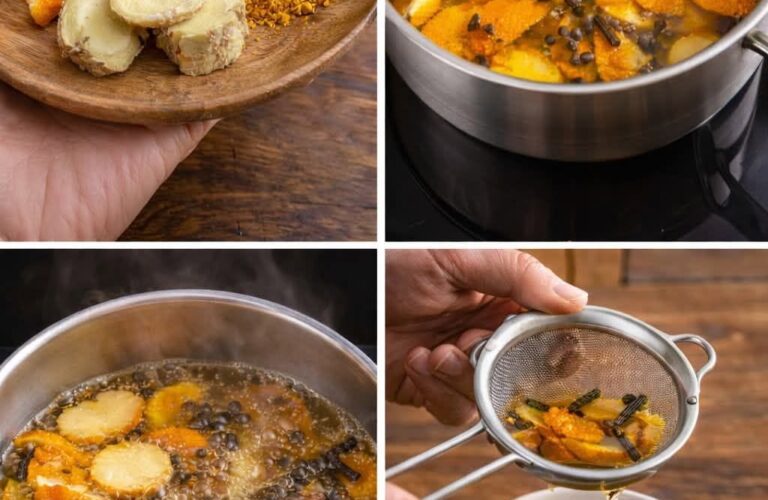
Homemade orange ginger spice tea is a fragrant, golden-colored drink made by gently simmering fresh ginger, orange peel, cinnamon, cloves, whole spices, and bay leaves in water. Inspired by the ingredients shown in the picture, this warming infusion combines bright citrus aromas with the naturally spicy flavor of ginger and the rich fragrance of cinnamon and cloves. The result is a delicious homemade beverage that can be enjoyed on a cool morning, during a relaxing afternoon, or as a comforting drink after a meal.
Unlike ordinary tea made with black tea leaves, this recipe is a caffeine-free herbal-style infusion when prepared without tea leaves. Its flavor comes entirely from the spices, citrus peel, and ginger, allowing each ingredient to contribute its own distinctive aroma. The orange peel adds a pleasant citrus fragrance, the ginger gives the drink a fresh and peppery warmth, and the cinnamon and cloves provide a deep, gently sweet spice flavor.
The recipe is simple enough for beginners, yet the combination of ingredients creates a drink that tastes carefully prepared and wonderfully balanced. You can enjoy it plain, sweeten it with honey or sugar, or adjust the ingredients to create a stronger, lighter, sweeter, or more citrus-forward version.
What Makes Orange Ginger Spice Tea Special
The beauty of this recipe lies in its simplicity. Instead of relying on complicated preparation techniques or expensive ingredients, it uses everyday aromatic ingredients to create a flavorful drink from scratch.
Fresh ginger gives the infusion its signature warmth. Orange peel contributes a bright, fruity fragrance, while cinnamon adds a mellow sweetness and cloves provide a bold, slightly peppery aroma. Whole spices release their flavors gradually as the water heats, producing a rich golden-brown liquid.
Bay leaves can be included for an earthy, herbal note, although they are optional. If you enjoy a more complex spice blend, you can also add a few cardamom pods or a small piece of star anise.
This tea is especially appealing because its strength can be controlled easily. A shorter simmer produces a light and delicate infusion, while a longer simmer creates a darker, more concentrated drink with a stronger ginger and spice flavor.
Preparation Time and Recipe Details
Preparation time: 10 minutes
Cooking time: 20–30 minutes
Total time: Approximately 30–40 minutes
Servings: 4 cups
Difficulty level: Easy
Best served: Warm
Flavor profile: Citrusy, spicy, aromatic, gently sweet, and warming
Dietary information: Naturally caffeine-free when made without tea leaves; vegan if served without honey.
Ingredients for Homemade Orange Ginger Spice Tea
Main Ingredients
4 cups water
Water is the foundation of the infusion. As it heats, it draws out the aromas and flavors of the ginger, orange peel, cinnamon, and whole spices. Filtered water is a good choice because it allows the natural flavors of the ingredients to come through clearly.
1 medium piece of fresh ginger, approximately 2–3 inches long
Fresh ginger is one of the most important ingredients in this recipe. It contributes a lively, peppery flavor and a pleasant warming sensation. Choose ginger that feels firm and fresh, with smooth skin and no soft or moldy patches.
Wash the ginger thoroughly before using it. You can peel it if you prefer a cleaner-looking infusion, but peeling is not essential when the skin is clean. Slice it into thin rounds to help the flavor release into the water.
For a mild tea, use a smaller piece of ginger. For a stronger, more pronounced ginger flavor, use a larger piece or lightly crush the slices before adding them to the saucepan.
Peel from 1 orange
Orange peel gives the tea its refreshing citrus aroma and beautiful golden color. It pairs naturally with ginger and warm spices, making the finished drink smell fresh and inviting.
Wash the orange thoroughly before peeling it. Whenever possible, choose an orange with fragrant skin. Remove strips of the colored outer peel, avoiding as much of the thick white pith as possible. The white pith can contribute bitterness if used in large quantities or simmered for too long.
Fresh orange peel provides a bright, lively flavor, while dried orange peel creates a deeper and slightly more concentrated citrus aroma. Both options work well.
1 cinnamon stick
Cinnamon contributes a sweet, woody fragrance that balances the sharpness of ginger and the brightness of orange. A whole cinnamon stick is preferable to ground cinnamon because it infuses the water without making the drink overly cloudy or leaving a heavy layer of powder at the bottom.
Use one medium cinnamon stick for a balanced flavor. If your cinnamon stick is particularly large or strong, you can use a smaller piece.
4–6 whole cloves
Cloves bring a rich, warm, slightly peppery flavor to the infusion. Their aroma is strong, so a small quantity is enough.
Whole cloves work better than ground cloves because they are easier to strain out and release their flavor gradually. Start with four cloves if you prefer a delicate spice profile, or use six for a more intense flavor.
1 bay leaf
A bay leaf is optional but complements the other spices with a subtle herbal fragrance. It adds complexity without making the drink taste overly sweet or strongly citrusy.
Use one clean, dry bay leaf. Remove it before serving because bay leaves are tough and should not be eaten.
Optional Ingredients
1–2 teaspoons honey
Honey adds a gentle sweetness that softens the stronger flavors of ginger and cloves. Stir it into the tea after pouring it into a cup, once the drink has cooled slightly.
You can adjust the amount according to your taste or leave it out entirely.
1–2 teaspoons sugar
Sugar is an alternative to honey and dissolves easily in hot tea. White sugar gives a clean sweetness, while brown sugar adds a deeper caramel-like note.
1 tablespoon fresh orange juice
A little orange juice can brighten the finished drink. Add it after simmering rather than cooking it for the entire time to preserve its fresh citrus flavor.
1–2 green cardamom pods
Cardamom introduces a floral, sweet-spicy fragrance that works beautifully with orange and cinnamon. Lightly crush the pods before adding them to the water.
1 small piece of star anise
Star anise gives the infusion a distinctive sweet, licorice-like aroma. It is optional and should be used sparingly so that it does not overpower the other ingredients.
A small strip of lemon peel
Lemon peel adds a sharper citrus note. Use it when you want the tea to taste brighter and less sweet.
A small pinch of black peppercorns
A few whole peppercorns can deepen the spice flavor. They are optional, especially if you already prefer the natural warmth of ginger and cloves.
Equipment Needed
You do not need specialized equipment to prepare this tea. A medium-sized saucepan, a cutting board, a sharp knife, a measuring cup, a wooden spoon, and a fine-mesh strainer are sufficient.
A heatproof teapot or serving jug is useful if you plan to serve several cups. A small ladle can also help you transfer the finished infusion without spilling it.
Choose a saucepan large enough to hold the water and ingredients comfortably. The liquid should have room to bubble gently without overflowing.
How to Prepare the Ingredients
Before beginning the cooking process, prepare each ingredient carefully. Good preparation helps the spices release their flavors evenly and makes the finished tea easier to strain.
Start by washing the ginger under cool running water. Remove any visible dirt, trim away dry ends, and slice the ginger into thin rounds. Thin slices expose more surface area to the hot water, helping the infusion develop a fuller flavor.
Next, wash the orange thoroughly. Use a vegetable peeler or small knife to remove several strips of the colored outer peel. Try to keep the strips relatively thin, with minimal white pith attached. You do not need to remove the entire orange peel if you only want a mild citrus flavor.
Place the ginger and orange peel on a clean plate. Measure the cloves and prepare the cinnamon stick and bay leaf. If using cardamom, gently crush the pods with the flat side of a knife to expose the seeds without grinding them into powder.
Keeping the ingredients ready before heating the water makes the process easier and helps prevent overcooking.
Step-by-Step Instructions
Step 1: Add the Water to a Saucepan
Pour four cups of water into a medium-sized saucepan. Place the saucepan on the stove over medium heat.
Allow the water to warm until it begins to produce small bubbles. It does not need to reach a vigorous boil before you add the ingredients.
Starting with water rather than adding everything to a very hot, dry saucepan allows the ingredients to heat gradually and release their aromas evenly.
Step 2: Add the Fresh Ginger
Add the sliced ginger to the water. Stir gently with a wooden spoon to distribute the slices throughout the saucepan.
As the water warms, the ginger begins releasing its distinctive spicy aroma. The liquid may gradually develop a pale golden tint.
If you prefer a stronger ginger flavor, gently press a few slices against the side of the saucepan with the back of the spoon. Avoid crushing every slice completely, as small pieces may make the finished drink harder to strain.
Let the ginger simmer gently for approximately five minutes before adding the remaining spices. This initial simmer gives the ginger time to begin flavoring the water.
Step 3: Add the Orange Peel
Add the prepared orange peel to the saucepan. Stir gently so that the strips are submerged as much as possible.
The orange peel introduces a fresh citrus fragrance that balances the ginger’s sharper notes. As the peel warms, its aromatic oils contribute a pleasant orange scent to the liquid.
Keep the heat moderate. A gentle simmer is preferable to an aggressive boil because prolonged, vigorous cooking can make the citrus flavor less delicate and may extract additional bitterness from the peel.
If you want a particularly bright orange aroma, reserve one small strip of fresh peel and add it during the final two minutes of cooking.
Step 4: Add the Cinnamon Stick and Cloves
Place the cinnamon stick and whole cloves into the saucepan. Stir carefully to distribute the spices.
Cinnamon releases its woody, sweet aroma gradually, while the cloves contribute a deeper, more intense spice character.
At this stage, the water should smell distinctly of ginger, orange, and warm spices. The color will become increasingly golden or amber as the infusion develops.
If you are using cardamom or star anise, add them now. Remember that these additional spices can become dominant if used in large quantities, so begin with small amounts.
Step 5: Add the Bay Leaf
Add one bay leaf if you are using it. Submerge it gently with the spoon.
The bay leaf contributes a subtle herbal quality that rounds out the citrus and spice flavors. It is not essential, so you can leave it out if you prefer a simpler infusion.
Allow the ingredients to simmer together for another 10–15 minutes.
Step 6: Simmer the Tea Gently
Reduce the heat to low or medium-low. The water should bubble gently rather than boil rapidly.
Let the mixture simmer for approximately 15–20 minutes in total, adjusting the time according to the strength you prefer. Because the ginger has already simmered for several minutes, you can begin tasting the infusion after about 15 minutes of total cooking.
Keep the saucepan uncovered or partially covered. Leaving it uncovered allows the aroma to develop freely, although more water may evaporate. Partially covering the saucepan helps retain more liquid and heat.
If too much water evaporates, add a small amount of hot water to restore the desired quantity.
Avoid boiling the mixture aggressively for a long time. A gentle simmer extracts the flavors without unnecessarily concentrating the bitter notes from the orange peel and spices.
Step 7: Taste and Adjust the Flavor
After the tea has simmered, carefully take a small spoonful of the liquid and allow it to cool before tasting.
If the ginger flavor is too mild, simmer for another three to five minutes. If the orange aroma needs to be brighter, add a little fresh orange juice after removing the saucepan from the heat.
If the cloves taste too strong, strain the tea immediately. Their flavor can become overpowering when the infusion is allowed to steep for too long.
For a milder drink, add a little hot water. For a more concentrated version, allow the liquid to simmer for a few additional minutes, watching the saucepan carefully.
The finished infusion should taste balanced, with recognizable ginger warmth, citrus freshness, and a gentle background of cinnamon and cloves.
Step 8: Turn Off the Heat and Allow the Tea to Rest
Once the desired flavor has developed, turn off the stove.
Let the saucepan rest for approximately two to three minutes. This short resting period allows the liquid to settle and makes handling the saucepan easier.
Do not leave the spices in the hot liquid indefinitely, especially if you are concerned about bitterness. Once the desired strength is reached, straining is the best way to preserve the flavor balance.
Step 9: Strain the Tea
Place a fine-mesh strainer over a heatproof jug or directly over a cup.
Carefully pour the liquid through the strainer, allowing the ginger slices, orange peel, cloves, cinnamon stick, and bay leaf to collect in the mesh.
Pour slowly because the liquid and saucepan will be hot. Use an oven mitt or heatproof glove if necessary, and keep your hands away from the rising steam.
Discard the used ingredients once the tea has been strained. Do not consume the whole cloves or bay leaf, and avoid eating the tough cinnamon bark.
The strained tea should have a clear golden-amber color, although the exact shade depends on the ingredients and cooking time.
Step 10: Sweeten and Serve
Pour the strained tea into heatproof cups.
If you like a sweeter drink, stir in a teaspoon of honey or sugar. Taste first and add more only if needed.
Honey is best added after the tea has been poured and cooled slightly. This makes it easier to control the sweetness and avoids exposing the honey to prolonged cooking.
You can also finish each cup with a small squeeze of fresh orange juice or a thin strip of orange peel for fragrance.
Serve the tea warm and enjoy its combination of citrus, ginger, and aromatic spices.
Tips for Achieving the Best Flavor
Use Fresh, Fragrant Ingredients
Fresh ginger and recently purchased spices generally provide the strongest aromas. Old spices may still be usable, but their fragrance can become weaker over time.
Choose an orange with clean, fragrant skin and avoid using peel from fruit that is moldy, spoiled, or unusually damaged.
Avoid Excessive White Pith
The white layer beneath orange skin can add bitterness. Removing mostly the colored outer peel produces a brighter, more pleasant citrus flavor.
A vegetable peeler is helpful because it creates thin strips while leaving much of the pith attached to the fruit.
Do Not Overuse Cloves
Cloves are powerful and can dominate the infusion. Four to six whole cloves are a reasonable starting point for four cups of water.
If you have never prepared this tea before, begin with four cloves and adjust the quantity in future batches.
Keep the Simmer Gentle
A gentle simmer gives the ingredients time to release their flavors. A rolling boil can cause excessive evaporation and may produce a harsher taste.
The water should show occasional bubbles rather than boiling violently.
Adjust the Ginger to Your Preference
Ginger is the main source of the tea’s peppery warmth. Thinly sliced ginger produces a balanced infusion, while crushed ginger generally creates a more pronounced flavor.
For a lighter drink, use less ginger and simmer for a shorter time. For a stronger infusion, increase the ginger slightly or allow the mixture to simmer longer.
Add Sweetener Only After Tasting
Orange peel, cinnamon, and ginger have enough natural aromatic complexity to make the tea enjoyable without sugar.
Taste the infusion before adding honey or sugar. This allows you to appreciate its natural flavor and prevents the finished drink from becoming excessively sweet.
Variations of Orange Ginger Spice Tea
Orange Ginger Cinnamon Tea
For a simple variation, focus on orange peel, fresh ginger, and cinnamon. Omit the bay leaf and use only two or three cloves.
This version has a smoother, more straightforward flavor. The cinnamon provides a warm sweetness while the orange keeps the drink fresh and lively.
It is a good option for anyone who prefers a less complex spice blend.
Strong Ginger and Orange Infusion
If you enjoy a stronger ginger flavor, use a larger piece of fresh ginger and slice it thinly. You can also lightly crush some of the slices before adding them to the water.
Simmer the ginger for five minutes before adding the orange peel and remaining spices. Continue cooking gently until the desired flavor develops.
This version is more peppery and robust, so a little honey can help soften the taste if you prefer a sweeter finish.
Orange Clove Spice Tea
For a deeper, more traditional spice flavor, emphasize the cinnamon and cloves while reducing the ginger slightly.
Use four cups of water, orange peel, one cinnamon stick, four to six cloves, and a small amount of ginger.
Simmer gently and strain promptly when the aroma becomes rich and balanced. This version pairs particularly well with a little brown sugar.
Orange Ginger Cardamom Tea
Add two lightly crushed green cardamom pods to the original recipe.
Cardamom contributes a sweet, floral aroma that complements the citrus peel. It also creates a more elaborate spice profile without requiring many extra ingredients.
This variation is particularly enjoyable when served warm in small cups.
Orange Ginger Lemon Tea
Prepare the original recipe, then add one or two teaspoons of fresh lemon juice after straining.
The lemon adds a sharper citrus note and makes the flavor taste brighter. Adjust the amount gradually because too much lemon can overpower the cinnamon and orange.
Naturally Sweet Orange Ginger Tea
For a naturally sweet-tasting version, use fragrant orange peel and a cinnamon stick, then allow the mixture to simmer until the flavors are well developed.
Cinnamon can create an impression of sweetness without actually adding sugar. If you want additional sweetness, a little honey or another preferred sweetener can be added to the finished cup.
The drink itself is not sugar-free if you add honey, sugar, or juice containing significant natural sugars.
Iced Orange Ginger Spice Tea
This infusion can also be served cold.
Prepare the tea as directed, strain it, and allow it to cool. Refrigerate it in a clean, covered container until chilled.
Pour it over ice and add a small strip of orange peel or a thin slice of fresh orange. If the chilled tea tastes too concentrated, add cold water until the flavor is balanced.
For the best quality, avoid leaving the prepared drink at room temperature for extended periods.
How to Store Homemade Orange Ginger Spice Tea
If you prepare more tea than you can drink immediately, allow the strained liquid to cool and transfer it to a clean, covered container.
Refrigerate it promptly and aim to use it within three to four days. If it develops an unusual smell, appearance, or taste, discard it.
Reheat only the quantity you intend to drink. Warm it gently in a saucepan or use a microwave-safe cup, checking the temperature before drinking.
For cold tea, pour the refrigerated infusion over ice shortly before serving.
Freezing is also possible if you want to keep the drink longer. Pour the cooled tea into freezer-safe containers, leaving room for expansion. Thaw it in the refrigerator and use it promptly after thawing. The flavor may change slightly after freezing, but the tea can still be convenient for later use.
Do not store the infusion with the cooked ginger, peel, and whole spices left inside for several days. Straining the liquid after preparation helps maintain a more predictable flavor.
Serving Suggestions
Orange ginger spice tea can be enjoyed on its own or alongside a light snack.
Serve it with plain biscuits, homemade scones, toast, or a slice of simple cake. Its citrus and spice notes also pair nicely with oat biscuits, ginger cookies, and lightly sweetened baked goods.
For a cozy breakfast, pour a cup alongside toast or a small bowl of oatmeal. In the afternoon, serve it in a favorite mug with a little honey on the side.
If serving guests, prepare a larger batch and keep the strained tea warm in a heatproof jug. Offer honey or sugar separately so everyone can adjust the sweetness.
You can also serve the tea after a meal as a flavorful alternative to ordinary hot beverages. Its warm spice aroma makes it particularly pleasant during cooler weather, although it can be enjoyed throughout the year.
Frequently Asked Questions
Can I make this tea without fresh ginger?
Yes. Fresh ginger provides the best texture and a bright flavor, but dried ginger can be used if necessary. Begin with a small amount because dried ginger may have a more concentrated taste.
The exact quantity depends on the form and strength of the dried product. Add it gradually, simmer briefly, and taste before adding more.
Can I use bottled orange juice instead of orange peel?
You can add a little orange juice to the finished tea, but it will not produce exactly the same flavor as orange peel.
The colored peel contains aromatic oils that contribute the characteristic orange fragrance. Juice adds acidity and fruitiness instead.
For the closest match to the pictured recipe, use orange peel as the primary citrus ingredient and add juice only if desired.
Is this recipe caffeine-free?
Yes, provided you prepare it with water, ginger, orange peel, cinnamon, cloves, and the optional bay leaf without adding black tea, green tea, or another caffeinated ingredient.
The drink is therefore a suitable option for people looking for a warm beverage without the caffeine found in traditional tea leaves. Individual dietary needs and sensitivities may vary.
Can I drink this tea without honey?
Absolutely. Honey is entirely optional.
The ginger, orange peel, and spices provide plenty of aroma and flavor on their own. If you prefer a less sweet drink, simply strain the infusion and serve it plain.
Why does my tea taste bitter?
Bitterness may come from too much white pith on the orange peel, an excessive quantity of cloves, or simmering the ingredients for too long.
To improve the next batch, remove more of the pith, use fewer cloves, and strain the liquid once it reaches the flavor you like.
You can also dilute an overly strong batch with a little hot water.
Can I prepare this tea in advance?
Yes. Prepare the infusion, strain it, cool it promptly, and refrigerate it in a covered container.
Reheat a serving when needed or drink it chilled. Preparing the tea in advance can be convenient when you want several servings throughout the day.
Can I use ground cinnamon and ground cloves?
Whole spices are recommended because they are easier to remove and generally produce a cleaner-looking infusion.
If you only have ground spices, use very small amounts and expect the tea to be cloudier. A fine-mesh strainer or a suitable paper filter may help remove some of the particles.
Can I add turmeric?
A small amount of culinary turmeric can be added if you enjoy its earthy flavor. However, turmeric will change the color and taste of the original recipe.
Start with a small pinch, mix thoroughly, and taste before adding more. Turmeric can settle at the bottom of the cup, so stir before drinking.
Is this tea a treatment for colds or inflammation?
This drink can be soothing and hydrating, and the warm liquid may feel comforting when you have a scratchy throat. However, it should not be considered a cure for colds, infections, or inflammatory conditions.
Although ginger and some spices have been studied for various health effects, the benefits of this particular homemade infusion are not established as a medical treatment. Seek appropriate medical advice for persistent or severe symptoms.
Can I drink it every day?
For many people, an ordinary culinary-strength infusion can be enjoyed as part of a varied diet. However, concentrated ginger or spice drinks may not suit everyone, particularly people who experience heartburn or stomach irritation.
If you take medication or have a medical condition that requires dietary precautions, ask a healthcare professional whether regular use is appropriate for you.
Can I make a larger batch for the whole family?
Yes. You can double the ingredients to make approximately eight cups, using eight cups of water and proportionally increasing the ginger, orange peel, cinnamon, and cloves.
Use a sufficiently large saucepan and keep the simmer gentle. Because spices vary in strength, taste the infusion as it cooks rather than assuming that the cooking time must double.
Can I reuse the spices for another batch?
You can reuse the ingredients once for a weaker second infusion, but most of their flavor will already have been extracted.
The second batch may taste noticeably lighter. For the most consistent flavor, fresh ingredients are preferable. Discard used ingredients promptly rather than storing them at room temperature.
Common Mistakes to Avoid
One common mistake is adding too much orange peel, especially when the white pith is included. This can make the finished tea unpleasantly bitter. Thin strips of colored peel usually give a cleaner citrus flavor.
Another mistake is using too many cloves. Although cloves smell wonderful, they are strong enough to overpower the ginger and orange when used excessively.
Boiling the tea too vigorously is also unnecessary. A steady, gentle simmer is sufficient to release the flavors and makes it easier to control evaporation.
Some people add large amounts of sweetener before tasting the drink. This can hide the natural citrus and spice balance. Start with the unsweetened infusion and add sweetness only if needed.
Finally, avoid leaving the finished tea on the stove with all the spices for an extended period. Once the flavor is right, strain the liquid to prevent it from becoming excessively strong.
A Simple Method for Adjusting the Recipe to Your Taste
If you are preparing this tea for the first time, the original quantities provide a balanced starting point. After tasting it, you can make small changes based on your preferences.
For a brighter citrus flavor, use fresh orange peel and add a little orange juice after straining.
For a stronger ginger flavor, slice the ginger more thinly or increase the amount slightly.
For a sweeter spice aroma, use cinnamon and a small amount of cardamom.
For a deeper clove flavor, add one extra clove at a time rather than increasing the quantity substantially.
For a lighter drink, use less ginger and simmer for a shorter period.
For a more concentrated infusion, simmer gently for a few additional minutes while monitoring the amount of water remaining.
These adjustments make it easy to develop a version that suits your taste without making the preparation complicated.
Final Thoughts
Homemade orange ginger spice tea is a simple yet flavorful beverage that transforms fresh ginger, orange peel, cinnamon, cloves, and optional bay leaves into a warm, fragrant infusion. Its appeal comes from the balance between bright citrus, peppery ginger, and aromatic spices, creating a drink that is comforting without requiring complicated ingredients or equipment.
The preparation is straightforward: wash and slice the ingredients, simmer them gently in water, strain the infusion, and sweeten if desired. You can enjoy it hot, refrigerate it for later, or serve it over ice during warmer weather.
For the best results, use fresh ingredients, remove excess orange pith, keep the simmer gentle, and strain the tea as soon as it reaches the flavor you prefer. Once you understand the basic method, you can experiment with cardamom, lemon, honey, or other complementary ingredients to create your own version.
Whether you prepare a single cup for a quiet afternoon or a larger batch to share with family, this orange ginger spice tea offers a delicious way to enjoy the natural aromas of citrus and warming spices in one comforting homemade drink.