admin1
Air Fryer Sizzling Chicken Fajita Strips
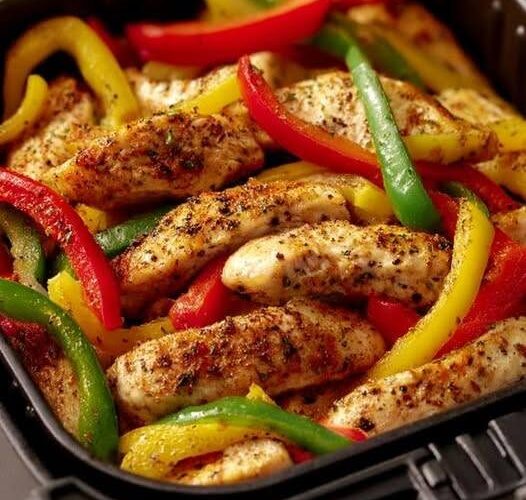
Air Fryer Sizzling Chicken Fajita Strips are a delicious, colorful, and easy-to-prepare meal featuring tender chicken, sweet bell peppers, flavorful onions, and a bold homemade fajita seasoning. The chicken is sliced into thin strips, coated with aromatic spices, and air-fried until beautifully golden on the outside while remaining juicy and tender inside. The peppers and onions become slightly caramelized, adding natural sweetness, a pleasant texture, and plenty of flavor to every bite.
This recipe brings the irresistible taste of sizzling restaurant-style chicken fajitas into your kitchen without requiring a heavy skillet, excessive oil, or complicated cooking techniques. The air fryer circulates hot air around the chicken and vegetables, helping them cook quickly while developing delicious browned edges. The result is a satisfying, protein-rich meal that works beautifully for lunch, dinner, meal preparation, or a relaxed family gathering.
One of the best things about this recipe is its versatility. You can serve the sizzling chicken fajita strips inside warm tortillas, spoon them over fluffy rice, add them to a fresh salad, or enjoy them in a nourishing grain bowl. You can also customize the seasoning according to your preferred level of spice, making the dish mild and family-friendly or bold and smoky.
The combination of paprika, cumin, garlic, onion, chili powder, black pepper, and fresh lime juice creates a balanced fajita flavor that complements both the chicken and the vegetables. A small amount of oil helps the seasoning adhere to the ingredients and encourages even browning, while lime juice adds brightness and balances the richness of the spices.
Whether you are preparing a quick weeknight dinner or looking for a reliable recipe that can become part of your regular meal rotation, these Air Fryer Sizzling Chicken Fajita Strips are an excellent choice. With simple ingredients, straightforward preparation, and plenty of serving possibilities, this recipe delivers a flavorful homemade meal with minimal effort.
Why You Will Love These Air Fryer Chicken Fajita Strips
There are many reasons to make this recipe, especially when you want a meal that tastes delicious without requiring hours in the kitchen.
First, the chicken cooks relatively quickly. Cutting the chicken into evenly sized strips allows the hot air to circulate around the pieces, helping them cook more efficiently than large, whole chicken breasts.
Second, the seasoning creates a wonderfully balanced flavor. Smoked paprika provides a subtle smoky taste, cumin adds warmth, garlic and onion powder bring savory depth, and chili powder contributes the characteristic fajita flavor. Fresh lime juice ties everything together with a bright, citrusy finish.
Third, the peppers and onions make the meal more colorful and flavorful. Red, yellow, and green bell peppers each contribute a slightly different taste, while sliced onions become tender and sweet as they cook.
Another advantage is that the recipe uses a relatively small amount of oil. You do not need to deep-fry the chicken or vegetables to achieve a satisfying result. The air fryer helps develop browned edges while keeping the preparation simple.
Finally, these fajita strips are easy to customize. You can change the vegetables, adjust the spices, prepare a larger batch in multiple rounds, or serve the finished dish with your favorite toppings.
Recipe Overview
Preparation time: 15 minutes
Marinating time: 15–30 minutes, optional
Cooking time: 10–16 minutes per batch, depending on the thickness of the chicken and your air fryer
Total time: Approximately 40–60 minutes, including optional marinating
Servings: 4
Course: Main course
Cuisine: Tex-Mex inspired
Cooking method: Air frying
Difficulty level: Easy
Best served with: Warm tortillas, rice, salad, guacamole, salsa, or your favorite fajita toppings
Ingredients for Air Fryer Sizzling Chicken Fajita Strips
For the chicken
- 1 ½ pounds boneless, skinless chicken breasts, approximately 680 grams
- 1 ½ tablespoons olive oil
- 1 tablespoon fresh lime juice
- 1 teaspoon smoked paprika
- 1 teaspoon ground cumin
- 1 teaspoon chili powder
- 1 teaspoon garlic powder
- ½ teaspoon onion powder
- ½ teaspoon dried oregano
- ½ teaspoon ground black pepper
- ¾ teaspoon salt, or to taste
- ¼ teaspoon cayenne pepper, optional
- ½ teaspoon ground coriander, optional
Boneless, skinless chicken breasts are an excellent choice because they are easy to slice into thin, even strips. They also absorb the fajita seasoning well and cook quickly in the air fryer.
You can use boneless, skinless chicken thighs instead if you prefer a slightly richer flavor. Chicken thighs tend to remain juicy because they contain more fat, although their cooking time may vary depending on the size of the strips.
Olive oil helps the spices coat the chicken evenly and encourages browning. You can use avocado oil or another suitable cooking oil if that is what you have available.
Fresh lime juice adds a refreshing citrus flavor. If you do not have lime, lemon juice can be used, although the flavor will be slightly different.
Smoked paprika provides a subtle smoky character. If you only have regular sweet paprika, you can substitute it without significantly changing the overall recipe.
The chili powder gives the chicken its familiar fajita flavor. Because chili powder blends vary in heat, start with the amount listed and adjust the cayenne pepper separately if you want a hotter result.
For the bell peppers and onions
- 1 medium red bell pepper
- 1 medium green bell pepper
- 1 medium yellow or orange bell pepper
- 1 large yellow onion
- 1 tablespoon olive oil
- ½ teaspoon garlic powder
- ½ teaspoon smoked paprika
- ¼ teaspoon ground cumin
- ¼ teaspoon salt, or to taste
- ¼ teaspoon ground black pepper
- 1 teaspoon fresh lime juice, optional
Red bell peppers provide a naturally sweet flavor and vibrant color. Green bell peppers have a slightly more pronounced, earthy taste, while yellow and orange peppers add sweetness and a bright appearance.
Yellow onions are particularly suitable because they become tender and sweet as they cook. Red onions can also be used if you prefer their slightly sharper flavor.
Try to cut all the vegetables into strips of approximately similar thickness. This helps them cook more evenly and makes them easier to combine with the chicken when serving.
Optional garnishes and toppings
- Fresh chopped cilantro
- Lime wedges
- Sliced jalapeños
- Diced tomatoes
- Shredded lettuce
- Grated cheddar or Monterey Jack cheese
- Sour cream or plain yogurt
- Guacamole
- Fresh tomato salsa
- Pico de gallo
- Sliced avocado
- Warm flour or corn tortillas
- Cooked rice
- Black beans
- Refried beans
- Pickled red onions
These additions are optional, so choose the ones that best suit your taste and the way you intend to serve the fajitas.
Equipment You Will Need
You will need an air fryer, a sharp knife, a cutting board, a mixing bowl, measuring spoons, kitchen tongs, and a clean plate or serving dish.
A meat thermometer is especially useful because it allows you to check whether the chicken has reached a safe internal temperature without overcooking it.
If your air fryer has a relatively small basket, you may need to cook the chicken and vegetables in separate batches. This is perfectly fine and often produces better results than filling the basket too heavily.
How to Prepare the Chicken for Fajitas
Begin by placing the chicken breasts on a clean cutting board. Pat them dry with paper towels to remove excess surface moisture. This small step helps the oil and seasoning adhere to the meat and supports better browning during air frying.
If the chicken breasts are especially thick, slice them horizontally into thinner pieces before cutting them into strips. This makes it easier to produce strips of a consistent thickness.
Cut the chicken into strips approximately ½ inch wide. Aim for similar lengths and thicknesses so that the pieces cook at roughly the same rate.
Avoid cutting some pieces extremely thin while leaving others thick. Very thin strips can become dry before thicker pieces are fully cooked, making consistent slicing an important part of the preparation.
Place the chicken strips in a large mixing bowl. Add the olive oil and fresh lime juice, then toss gently to coat the meat.
Next, add the smoked paprika, cumin, chili powder, garlic powder, onion powder, oregano, black pepper, salt, and optional cayenne pepper and coriander.
Use clean hands or a spoon to mix everything thoroughly. Every strip should have a light, even coating of seasoning.
The chicken should appear evenly colored, with the spices distributed across the surface rather than gathered in a few concentrated areas.
For the best flavor, allow the seasoned chicken to rest in the refrigerator for 15–30 minutes. This gives the seasoning time to settle into the surface of the meat.
If you are short on time, you can cook the chicken immediately. The seasoning will still provide plenty of flavor, so marinating is optional rather than essential.
Because this marinade contains fresh lime juice, there is no need to leave the chicken in it for several hours. A short resting period is sufficient for this quick-cooking recipe.
Always keep raw chicken refrigerated while it marinates, and never reuse marinade that has been in contact with raw chicken as a finishing sauce unless it has been thoroughly cooked.
How to Prepare the Bell Peppers and Onions
Wash the bell peppers under clean running water and dry them with a clean towel.
Cut each pepper in half and remove the stem, seeds, and inner membranes. Slice the peppers into strips approximately ¼–½ inch wide.
Try to keep the strips similar in size. Very thin pieces may soften quickly, while thicker pieces will retain more firmness and crunch.
Peel the onion and cut it in half from top to bottom. Place each half flat on the cutting board and slice it into thin strips.
Separate the onion layers gently with your fingers.
Transfer the peppers and onions to a separate bowl. Add the olive oil, garlic powder, smoked paprika, cumin, salt, and black pepper.
Toss the vegetables until they are lightly coated. You do not need to use a large amount of oil because the vegetables will release some moisture as they cook.
If you prefer vegetables with a little more bite, keep the strips slightly thicker and avoid cooking them for too long.
If you prefer soft, caramelized vegetables, cut them a little thinner and allow them to cook until the edges begin to brown.
The ideal texture for fajitas is somewhere between crisp and tender. The vegetables should be cooked through while retaining enough structure to hold their shape when placed inside tortillas.
Step-by-Step Instructions for Air Fryer Sizzling Chicken Fajita Strips
Step 1: Preheat the air fryer
Preheat your air fryer to 380°F, or approximately 193°C, for 3–5 minutes if your model recommends preheating.
Preheating helps the chicken begin cooking as soon as it enters the basket. It can also encourage more consistent browning.
Some air fryers do not require preheating, so follow your appliance’s instructions if they differ.
Step 2: Arrange the chicken in the basket
Lightly grease the air fryer basket if necessary, following the manufacturer’s guidance.
Arrange the seasoned chicken strips in a single layer. Leave a little space between the pieces so that hot air can circulate around them.
Do not pile the strips on top of one another. Crowding traps moisture and can prevent the chicken from browning properly.
If you have a small air fryer, cook the chicken in two batches. Although this takes slightly longer, it generally produces better texture.
Step 3: Air-fry the chicken
Cook the chicken at 380°F, or 193°C, for approximately 8–12 minutes, turning or tossing the strips halfway through.
The exact cooking time depends on the thickness of the strips, the size of the basket, and the performance of your air fryer.
Begin checking thinner strips around the 7–8 minute mark. Thicker pieces may require additional time.
The chicken should develop lightly browned edges, and the seasoning should look fragrant and well distributed.
Avoid judging doneness by color alone. The safest method is to check the thickest pieces with a food thermometer. Chicken should reach an internal temperature of 165°F, or 74°C.
If the strips have not reached that temperature, continue cooking in short increments and check again.
Once cooked, transfer the chicken to a clean plate. Keep it loosely covered while you prepare the vegetables, but do not leave it at room temperature for an extended period.
Step 4: Air-fry the peppers and onions
Place the seasoned bell peppers and onions in the air fryer basket.
Cook them at 380°F, or 193°C, for approximately 6–9 minutes, shaking the basket halfway through.
Check the vegetables after about 5 minutes if you prefer them crisp. Continue cooking until they reach your preferred texture.
The peppers should soften slightly, while the onions become tender and begin developing golden edges.
If you prefer more pronounced browning, increase the temperature slightly toward the end of cooking, provided your appliance allows it and the vegetables are not burning.
Keep an eye on thin onion strips because they may brown faster than the peppers.
For a small air fryer, cook the vegetables in batches rather than packing them tightly into the basket.
Step 5: Combine the chicken and vegetables
Once the chicken and vegetables are cooked, return the chicken strips to the basket with the peppers and onions.
Toss them gently with tongs to distribute the ingredients.
Air-fry everything together for another 1–2 minutes at 380°F, or 193°C, to bring the flavors together and warm the chicken.
Check that the chicken remains at a safe temperature and avoid extending the cooking time unnecessarily.
If you want an extra burst of freshness, add a small squeeze of lime juice after cooking rather than pouring a large amount into the basket.
The finished mixture should contain juicy chicken strips, colorful peppers, tender onions, and lightly browned edges.
Step 6: Finish with lime juice and fresh herbs
Transfer the chicken fajita mixture to a serving dish.
Squeeze fresh lime juice over the top and sprinkle with chopped cilantro if desired.
The lime juice adds a refreshing contrast to the smoky seasoning, while cilantro contributes a fresh herbal flavor.
If you enjoy a little extra heat, add thin slices of jalapeño or a small pinch of cayenne pepper.
For a richer finish, serve the fajitas with guacamole, shredded cheese, or a spoonful of sour cream.
Step 7: Serve immediately
Serve the chicken fajita strips while they are hot and juicy.
For a traditional presentation, place the chicken and vegetables on a warm platter and arrange tortillas, lime wedges, salsa, and other toppings nearby.
Allow everyone to build their own fajitas by filling a tortilla with the chicken mixture and adding their preferred toppings.
You can also serve the mixture over rice, inside lettuce wraps, or alongside roasted potatoes.
How to Make the Chicken Extra Juicy
Juicy chicken depends on several small but important details.
The first is the thickness of the strips. Cutting the chicken into reasonably even pieces prevents the thinner strips from becoming overcooked while the thicker pieces finish cooking.
The second is the amount of oil. You only need enough to lightly coat the meat and help the seasoning adhere. Too much oil is unnecessary, but leaving the chicken completely dry may make the seasoning less evenly distributed.
The third is avoiding overcrowding. When chicken strips are packed tightly together, moisture accumulates and the meat may steam instead of developing browned edges. Cooking in batches is a better option when necessary.
The fourth is monitoring the internal temperature. Chicken breast is lean, so cooking it far beyond the recommended safe temperature can make it dry and firm. Use a thermometer and remove the chicken once the thickest pieces reach 165°F, or 74°C.
Finally, allow the cooked chicken to rest briefly before serving. A short rest helps the juices settle and makes the strips more pleasant to eat.
How to Get Beautifully Browned Fajita Strips
The sizzling, browned appearance is one of the most appealing features of restaurant-style fajitas.
To encourage browning in the air fryer, begin with chicken that has been patted dry. Excess moisture on the surface can delay browning.
Use a light coating of oil rather than soaking the chicken. Oil supports heat transfer and helps the spices develop a more appealing color.
Leave space between the strips. Air circulation is essential for achieving the characteristic air-fried texture.
Avoid adding large amounts of lime juice before cooking. A little is useful for flavor, but too much liquid can leave the chicken wet.
Shake or turn the chicken halfway through cooking to expose different surfaces to the hot air.
If your air fryer has a suitable higher-temperature setting, you may finish the cooked strips briefly at 400°F, or 204°C, to develop extra color. Keep the finishing period short and monitor the chicken carefully to avoid drying it out.
The vegetables can be browned separately because they release moisture at a different rate than chicken. Combining them only near the end helps preserve the texture of both ingredients.
The Best Homemade Fajita Seasoning
A balanced fajita seasoning should be smoky, savory, mildly earthy, and slightly spicy without allowing any single ingredient to overpower the others.
For this recipe, smoked paprika provides the smoky foundation. Cumin contributes a warm, earthy flavor, while garlic and onion powders add savory depth.
Chili powder gives the mixture its recognizable Tex-Mex inspired character. Oregano provides a gentle herbal note, and black pepper adds a mild, sharp finish.
Cayenne pepper is optional because it increases heat quickly. If you are preparing the meal for children or anyone who prefers mild food, leave it out.
For a brighter seasoning profile, add a little finely grated lime zest before cooking. The zest provides citrus aroma without introducing as much liquid as additional juice.
You can also prepare a larger quantity of the dry spices and keep them in a sealed container for future meals. For the freshest flavor, store the blend away from heat, sunlight, and moisture.
If you prepare the dry blend in advance, add the olive oil and lime juice only when you are ready to season the chicken.
Tips for Perfect Air Fryer Chicken Fajitas
Use evenly cut chicken strips. Similar thickness helps all the pieces finish cooking at approximately the same time.
Preheat when appropriate. A preheated air fryer can help the chicken begin browning more consistently.
Do not overcrowd the basket. A single layer is best for proper air circulation and a more attractive finish.
Shake the basket halfway through cooking. This helps expose more surfaces to the hot air.
Season the chicken and vegetables separately. This allows you to control the flavor and amount of seasoning on each ingredient.
Cook according to temperature, not just time. Air fryers vary, and chicken thickness makes a significant difference.
Add fresh lime juice after cooking if you want a brighter finish. This preserves its fresh citrus flavor.
Warm your tortillas before serving. Warm tortillas are softer, more flexible, and less likely to tear when filled.
Prepare the toppings in advance. Once the chicken is ready, the fajitas can be served immediately without a long delay.
How to Serve Air Fryer Sizzling Chicken Fajita Strips
Classic chicken fajitas
Warm flour or corn tortillas and fill each one with chicken strips, bell peppers, and onions.
Add salsa, guacamole, shredded lettuce, or a little cheese according to your preference.
Fold the tortilla around the filling and serve with lime wedges. This is one of the easiest and most traditional ways to enjoy the recipe.
Chicken fajita rice bowls
Spoon cooked rice into individual bowls and top with the chicken and vegetable mixture.
Add black beans, corn, chopped tomatoes, avocado, and fresh cilantro for a colorful, satisfying meal.
A little lime juice mixed into the rice can complement the seasoning in the chicken.
Brown rice, white rice, and cilantro-lime rice all work well.
Chicken fajita salad
Place shredded lettuce or mixed salad greens in a bowl.
Add the warm chicken strips, peppers, onions, tomatoes, cucumber, and avocado.
Finish with a simple lime dressing made from lime juice, a small amount of olive oil, black pepper, and a pinch of salt.
Allow the chicken to cool slightly before adding it to delicate greens if you do not want them to wilt.
Chicken fajita wraps
Spread a thin layer of plain yogurt, sour cream, or guacamole over a large tortilla.
Add the chicken fajita mixture, lettuce, tomatoes, and shredded cheese.
Fold in the sides, roll tightly, and slice in half.
These wraps are suitable for lunch, a packed meal, or a quick dinner.
Chicken fajita quesadillas
Place chicken, peppers, onions, and shredded cheese over half of a tortilla.
Fold the tortilla and cook it in a skillet until the outside is golden and the cheese has melted.
Cut into wedges and serve with salsa or guacamole.
This is an excellent way to use leftover fajita filling.
Chicken fajita lettuce wraps
For a lighter serving option, spoon the chicken mixture into large, clean lettuce leaves.
Butter lettuce and romaine leaves work particularly well because they can hold the filling.
Add diced tomatoes, avocado, cilantro, and a little lime juice before serving.
Chicken fajita loaded potatoes
Serve the chicken mixture over a baked potato or roasted potato wedges.
Add a spoonful of plain yogurt or sour cream, a little cheese, and chopped green onions.
The combination of seasoned chicken and soft potato makes a comforting alternative to tortillas.
Delicious Variations to Try
Spicy air fryer chicken fajita strips
For a hotter version, increase the cayenne pepper slightly or add finely chopped jalapeños to the vegetables.
You can also serve the finished chicken with a spicy salsa.
Make changes gradually, especially if you are cooking for people with different spice preferences.
Mild family-friendly fajita strips
Leave out the cayenne pepper and reduce the chili powder if necessary.
Keep the smoked paprika, garlic powder, cumin, and onion powder because these ingredients provide plenty of flavor without requiring strong heat.
Serve spicy sauces separately so everyone can customize their meal.
Garlic lime chicken fajitas
Increase the garlic powder slightly and add extra lime zest to the seasoning.
After cooking, finish with fresh lime juice and chopped cilantro.
This version has a brighter citrus flavor that works especially well in rice bowls and salads.
Smoky paprika chicken fajitas
Use smoked paprika as the main flavor and keep the cumin and chili powder balanced.
A small pinch of ground coriander can add complexity.
Avoid adding too much paprika, as excessive seasoning can become overpowering or taste slightly bitter if the spices scorch.
Chicken fajitas with mushrooms
Add sliced mushrooms to the peppers and onions.
Mushrooms release moisture during cooking, so avoid crowding the basket. If necessary, cook them separately to achieve better browning.
Their savory flavor complements the chicken and smoky seasoning.
Chicken fajitas with zucchini
Cut zucchini into firm, moderately thick strips and toss lightly with the vegetables.
Because zucchini softens quickly and contains considerable moisture, add it partway through cooking or prepare it in a separate batch.
This helps prevent the entire mixture from becoming too soft.
Chicken fajitas with corn
Add cooked corn kernels after the chicken and vegetables have finished cooking.
You can also air-fry corn separately until lightly browned.
Corn contributes natural sweetness that balances the smoky spices and the slight sharpness of lime juice.
Chicken fajitas with black beans
Warm cooked black beans separately and serve them alongside the chicken mixture.
Alternatively, stir them into a rice bowl after cooking.
Avoid adding a large quantity of wet beans directly to the air fryer basket, as excess moisture can interfere with browning.
Chicken thigh fajitas
Replace the chicken breast with boneless, skinless chicken thighs.
Slice them into even strips and use the same seasoning mixture.
Thighs may need a little more cooking time depending on their thickness. Check the thickest pieces with a thermometer and ensure they reach at least 165°F, or 74°C.
Lemon pepper chicken fajitas
Replace some of the lime juice with lemon juice and add a little extra black pepper.
This creates a brighter, sharper flavor while preserving the general fajita seasoning profile.
Common Mistakes and How to Avoid Them
Cutting the chicken into uneven pieces
Uneven strips cook at different rates. Thin strips may become dry before thick strips are fully cooked.
Take a few extra minutes to cut the chicken into pieces of similar thickness.
Overfilling the air fryer
A crowded basket prevents hot air from circulating effectively. The chicken and vegetables may release steam and become soft instead of developing browned edges.
Cook in batches if necessary.
Using too much oil
A heavy coating of oil is unnecessary and can make the seasoning greasy.
Measure the oil and use just enough to lightly coat the ingredients.
Adding too much lime juice before cooking
Although lime juice provides excellent flavor, excessive liquid can make the surface of the chicken wet.
Use the recommended amount before cooking and add additional juice after cooking if desired.
Cooking the chicken for too long
Thin chicken strips can cook quickly. Leaving them in the air fryer long after they reach a safe internal temperature can result in dry meat.
Check early, particularly when using a powerful air fryer or cutting the strips thinly.
Forgetting to turn the chicken
Turning the strips halfway through cooking helps promote more even browning.
Use tongs or shake the basket gently, depending on the design of your air fryer.
Overcooking the vegetables
Peppers and onions should be tender but should not completely lose their structure unless you specifically prefer them very soft.
Begin checking the vegetables early and remove them when they reach your preferred texture.
Using old or stale spices
Spices lose aroma over time, which can make the finished fajitas taste flat.
Use spices that smell fresh and store them in tightly sealed containers.
Skipping the finishing lime juice
The seasoning can taste rich and smoky, especially when the chicken is hot.
A small squeeze of fresh lime juice at the end helps balance those flavors and makes the finished dish taste brighter.
Can You Prepare the Chicken in Advance?
Yes. Preparing the chicken in advance is a convenient way to make dinner easier.
You can slice the chicken and mix the dry seasoning ahead of time. Store the raw chicken in a sealed container in the refrigerator and season it shortly before cooking, or marinate it in the refrigerator for a short period.
For food safety, raw poultry should generally be refrigerated at 40°F, or 4°C, or below and cooked within one to two days of purchase or thawing, unless the packaging or applicable food-safety guidance specifies a shorter period.
Keep raw chicken separate from ready-to-eat foods, and wash hands, utensils, and work surfaces after handling it.
You can also slice the peppers and onions in advance and store them in a separate airtight container in the refrigerator.
For the best texture, cook the ingredients shortly before serving. This preserves the fresh flavor of the vegetables and reduces the chance of the chicken becoming dry during reheating.
How to Store Leftover Chicken Fajita Strips
Allow the cooked chicken and vegetables to cool slightly, then transfer them to shallow, airtight containers.
Refrigerate leftovers within two hours of cooking, or within one hour if the surrounding temperature is above 90°F, or 32°C.
Store the chicken and vegetables in the refrigerator at 40°F, or 4°C, or below and use them within three to four days.
If you have prepared tortillas, rice, salsa, or other toppings, store them separately when possible. This helps preserve their individual textures and makes reheating easier.
Labeling the container with the preparation date can help you keep track of the leftovers.
If the chicken has been left at room temperature for too long, do not rely on smell or appearance alone to determine whether it is safe to eat.
How to Reheat Chicken Fajita Strips in the Air Fryer
Preheat the air fryer to approximately 350°F, or 177°C, if your appliance recommends preheating.
Place the leftover chicken and vegetables in the basket in a reasonably even layer.
Reheat for approximately 3–5 minutes, tossing halfway through. The exact time depends on the quantity and thickness of the pieces.
Check that the chicken reaches an internal temperature of 165°F, or 74°C, before serving.
If the chicken looks dry, you can add a small amount of water or a little oil before reheating. Avoid adding too much liquid because it may soften the vegetables.
For a small portion, begin checking after 2–3 minutes so the chicken does not overcook.
You can also reheat the mixture in a covered skillet over medium-low heat, stirring occasionally until thoroughly hot.
Can You Freeze Chicken Fajita Strips?
Yes. Cooked chicken fajita strips can be frozen for longer storage.
Allow the cooked mixture to cool promptly, then divide it into meal-sized portions and place the portions in freezer-safe airtight containers or bags.
Remove excess air from freezer bags and label each package with the date.
For best quality, use frozen cooked chicken within approximately two to three months, although continuously frozen food can remain safe for longer when kept at 0°F, or −18°C, or below.
Thaw frozen leftovers in the refrigerator rather than leaving them on the kitchen counter.
You can also reheat the chicken directly from frozen, but it may heat more evenly if thawed first. Always ensure the reheated chicken reaches 165°F, or 74°C.
The peppers and onions may become softer after freezing and thawing. This is normal and generally makes the mixture better suited to wraps, quesadillas, rice bowls, and casseroles than to a presentation where crisp vegetables are important.
For the freshest texture, freeze the cooked chicken and prepare fresh vegetables when you are ready to serve.
Nutritional Information
The nutritional values below are estimates for one-quarter of the chicken and vegetable mixture, prepared with the listed ingredients and without tortillas, rice, cheese, or optional toppings.
- Calories: approximately 300–350
- Protein: approximately 40–45 grams
- Carbohydrates: approximately 10–14 grams
- Fat: approximately 10–14 grams
- Fiber: approximately 3–4 grams
- Sugar: approximately 5–7 grams
- Sodium: approximately 500–700 milligrams
Actual values will vary according to the size of the chicken breasts, the amount of oil used, the vegetables, the salt, and the specific ingredients.
Serving the chicken with tortillas, rice, cheese, sour cream, or guacamole will change the overall nutritional values.
Chicken breast is a useful source of protein, while bell peppers provide vitamin C and other nutrients. Onions contribute flavor and small amounts of fiber, and olive oil supplies unsaturated fats.
The recipe can be adapted to suit different preferences by changing the serving style, adjusting the amount of oil, or choosing different toppings.
Frequently Asked Questions
What temperature is best for air fryer chicken fajita strips?
A temperature of 380°F, or 193°C, is a good starting point. It allows the chicken to cook relatively quickly while giving the vegetables time to soften and brown.
Air fryer models differ, so use the cooking time as a guide and check the internal temperature of the chicken.
How long should I cook chicken fajita strips in the air fryer?
Thin chicken strips generally take about 8–12 minutes at 380°F, or 193°C. Turn them halfway through cooking and begin checking early.
The chicken is ready when the thickest pieces reach 165°F, or 74°C.
Can I cook the chicken and vegetables together?
Yes, provided your air fryer has enough room for the ingredients to sit in a reasonably even layer.
However, cooking them separately often produces better results because chicken and vegetables release moisture and cook at different rates.
If you prefer to cook everything together, consider adding the vegetables first and introducing the chicken according to the thickness of the strips, while ensuring all ingredients are cooked safely.
Do I need to marinate the chicken?
No. The chicken can be cooked immediately after seasoning.
However, allowing it to rest in the refrigerator for 15–30 minutes can help the flavors develop and makes preparation more convenient if you are organizing the rest of the meal.
Can I use frozen chicken?
For this recipe, it is best to thaw the chicken safely in the refrigerator before slicing it into strips and applying the seasoning.
Cooking thin strips from frozen can produce uneven results because the outside may cook before the center reaches a safe temperature.
Never thaw chicken on the kitchen counter.
Can I use chicken thighs instead of chicken breasts?
Yes. Boneless, skinless chicken thighs work well and have a richer flavor.
Cut them into evenly sized strips and adjust the cooking time as necessary. Always check that the thickest pieces reach 165°F, or 74°C.
How do I keep the peppers from becoming soggy?
Cut the peppers into moderately thick strips, avoid overcrowding the basket, and use only a light coating of oil.
Check them frequently and remove them once they are tender but still retain some structure.
Can I make this recipe without oil?
You can reduce the oil or omit it, although the seasoning may not adhere as evenly and the ingredients may brown less effectively.
If you omit the oil, make sure the air fryer basket is suitable for cooking without added fat and follow the manufacturer’s instructions.
What can I use instead of smoked paprika?
Regular paprika is a good substitute. The result will be slightly less smoky but still flavorful.
You can also use a small amount of ground cumin and black pepper to maintain the warm, savory character of the seasoning.
Are these fajita strips suitable for meal preparation?
Yes. The cooked chicken and vegetables can be portioned into airtight containers and refrigerated for three to four days.
Store tortillas, fresh salad ingredients, and creamy toppings separately so that they retain their texture.
Can I make the recipe less spicy?
Yes. Leave out the cayenne pepper and reduce the chili powder if necessary.
The garlic, cumin, paprika, onion powder, and oregano will still provide a flavorful seasoning.
Can I double the recipe?
Yes. Double the ingredients while maintaining the same proportions.
However, do not double the amount placed in the air fryer basket at one time. Cook in batches to maintain proper airflow and even browning.
What is the best way to serve these fajitas to guests?
Arrange the hot chicken, peppers, and onions on a large serving platter.
Place warm tortillas, lime wedges, salsa, guacamole, shredded cheese, and other toppings in separate bowls.
This allows guests to assemble their own fajitas and choose the flavors they enjoy most.
Final Thoughts
Air Fryer Sizzling Chicken Fajita Strips are a practical, flavorful way to bring a restaurant-inspired meal to your home kitchen. The combination of juicy chicken, colorful bell peppers, sweet onions, smoky spices, and fresh lime creates a dish that is satisfying without being complicated to prepare.
The key to success is simple: cut the chicken evenly, season it thoroughly, leave enough space in the air fryer basket, and check the internal temperature rather than relying on cooking time alone. Cooking the vegetables separately also gives you greater control over their texture and helps the finished meal develop attractive browned edges.
Once you have mastered the basic recipe, you can experiment with different spice levels, vegetables, sauces, and serving ideas. Use the fajita strips for tacos, wraps, rice bowls, salads, quesadillas, or meal-preparation containers.
For the best experience, serve the chicken hot with freshly squeezed lime juice, warm tortillas, and a selection of your favorite toppings. The result is a colorful, versatile meal with smoky flavor, tender chicken, and plenty of fresh ingredients in every bite.