admin1
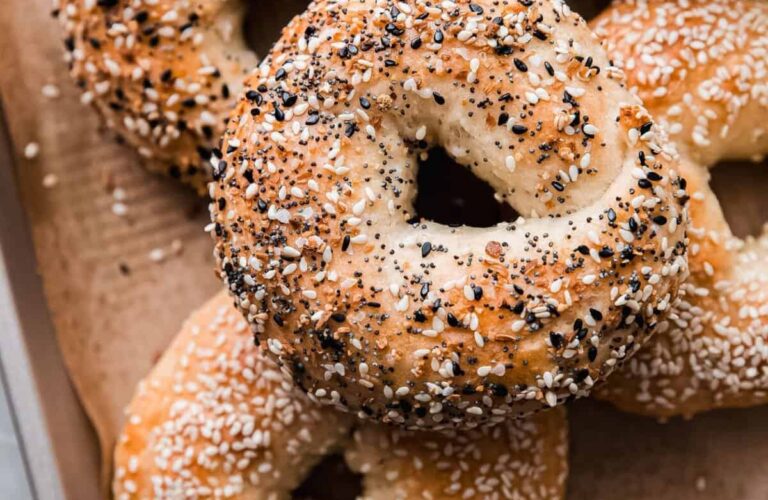
Homemade Everything Bagels and Sesame Seed Bagels: The Ultimate Bakery-Style Recipe
Homemade bagels are one of the most satisfying breads to make in your own kitchen. With their golden-brown crust, soft and chewy centers, and delicious toppings, these classic ring-shaped breads are perfect for breakfast, brunch, sandwiches, and snacks. Everything bagels are covered with a flavorful mixture of sesame seeds, poppy seeds, garlic, onion, and salt, while sesame bagels feature a generous coating of nutty sesame seeds that toast beautifully in the oven.
The bagels in this recipe are inspired by traditional bakery-style bagels, with a firm exterior, a pleasantly chewy texture, and a soft, flavorful interior. The dough is prepared with simple pantry ingredients, shaped into rings, briefly boiled, and then baked until golden. This combination of boiling and baking gives homemade bagels their characteristic texture and appearance.
Whether you prefer the bold flavor of everything seasoning or the classic simplicity of sesame seeds, this detailed recipe will help you make delicious bagels from scratch. You do not need a professional bakery or specialized equipment. With a little patience, careful shaping, and the right baking technique, you can prepare a fresh batch of bagels that taste wonderful straight from the oven.
What Makes Homemade Bagels Special?
Bagels are different from ordinary bread rolls because they are boiled before baking. This additional step is essential to developing the distinctive bagel crust. The hot water begins setting the outside of the dough, helping the finished bagels develop a chewy exterior while retaining a tender center.
Another important characteristic is the dough itself. Bagel dough is generally firmer than sandwich bread dough. This helps the bagels maintain their round shape during boiling and baking. A well-developed dough also provides the elasticity needed for the characteristic chewy bite.
Everything bagels are especially popular because they combine several savory flavors in every bite. Sesame seeds contribute nuttiness, poppy seeds add a delicate crunch, dried garlic and onion provide a savory aroma, and salt brings all the ingredients together.
Sesame bagels offer a simpler but equally delicious alternative. Their toasted seeds create a pleasant crunch and a warm, nutty flavor that pairs beautifully with cream cheese, butter, eggs, avocado, and a variety of sandwich fillings.
Preparation Time and Yield
Preparation time: Approximately 30 minutes
Rising time: Approximately 60 to 90 minutes, depending on room temperature
Shaping time: Approximately 15 minutes
Boiling time: Approximately 15 minutes
Baking time: Approximately 20 to 25 minutes
Total time: Approximately 2 hours and 30 minutes
Yield: 8 medium homemade bagels
Difficulty level: Moderate and suitable for enthusiastic beginners
Ingredients for the Bagel Dough
Bread Flour
You will need 500 grams of bread flour, approximately 4 cups depending on how the flour is measured.
Bread flour is the preferred choice because it contains more protein than many ordinary all-purpose flours. This protein helps develop gluten, which gives bagels their characteristic chewy texture.
If bread flour is unavailable, all-purpose flour can be used. The resulting bagels may be slightly less chewy, but they can still be delicious. Add water gradually because different flours absorb moisture differently.
Warm Water
Use 300 milliliters of warm water, approximately 1¼ cups.
The water should feel comfortably warm rather than hot. Water that is too hot can damage the yeast, while cold water may slow the rising process.
The exact amount required can vary slightly depending on the flour and the humidity in your kitchen. Begin with the stated amount and adjust only if necessary.
Instant Yeast
Add 7 grams of instant yeast, approximately 2¼ teaspoons.
Yeast helps the dough rise and contributes to its flavor. Instant yeast can generally be mixed directly into the dry ingredients without being dissolved separately.
If you prefer active dry yeast, follow the instructions on its packaging. It may be dissolved in some of the warm water before being added to the flour.
Sugar
Use 20 grams of granulated sugar, approximately 1½ tablespoons.
Sugar provides a small amount of sweetness and helps support yeast activity. The finished bagels will remain savory rather than sweet.
Salt
Add 10 grams of fine salt, approximately 1¾ teaspoons, depending on the salt used.
Salt improves the flavor of the dough and helps regulate fermentation. Measure carefully because salt crystals vary in size.
Neutral Oil
Use 1 tablespoon of neutral oil, such as sunflower or vegetable oil, if desired.
Oil is optional. It can make the dough slightly easier to handle and contribute to a tender interior, although traditional bagel recipes may omit it.
Ingredients for the Everything Bagel Topping
Prepare the following ingredients for a flavorful homemade everything seasoning.
2 tablespoons white sesame seeds
2 tablespoons black sesame seeds, or additional white sesame seeds
2 tablespoons poppy seeds
1 tablespoon dried minced onion
1 tablespoon dried minced garlic
1 teaspoon flaky or coarse salt, adjusted to taste
Combine the ingredients in a small bowl and mix thoroughly. Store any unused seasoning in an airtight container.
The quantities can be adjusted to suit your taste. If you enjoy a strong garlic and onion flavor, increase those ingredients slightly. If you prefer a milder topping, use more sesame seeds and reduce the dried garlic and onion.
Use dried garlic and onion rather than fresh chopped ingredients for the topping. Fresh ingredients contain moisture and may burn or interfere with the desired crust.
Ingredients for the Sesame Bagel Topping
For sesame bagels, prepare approximately ½ cup of white sesame seeds.
You may also use a combination of white and black sesame seeds for a contrasting appearance. The seeds should be spread on a shallow plate to make coating the bagels easier.
Sesame seeds have a naturally rich flavor that becomes more pronounced during baking. As the bagels cook, the seeds toast lightly and create an appealing golden surface.
Ingredients for the Boiling Water
2 liters of water
1 tablespoon honey, brown sugar, or granulated sugar, optional
Some bakers also add a small amount of barley malt syrup to the boiling water. This ingredient can contribute a traditional bagel flavor and help the crust brown.
For a simple homemade version, water alone is sufficient. The optional sweetener can provide a little extra color and flavor.
Equipment Needed
You will need a large mixing bowl, a kitchen scale or measuring cups, a sturdy spoon, a clean work surface, a baking sheet, parchment paper, a large pot, a slotted spoon, and a cooling rack.
A stand mixer with a dough hook can make kneading easier, but it is not necessary. The dough can be kneaded by hand.
A kitchen scale is particularly useful for dividing the dough into equal portions. Uniform bagels bake more evenly and look more consistent.
Step 1: Prepare the Ingredients
Before mixing the dough, measure all the ingredients and place them within easy reach.
Check that the yeast is fresh and that the water is not too hot. Fresh yeast should be active and capable of producing a good rise.
Measure the flour into a large bowl. Add the instant yeast and sugar, then mix briefly to distribute them.
Add the salt, keeping it reasonably distributed through the flour rather than placing a concentrated amount directly on the yeast.
Pour in the warm water gradually while stirring with a sturdy spoon. Add the optional oil if using it.
At first, the mixture may look rough and uneven. This is normal. Continue mixing until most of the flour has absorbed the water and a thick, shaggy dough begins to form.
If dry flour remains at the bottom of the bowl, work it into the dough with your hands. If the mixture feels unusually dry and will not come together, add water a teaspoon at a time.
Avoid adding too much water. Bagel dough should be firm and elastic rather than loose and sticky.
Step 2: Knead the Dough
Transfer the dough to a clean work surface.
Knead it for approximately 10 to 15 minutes by hand, or about 8 to 10 minutes in a stand mixer fitted with a dough hook.
To knead by hand, push the dough away from you with the heel of your hand, fold it back toward the center, rotate it, and repeat.
Initially, the dough may feel stiff and resistant. Continue working it patiently. As the gluten develops, the dough should become smoother and more elastic.
If the dough sticks slightly, use only a small amount of flour on the work surface. Excessive flour can make the bagels dry and dense.
The dough is ready when it feels smooth, firm, and elastic. A small piece should stretch somewhat before tearing, although bagel dough is generally firmer than dough used for soft sandwich bread.
Do not worry if the dough requires more effort than ordinary bread dough. Its firmness is an important part of the finished texture.
Step 3: Allow the Dough to Rise
Place the kneaded dough in a lightly oiled bowl.
Turn the dough once so its surface is lightly coated, then cover the bowl with a clean kitchen towel, reusable cover, or plastic wrap.
Leave the dough in a comfortably warm place for approximately 60 to 90 minutes, or until it has expanded noticeably.
The dough does not always need to double completely. The amount of expansion depends on the room temperature, yeast activity, and flour used.
In a cool kitchen, rising may take longer. In a warm kitchen, the dough may rise more quickly.
Avoid placing the bowl directly beside a hot stove or in an excessively warm location. Gentle, consistent warmth is better than high heat.
During this time, the yeast produces gas that expands the dough and develops its flavor.
Step 4: Prepare the Baking Sheet
While the dough rises, line a large baking sheet with parchment paper.
If you have two baking sheets, prepare both. The bagels should have enough space between them to bake evenly.
Prepare a clean work surface for shaping the dough.
Place the sesame seeds on one shallow plate and the everything seasoning on another. Keeping the toppings separate makes it easy to prepare both varieties.
Set a large pot aside for boiling the bagels later.
Organizing these items before shaping makes the remaining process smoother and prevents unnecessary delays.
Step 5: Divide the Dough into Eight Portions
Once the dough has risen, gently transfer it to the work surface.
Press it lightly to release some of the larger air pockets. Avoid aggressively squeezing or tearing the dough.
Divide the dough into eight equal portions. Each portion should weigh approximately 100 to 105 grams, depending on the final dough weight.
Use a kitchen scale for the most consistent results. If you do not have one, divide the dough in half, then divide each half into four portions.
Shape each portion into a small ball.
To form a ball, gather the edges of the dough underneath and gently roll it against the work surface until the top becomes relatively smooth.
Cover the portions with a clean towel and allow them to rest for about 10 minutes.
This short resting period relaxes the gluten, making the dough easier to shape without excessive resistance.
Step 6: Shape the Bagels
There are two common ways to shape bagels. Both work well, so choose whichever method feels more comfortable.
Method One: Make a Hole Through Each Dough Ball
Take one dough ball and gently flatten it into a thick disc.
Press your thumb through the center to create an opening. Carefully widen the opening with your fingers, rotating the dough as you work.
Aim for a center hole approximately 4 to 5 centimeters wide before boiling. The hole will shrink as the dough rises and bakes, so it should appear larger than the opening you want in the finished bagel.
Try to maintain an even thickness around the ring. An uneven bagel may bake with one thick section and one thin section.
If the dough repeatedly springs back, allow it to rest for another few minutes before continuing.
Method Two: Roll the Dough into a Rope
Take a dough ball and roll it into a rope approximately 20 to 25 centimeters long.
Keep the center and ends reasonably even in thickness.
Wrap the rope around your hand to form a ring, overlapping the ends by a few centimeters.
Roll the overlapping section gently against the work surface to join the ends together.
Make sure the seam is secure. If the ends are not properly joined, the bagel may open during boiling.
Both methods can produce attractive homemade bagels. The first is often easier for beginners, while the rope method creates a more traditional hand-shaped appearance.
Step 7: Rest the Shaped Bagels
Arrange the shaped bagels on the prepared baking sheet, leaving space between them.
Cover them loosely with a clean towel or lightly greased plastic wrap.
Allow them to rest for approximately 15 to 25 minutes.
They should become slightly puffy but should not be allowed to overproof. Bagels that rise excessively may lose their shape or become too delicate during boiling.
To check the dough, gently touch one bagel with a fingertip. It should feel a little softer and fuller than when it was first shaped.
If the indentation springs back immediately, the dough may need a little more time. If it remains deeply indented and the bagel feels very fragile, it may have risen too much.
Keep in mind that the response depends on the dough and the temperature of the room. Use these observations as general guidance rather than strict rules.
Step 8: Preheat the Oven
Preheat the oven to 220°C, or 425°F.
Allow sufficient time for the oven to reach the correct temperature before baking.
Position a rack near the middle of the oven. This helps the bagels brown evenly without placing them too close to the upper heating element.
If your oven has a strong hot spot, rotate the baking sheet during baking.
Prepare the boiling water while the oven heats.
Step 9: Prepare the Boiling Water
Pour approximately 2 liters of water into a large pot.
Bring the water to a gentle boil. Add the optional honey, brown sugar, or granulated sugar if desired, stirring until dissolved.
Reduce the heat slightly so the water maintains a steady simmer.
The water should be hot enough to cook the outside of the dough, but it does not need to boil violently.
A vigorous boil can cause the bagels to collide, become misshapen, or develop uneven surfaces.
Avoid overcrowding the pot. Boil two or three bagels at a time, depending on the size of the pot.
Step 10: Boil the Bagels
Carefully lower the bagels into the simmering water.
Boil them for approximately 30 to 45 seconds on the first side. Turn them over with a slotted spoon and cook for another 30 to 45 seconds.
For a chewier crust, you can extend the total boiling time slightly, but very long boiling may make the crust excessively thick or the bagels dense.
Remove each bagel carefully, allowing excess water to drain back into the pot.
Place the boiled bagels on the prepared baking sheet.
Repeat until all eight bagels have been boiled.
You may notice that the bagels become slightly puffier and develop a smoother exterior. This is expected and is part of what makes bagels different from ordinary bread rolls.
Handle the bagels gently during this stage. Their surfaces will be soft and somewhat delicate immediately after boiling.
Step 11: Add the Toppings
For the best coverage, apply the toppings while the bagels are still wet from boiling.
The remaining moisture helps the seeds and seasoning adhere to the surface.
For Everything Bagels
Sprinkle the everything seasoning generously over the top of each bagel.
If you want the topping to cover the sides as well, gently dip the upper surface into the seasoning or sprinkle the mixture around the entire ring.
Press very lightly if necessary to help the seeds stick. Avoid flattening the dough.
Distribute the garlic, onion, poppy seeds, sesame seeds, and salt evenly so that each bite contains a balanced mixture of flavors.
For Sesame Bagels
Place the wet surface of each bagel into the sesame seeds.
Turn it gently or sprinkle seeds over the uncovered areas.
A generous coating creates the classic sesame bagel appearance shown in bakery displays.
If you prefer a lighter topping, use fewer seeds. If you enjoy a crunchy exterior, cover the surface more thoroughly.
For a mixed batch, prepare four sesame bagels and four everything bagels. You can also make all eight bagels with the same topping.
Step 12: Bake the Bagels
Transfer the topped bagels to the preheated oven.
Bake at 220°C, or 425°F, for approximately 20 to 25 minutes.
During baking, the bagels will expand slightly and develop a golden-brown crust.
Check them after about 15 minutes. If the tops are browning very quickly, reduce the oven temperature slightly or move the tray to a lower rack.
Rotate the baking sheet if one side of the oven cooks more quickly than the other.
The bagels are ready when the surfaces are golden brown and the dough is fully baked.
Larger bagels may require a few additional minutes. Smaller bagels may finish earlier.
If you use a thermometer, the internal temperature of a fully baked bread product is often around 93°C to 96°C, although appearance and texture should also be considered.
Do not remove the bagels simply because the toppings look toasted. The centers must have enough time to cook through.
Step 13: Cool the Bagels Properly
Remove the baking sheet from the oven and let the bagels rest for several minutes.
Transfer them to a wire cooling rack.
Allow them to cool for at least 20 to 30 minutes before slicing.
The interior continues to settle as the bagels cool. Cutting them immediately may release excess steam and make the crumb seem gummy.
For the best texture, let them cool until they are warm or at room temperature.
Once cooled, the bagels should have a golden exterior, a chewy crust, and a soft but substantial center.
The sesame seeds should smell lightly toasted, while the everything seasoning should provide a savory aroma of garlic, onion, and poppy seeds.
Understanding the Perfect Bagel Texture
A successful bagel combines several qualities.
The exterior should be firm enough to provide a gentle resistance when bitten. It should not be as soft as a dinner roll or as hard as a cracker.
The inside should be moist and chewy without appearing raw, wet, or overly dense.
The center hole should remain visible after baking, although it will usually be smaller than it was during shaping.
The surface should be evenly golden, with no large areas of pale, underbaked dough.
These characteristics are influenced by the flour, hydration, kneading, rising time, boiling process, and oven temperature.
If your first batch is not perfect, small adjustments can make a significant difference. Homemade bagels improve with practice, and learning how your particular flour and oven behave is part of the process.
How to Make Extra-Chewy Bagels
If you enjoy a firm, chewy bagel similar to those sold in traditional bakeries, begin with bread flour.
Its higher protein content helps create a strong gluten structure.
Knead the dough thoroughly so that it becomes smooth and elastic. Under-kneaded dough may produce bagels with a less structured interior.
Keep the dough relatively firm. Adding excessive water may make the bagels softer and more bread-like.
Do not skip the boiling stage. Boiling is one of the most important steps in achieving the distinctive crust.
You may also experiment with a slightly longer boiling time, keeping the increase modest so that the finished bagels do not become overly dense.
Finally, allow the bagels to bake until their crusts are properly browned.
How to Make Softer Bagels
For a softer result, use the optional tablespoon of oil in the dough.
Avoid adding excessive flour during kneading, because too much flour can make the finished bagels dry.
Use the recommended boiling time rather than extending it significantly.
Bake until the bagels are fully cooked and golden, but do not leave them in the oven longer than necessary.
Once cooled, store them in an airtight bag or container to help retain moisture.
Keep in mind that traditional bagels are naturally chewier than many other bread products. A softer homemade bagel may still have a more substantial bite than a typical bread roll.
The Best Way to Prepare Everything Seasoning
Homemade everything seasoning is easy to customize.
Start with sesame seeds and poppy seeds, then add dried garlic, dried onion, and salt.
White sesame seeds contribute a mild nutty flavor, while black sesame seeds provide a more pronounced appearance and slightly different flavor.
Poppy seeds add small, crisp accents. Dried garlic and onion bring a savory depth that makes the seasoning especially suitable for breakfast sandwiches.
Mix the ingredients thoroughly so that the salt and smaller particles are distributed evenly.
If you prepare a large batch, keep it in an airtight container in a cool, dry place. Use clean, dry utensils when measuring it out.
For the freshest flavor, make sure the dried garlic and onion are not stale. Their aroma should be noticeable before they are added to the mixture.
If you are sensitive to salt, reduce the quantity and use a smaller amount on each bagel.
How to Make Sesame Bagels Extra Flavorful
Sesame bagels rely on a simple topping, so ingredient quality matters.
Use fresh sesame seeds with a pleasant nutty aroma. Old seeds can taste stale or bitter.
Apply the seeds while the dough is still wet so that they adhere well during baking.
Distribute the seeds evenly rather than concentrating them in one area.
For additional visual interest, combine white and black sesame seeds. You can also add a small quantity of poppy seeds, although this changes the traditional appearance slightly.
Avoid roasting the sesame seeds separately before baking unless you specifically want a stronger toasted flavor. The seeds will toast as the bagels bake.
Flavor Variations
Garlic and Herb Bagels
For a savory variation, prepare the basic dough and top the bagels with sesame seeds, dried garlic, and a small amount of dried herbs.
Parsley, oregano, and thyme can work well. Use dried herbs sparingly so they do not overpower the bread.
This version pairs nicely with cream cheese, tomato, cucumber, and egg.
Cheddar Bagels
For a cheesy version, add a modest amount of grated cheddar to the topping.
Some cheese can be sprinkled over the bagels during the final minutes of baking to reduce the chance of excessive browning.
Cheese may melt around the edges and create a crisp, savory crust.
Cinnamon Sugar Bagels
For a sweeter variation, omit the savory toppings and use a light cinnamon-sugar coating.
Because sugar can brown quickly, monitor these bagels carefully during baking.
The flavor pairs well with cream cheese or a thin spread of butter.
Poppy Seed Bagels
Replace the everything seasoning with a generous coating of poppy seeds.
These bagels have a classic bakery appearance and a mild, slightly nutty flavor.
Mixed Seed Bagels
Combine sesame seeds, poppy seeds, sunflower seeds, and pumpkin seeds for a varied topping.
Chop larger seeds if necessary so they adhere more easily. Keep the coating moderate to avoid making the surface too heavy.
Whole-Wheat Bagels
Replace a portion of the bread flour with whole-wheat flour.
Begin by substituting approximately 20% to 30% of the total flour. Whole-wheat flour absorbs water differently and can produce a denser texture, so the water may need to be adjusted slightly.
For a lighter result, avoid replacing all the bread flour at once.
How to Serve Homemade Bagels
Freshly baked bagels can be served in many different ways.
Classic Cream Cheese Bagel
Slice a cooled bagel horizontally and spread cream cheese over the cut surfaces.
Plain cream cheese is delicious, but chive, garlic, or herb varieties also work well.
For extra freshness, add cucumber slices, tomato, or a few leafy greens.
Buttered Sesame Bagel
Slice a sesame bagel and spread a little butter over the warm interior.
The butter melts into the crumb, allowing the nutty flavor of the sesame seeds to stand out.
This is a simple breakfast that requires very little preparation.
Egg and Cheese Breakfast Bagel
Toast the cut sides of a bagel lightly.
Prepare a cooked egg and place it on the bottom half. Add a slice of cheese and the top half of the bagel.
You can include tomato or spinach if desired.
This combination is particularly satisfying for a substantial breakfast.
Avocado Bagel
Spread mashed avocado over the cut surface of an everything bagel.
Season with black pepper and a little lemon juice.
Add sliced tomato or cucumber for extra freshness.
Smoked Salmon Bagel
Spread cream cheese on a sesame or everything bagel.
Add smoked salmon, thinly sliced red onion, and cucumber or capers if desired.
This combination is popular for brunch because the mild cream cheese balances the savory toppings.
Turkey and Cheese Sandwich
Use a cooled bagel as the base for a sandwich with cooked turkey, cheese, lettuce, and tomato.
A little mustard or mayonnaise can provide extra flavor.
Sesame bagels work especially well with mild sandwich fillings, while everything bagels add a stronger savory note.
Pizza Bagels
Slice the bagels, add a small amount of tomato sauce, sprinkle with cheese, and add your preferred toppings.
Bake briefly until the cheese melts and the bagel edges become lightly crisp.
This is an easy way to turn leftover bagels into a warm snack.
Storage Instructions
Storing at Room Temperature
Allow the bagels to cool completely before storing them.
Place them in an airtight bag or container and keep them at room temperature for approximately two to three days.
The exact shelf life depends on the temperature, humidity, and cleanliness of the storage environment.
Avoid sealing warm bagels in a container because trapped steam can soften the crust and encourage moisture buildup.
Refrigeration is generally not the best choice for maintaining bread texture because bread can stale more quickly in the refrigerator.
Freezing Homemade Bagels
Freezing is an excellent option if you want to keep bagels for longer.
Let them cool completely, then place them in freezer-safe bags or airtight containers.
For easier serving, slice the bagels horizontally before freezing. This makes it possible to toast the halves directly from frozen.
Remove as much excess air from the bag as practical.
For best quality, use the frozen bagels within approximately two to three months.
Reheating Bagels
For a quick breakfast, slice the bagel and toast it until the interior is warm and lightly crisp.
If reheating a whole bagel, use a moderate oven temperature until it is warmed through.
A frozen bagel can be thawed at room temperature or toasted from frozen, depending on your toaster and its instructions.
Avoid overheating the bagels, because excessive heat can make them hard and dry.
Troubleshooting Common Bagel Problems
The Dough Is Too Sticky
Bagel dough should be firm, but flour absorption varies.
If the dough is genuinely sticky and difficult to handle, add a little flour at a time while kneading.
Do not add large amounts at once. Excess flour can make the bagels dry and dense.
Allowing the dough to rest briefly can also help the flour absorb the water more evenly.
The Dough Is Too Dry
If the dough breaks apart and refuses to come together, add a small amount of water.
Work it in thoroughly before adding more.
The finished dough should feel firm and elastic rather than crumbly.
The Bagels Lose Their Shape During Boiling
This may happen if the dough is overproofed, the seams are poorly joined, or the water is boiling too vigorously.
Use a gentle simmer and make sure the dough rings are securely shaped.
Avoid allowing the shaped bagels to become excessively puffy before boiling.
The Bagels Are Too Dense
Dense bagels can result from insufficient kneading, inactive yeast, or inadequate rising time.
Check the freshness of the yeast and allow the dough to rise until it has expanded noticeably.
Knead thoroughly to develop the gluten structure.
Remember that bagels are naturally denser and chewier than many ordinary bread rolls, so a substantial texture is normal.
The Bagels Are Too Soft
A very soft texture may indicate excessive water, insufficient boiling, or a dough that was allowed to rise too much.
Keep the dough relatively firm and follow the recommended boiling process.
Bake until the exterior is golden and the center is fully cooked.
The Toppings Fall Off
The toppings may not adhere properly if the bagels have dried before the seeds are applied.
Apply the seasoning immediately after boiling while the surface is still wet.
Press the toppings gently into place without flattening the dough.
The Bagels Are Pale
Pale bagels may need additional baking time or a slightly hotter oven.
Check that the oven has been fully preheated.
If the bagels are cooked through but remain pale, leave them in the oven for a few additional minutes while watching carefully.
The optional sweetener in the boiling water may also help with browning.
The Bagels Are Too Hard
Overbaking, excessive flour, or very long boiling can contribute to a hard finished texture.
Measure the flour carefully, use the recommended boiling time, and check the bagels toward the end of baking.
Store the cooled bagels in an airtight container to help prevent them from drying out.
The Center Holes Close Up
The holes may be too small before baking, or the dough may have expanded significantly during rising.
Make the openings larger during shaping, allowing for some shrinkage and expansion.
A center opening of approximately 4 to 5 centimeters before boiling is a useful starting point.
Frequently Asked Questions
Can I Make Bagels Without a Stand Mixer?
Yes. Bagels can be kneaded entirely by hand.
The dough is firm, so it requires a little effort, but a large bowl and a clean work surface are sufficient.
Knead until the dough becomes smooth and elastic.
Can I Use All-Purpose Flour?
Yes. Bread flour is preferred for a chewy texture, but all-purpose flour can also produce good homemade bagels.
The finished texture may be slightly softer and less chewy.
Because different flours absorb water differently, add the liquid gradually and adjust only as needed.
Why Do Bagels Need to Be Boiled?
Boiling sets the exterior of the dough before it enters the oven.
This helps create the distinctive chewy crust and shiny surface associated with bagels.
It also helps the bagels retain their characteristic shape during baking.
Can I Skip the Boiling Step?
You can bake shaped dough without boiling it, but the result will be closer to a bread roll than a traditional bagel.
For the texture shown in the photograph, boiling is strongly recommended.
Can I Prepare the Dough the Night Before?
Yes. You can prepare the dough, cover it, and refrigerate it for a slow overnight rise.
Cold fermentation can improve flavor and make the dough easier to schedule.
Because the dough develops more slowly in the refrigerator, the timing will differ from the standard recipe. Keep it covered and allow it to warm slightly if it is too firm to shape comfortably.
You can also shape the bagels before refrigerating them, provided they are covered carefully and do not overproof.
Can I Make the Bagels Smaller?
Yes. Divide the dough into 10 or 12 portions instead of eight.
Smaller bagels may bake more quickly, so begin checking them earlier than the standard baking time.
Try to keep the portions equal for consistent results.
Can I Make Larger Bagels?
Yes. Divide the dough into six portions for larger bagels.
You may need to extend the baking time slightly. Check that the centers are fully cooked before removing them from the oven.
Which Topping Is Better: Everything Seasoning or Sesame Seeds?
Both are excellent, but the choice depends on the flavor you prefer.
Everything seasoning offers a more complex savory taste with garlic, onion, poppy seeds, and sesame seeds.
Sesame bagels are simpler and allow the toasted nutty flavor of the seeds to stand out.
Making a mixed batch is a good way to enjoy both.
Can I Use Store-Bought Everything Seasoning?
Yes. Store-bought everything seasoning is a convenient alternative.
Check its salt content before adding extra salt to the dough or topping.
Some commercial mixtures contain considerably more salt than homemade versions.
Can I Make These Bagels Vegan?
The basic dough in this recipe is naturally vegan when made with water, flour, yeast, sugar, salt, and plant-based oil.
Choose a plant-based sweetener for the boiling water if desired.
Check the labels of packaged seasonings to ensure they contain no unwanted animal-derived ingredients.
Are Sesame Bagels Suitable for People With Sesame Allergies?
No. Sesame bagels contain sesame seeds, and everything seasoning often contains them as well.
People with a sesame allergy should avoid these toppings and check all ingredient labels carefully.
An alternative topping may be used, but allergy safety depends on avoiding cross-contact as well as the ingredient itself.
How Do I Get a Bakery-Style Appearance?
Use equal portions of dough, shape smooth rings, and make the center holes large enough to remain visible after baking.
Boil the bagels briefly, apply the toppings while they are wet, and bake in a properly preheated oven.
A kitchen scale and careful attention to shaping can make the finished batch more consistent.
Can I Toast the Bagels After Baking?
Yes. Allow the bagels to cool, slice them horizontally, and toast the cut sides until lightly crisp.
Toasting enhances the nutty sesame flavor and provides a pleasant contrast to the soft interior.
What Should I Do With Leftover Bagels?
Leftover bagels can be used for sandwiches, breakfast melts, pizza bagels, or crunchy bread chips.
You can also cut them into small pieces, season them lightly, and bake them until crisp for a homemade snack.
Freezing extra bagels shortly after they cool is another excellent way to reduce waste.
Tips for the Best Homemade Bagels
Measure the flour accurately. Too much flour can make the dough excessively dry.
Use fresh yeast. Active yeast helps the dough develop the right texture and volume.
Knead thoroughly. A strong gluten structure is important for the characteristic chew.
Keep the dough firm. Bagel dough should not feel as wet as ordinary sandwich bread dough.
Allow enough rising time. The dough should expand noticeably but should not become excessively puffy.
Shape the rings evenly. Consistent thickness helps each bagel bake at the same rate.
Make the center holes large enough. They will shrink as the bagels rise and bake.
Boil gently. A steady simmer is easier to control than a vigorous rolling boil.
Apply toppings immediately. The moist surface helps seeds and seasoning adhere.
Preheat the oven fully. A properly heated oven helps the crust develop.
Avoid overbaking. Remove the bagels when they are golden and fully cooked.
Cool before slicing. This helps the interior finish setting and improves the texture.
Make-Ahead Instructions
If you want freshly baked bagels for breakfast, you can prepare much of the work in advance.
One option is to mix and knead the dough in the evening, place it in a covered bowl, and refrigerate it overnight.
The next morning, check the dough and allow it to become manageable before shaping if necessary.
Divide the dough, shape the rings, and allow them to rest until slightly puffy. Continue with boiling, topping, and baking.
Another option is to shape the bagels in advance and refrigerate them on a covered tray. The amount of time they can remain refrigerated depends on the yeast activity and refrigerator temperature, so check their appearance and texture before boiling.
For the most convenient preparation, bake the bagels completely, cool them, and freeze them. You can then take out individual portions whenever you want a quick breakfast.
Serving Ideas for Breakfast, Brunch, and Lunch
For breakfast, serve a toasted sesame bagel with butter, cream cheese, or a cooked egg.
For brunch, offer both sesame and everything bagels alongside cream cheese, sliced vegetables, and sandwich fillings so that everyone can assemble their own.
For lunch, use the bagels as the foundation for turkey, chicken, egg, or vegetable sandwiches.
For an afternoon snack, toast half a bagel and serve it with a favorite spread.
For a casual family gathering, arrange the different varieties on a platter and provide a selection of savory and sweet toppings.
The homemade bagels can be served simply or used as the starting point for more elaborate meals.
Final Thoughts
Homemade everything bagels and sesame seed bagels are a wonderful way to bring the flavor and texture of fresh bakery bread into your own kitchen.
The process involves a few essential stages: preparing a firm dough, kneading it until elastic, allowing it to rise, shaping the rings, boiling them briefly, applying the toppings, and baking until golden.
Each stage contributes to the final result. The dough provides structure, the boiling water develops the characteristic crust, the toppings add flavor and texture, and the oven completes the transformation into delicious homemade bagels.
Everything bagels are ideal for those who enjoy bold, savory flavors, while sesame bagels offer a classic taste with a delicate crunch. Both varieties are versatile enough for breakfast, brunch, lunch, and snacks.
Once you become familiar with the method, you can experiment with different toppings, adjust the size of the bagels, and prepare batches ahead of time.
Serve them fresh with cream cheese, toast them with butter, or fill them with eggs and vegetables for a satisfying sandwich.
With simple ingredients, careful preparation, and a little patience, you can make eight delicious homemade bagels with golden crusts, chewy centers, and the inviting appearance of freshly baked bakery bread.