admin1
Creamy Garlic Parmesan Shrimp with Spinach and Cherry Tomatoes
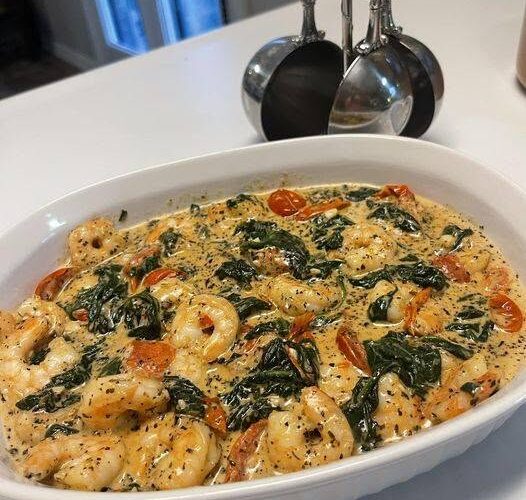
Creamy Garlic Parmesan Shrimp with Spinach and Cherry Tomatoes is a rich, flavorful, and comforting seafood dish made with tender, juicy shrimp simmered in a velvety garlic cream sauce. Fresh spinach adds beautiful color and a delicate earthy flavor, while sweet cherry tomatoes bring a refreshing burst of sweetness that balances the richness of the cream and Parmesan cheese. Every bite combines succulent shrimp, fragrant garlic, fresh herbs, and a smooth, cheesy sauce that tastes like something served at a favorite Italian restaurant.
This dish is perfect for family dinners, weekend meals, special occasions, and evenings when you want to prepare something delicious without spending hours in the kitchen. Although it looks elegant and impressive, the recipe uses simple ingredients and straightforward cooking techniques. The shrimp cook quickly, the sauce comes together in one pan, and the vegetables soften gently in the creamy mixture, creating a beautiful combination of flavors and textures.
The sauce is the heart of this recipe. Butter and garlic provide the aromatic foundation, heavy cream creates a silky consistency, and freshly grated Parmesan cheese adds a savory, slightly nutty flavor. Italian seasoning, black pepper, paprika, and a little lemon juice enhance the seafood without overpowering its natural sweetness. Fresh spinach wilts into the sauce, while cherry tomatoes soften just enough to release their juices and create little pockets of sweetness throughout the dish.
Served over pasta, rice, mashed potatoes, or alongside warm crusty bread, this creamy shrimp recipe makes a satisfying meal that feels both luxurious and comforting. It can also be enjoyed on its own as a delicious seafood entrée.
Recipe Overview
Preparation time: 15 minutes
Cooking time: 20 minutes
Total time: Approximately 35 minutes
Servings: 4
Cuisine: Italian-inspired
Course: Main course
Cooking method: Stovetop
Difficulty: Easy to moderate
Flavor profile: Creamy, garlicky, savory, slightly tangy, and gently sweet
Ingredients for Creamy Garlic Parmesan Shrimp
For the shrimp
- 1 1/2 pounds large shrimp, peeled and deveined
- 1 tablespoon olive oil
- 1 tablespoon unsalted butter
- 1/2 teaspoon salt, or to taste
- 1/2 teaspoon freshly ground black pepper
- 1 teaspoon paprika
- 1/2 teaspoon Italian seasoning
- 1/4 teaspoon red pepper flakes, optional
- 1 tablespoon fresh lemon juice
Large shrimp work especially well because they remain juicy and tender when cooked correctly. You can use fresh or frozen shrimp. If using frozen shrimp, thaw them completely in the refrigerator or under cold running water before cooking. Remove the shells and devein them if necessary, then pat the shrimp dry with paper towels. Removing excess moisture helps them develop a better surface texture when they meet the hot pan.
The seasoning should enhance the natural flavor of the shrimp rather than cover it. Salt brings out their sweetness, black pepper adds gentle warmth, paprika contributes color, and Italian seasoning introduces familiar herbaceous notes. Lemon juice brightens the seafood and helps balance the richness of the finished sauce.
For the creamy garlic sauce
- 2 tablespoons unsalted butter
- 1 tablespoon olive oil
- 6 to 8 cloves garlic, finely minced
- 1 small yellow onion, finely chopped, optional
- 1 cup heavy cream
- 1/2 cup chicken broth or seafood broth
- 3/4 cup freshly grated Parmesan cheese
- 1/2 teaspoon Italian seasoning
- 1/4 teaspoon freshly ground black pepper
- 1/4 teaspoon paprika
- Salt, to taste
- 1 teaspoon Dijon mustard, optional
- 1 teaspoon lemon zest, optional
Heavy cream creates the smoothest, richest sauce. It reduces gently without becoming too thin and combines beautifully with Parmesan cheese. If you prefer a lighter consistency, you can use half-and-half, although the sauce may be less thick and may require a little more attention while simmering.
Fresh garlic is essential for the characteristic flavor of this recipe. Six cloves provide a noticeable garlic taste, while eight cloves create a deeper, more pronounced flavor. Mince the garlic finely so it distributes evenly throughout the sauce.
Chicken broth works well because it adds savory depth without overpowering the shrimp. Seafood broth is another excellent choice if you want to emphasize the seafood flavor. Use a low-sodium broth when possible so you can control the saltiness of the finished dish.
Freshly grated Parmesan cheese is strongly recommended. Pre-grated cheese sometimes contains anti-caking ingredients that prevent it from melting as smoothly. Grating Parmesan from a block gives the sauce a more cohesive texture and a fuller flavor.
Dijon mustard is optional, but a small amount adds subtle complexity and helps balance the richness of the cream. It should not make the sauce taste strongly of mustard. Lemon zest is another optional ingredient that adds a fresh citrus aroma.
For the spinach and cherry tomatoes
- 4 cups fresh baby spinach
- 1 1/2 cups cherry tomatoes, halved
- 1 tablespoon olive oil, if needed
- 1/4 teaspoon salt
- 1/4 teaspoon black pepper
- 1 tablespoon chopped fresh parsley
- 1 tablespoon chopped fresh basil, optional
Fresh baby spinach is ideal because its tender leaves wilt quickly and blend naturally into the creamy sauce. Four cups may seem like a large amount, but spinach reduces considerably as it cooks. You can add it in batches if your pan is not large enough.
Cherry tomatoes contribute color, sweetness, and a slight tang. Red cherry tomatoes work beautifully, but a mixture of red, orange, and yellow tomatoes makes the dish especially attractive. Halving them allows the cut surfaces to soften and release their juices while maintaining some shape.
Fresh parsley adds a clean herbal finish, while basil introduces a fragrant, Italian-inspired aroma. If fresh herbs are unavailable, dried Italian herbs can be used in small quantities, although fresh herbs provide a brighter finish.
Optional ingredients for extra flavor
- 1/4 teaspoon onion powder
- 1/4 teaspoon garlic powder
- 2 tablespoons cream cheese for a thicker sauce
- 1 tablespoon sun-dried tomato oil
- 2 tablespoons chopped sun-dried tomatoes
- 1/4 cup shredded mozzarella cheese
- A pinch of crushed red pepper flakes
- Extra Parmesan cheese for serving
- Additional lemon wedges
- A small handful of chopped fresh basil
These ingredients are optional and should be chosen according to your taste. Sun-dried tomatoes provide concentrated sweetness and a slightly tangy flavor. Cream cheese creates a thicker, richer sauce, while mozzarella adds extra stretchiness. Use these additions sparingly so the garlic, Parmesan, shrimp, spinach, and fresh tomatoes remain the main flavors.
Equipment Needed
You do not need specialized equipment to prepare this dish. A large skillet or sauté pan is sufficient for cooking the shrimp, vegetables, and sauce.
A wide pan is particularly helpful because it allows the shrimp to cook in a single layer. If the pan is too small, the shrimp may release moisture and steam instead of developing a lightly golden surface.
You will also need a cutting board, a sharp knife, a garlic press or small grater if preferred, measuring cups and spoons, a spatula or wooden spoon, a plate for the cooked shrimp, and a small whisk for combining the sauce.
A heavy-bottomed skillet is an excellent option because it distributes heat more evenly and reduces the risk of scorching the garlic or cream.
How to Prepare the Ingredients
Begin by preparing all the ingredients before turning on the stove. This recipe moves quickly once the cooking starts, so having everything ready makes the process easier.
If the shrimp are frozen, thaw them completely and drain away any excess water. Peel and devein them if necessary. Rinse them briefly under cool running water if needed, then pat them thoroughly dry with paper towels.
Place the shrimp in a bowl and season them with salt, black pepper, paprika, Italian seasoning, and a little lemon juice. Toss gently until each shrimp is evenly coated. Let them rest for about five minutes while you prepare the vegetables.
Wash the spinach and dry it well. Excess water can dilute the cream sauce, so use a salad spinner or clean kitchen towel if necessary.
Wash the cherry tomatoes, remove any stems, and cut each tomato in half. For larger cherry tomatoes, cut them into quarters so they soften more quickly.
Peel and mince the garlic. Chop the onion finely if you are using it. Grate the Parmesan cheese and chop the parsley and basil.
Measure the cream and broth into separate containers. Keep the butter and olive oil close to the stove.
Once everything is ready, you can begin cooking.
Step-by-Step Instructions
Step 1: Season the shrimp
Place the prepared shrimp in a medium-sized bowl. Add the salt, black pepper, paprika, Italian seasoning, and lemon juice.
Toss gently using a spoon or clean hands until the seasoning is evenly distributed. The shrimp should have a light coating of spices without being covered in a thick paste.
Avoid adding too much salt at this stage because Parmesan cheese and broth will contribute additional saltiness later.
Allow the shrimp to sit for approximately five minutes. There is no need for a long marinade because shrimp absorb flavor quickly, and prolonged exposure to acidic lemon juice can affect their texture.
Step 2: Heat the skillet
Place a large skillet over medium-high heat. Add one tablespoon of olive oil and one tablespoon of butter.
Allow the butter to melt completely. Swirl the pan gently so the oil and butter cover the bottom.
The pan should be hot enough that the shrimp begin sizzling when added, but the butter should not smoke or turn dark brown.
Using both olive oil and butter provides a useful combination. Olive oil helps with cooking at higher heat, while butter contributes a rich flavor that complements the seafood.
Step 3: Sear the shrimp
Arrange the shrimp in a single layer in the hot skillet. Avoid overcrowding the pan. If necessary, cook the shrimp in two batches.
Cook the shrimp for approximately one to two minutes on the first side, depending on their size. Turn them over and cook for another one to two minutes, just until they become pink and opaque.
The shrimp should look plump and lightly golden in places. They do not need to develop a deep crust.
Transfer the cooked shrimp to a clean plate and set them aside.
At this stage, the shrimp should be nearly cooked through but not overdone. They will return to the sauce later, where they can finish cooking gently.
If shrimp are cooked for too long, they can become rubbery and lose their delicate texture. Removing them from the pan early is one of the most important techniques for achieving a tender result.
Step 4: Sauté the onion
Reduce the heat to medium. Add another tablespoon of olive oil or a small amount of butter if the pan looks dry.
Add the finely chopped onion, if using. Cook for three to four minutes, stirring occasionally, until it softens and becomes translucent.
The onion should not become deeply browned. Its purpose is to create a subtle sweetness that supports the garlic and cream sauce.
If you prefer a stronger garlic flavor without onion, simply skip this step and proceed directly to the garlic.
Step 5: Add the garlic
Add the minced garlic to the skillet.
Cook for approximately 30 to 60 seconds, stirring continuously. The garlic should become fragrant without turning dark brown.
Garlic burns quickly, particularly in a hot pan, so keep it moving. Burned garlic can taste bitter and may affect the entire sauce.
If the skillet is extremely hot, lower the heat slightly before adding the garlic.
At this point, the kitchen should begin to smell rich and aromatic as the garlic combines with the butter and olive oil.
Step 6: Cook the cherry tomatoes
Add the halved cherry tomatoes to the skillet. Sprinkle them with a small pinch of salt and black pepper.
Cook for three to five minutes, stirring occasionally.
The tomatoes should soften and release some of their juices while retaining enough structure to remain visible in the finished dish. Gently press a few tomatoes with the back of a spoon if you want more tomato flavor throughout the sauce.
Do not crush all the tomatoes. Their small, juicy pieces provide a pleasant contrast to the smooth cream and tender shrimp.
If you are using sun-dried tomatoes, add them now so their flavor can blend with the garlic and tomato juices.
Step 7: Add the broth
Pour the chicken broth or seafood broth into the skillet.
Stir gently, scraping the bottom of the pan with a wooden spoon or spatula. This loosens the flavorful browned bits left behind by the shrimp and combines them with the tomato juices.
Allow the broth to simmer for two to three minutes.
It should reduce slightly and become more concentrated. This step develops flavor before the cream is added.
Keep the heat moderate. A gentle simmer is preferable to vigorous boiling because it allows the ingredients to combine without reducing the liquid too quickly.
Step 8: Add the heavy cream
Reduce the heat to medium-low.
Pour the heavy cream into the skillet while stirring gently. Add the Italian seasoning, black pepper, paprika, and Dijon mustard if using.
Stir until the cream combines evenly with the broth, garlic, and tomato juices.
Let the mixture simmer gently for three to five minutes. Avoid boiling it aggressively.
As the sauce warms, it will become slightly thicker and take on a pale golden color from the seasonings and tomato juices.
Taste a small amount before adding additional salt. The broth, shrimp seasoning, and Parmesan will all influence the final flavor.
If the sauce seems too thin, allow it to simmer for another minute or two. If it becomes too thick, add a small splash of broth.
Step 9: Add the Parmesan cheese
Reduce the heat to low before adding the Parmesan cheese.
Gradually sprinkle the freshly grated cheese into the cream sauce while stirring continuously.
Allow each addition to melt before adding more. This gradual process helps produce a smooth, cohesive sauce instead of a clumpy mixture.
Continue stirring until the Parmesan has melted completely and the sauce looks creamy and glossy.
The cheese adds savory depth, a slightly nutty flavor, and additional thickness. It should blend into the cream rather than form a separate layer.
If the sauce becomes too thick after adding the cheese, stir in one or two tablespoons of warm broth or cream until the consistency is right.
Avoid adding a large amount of extra cheese all at once. Too much cheese can make the sauce overly salty or heavy.
Step 10: Add the fresh spinach
Add the fresh spinach to the skillet in two or three batches.
Stir gently after each addition, allowing the leaves to wilt before adding the next batch.
Baby spinach usually takes only one to three minutes to soften. It should become tender and dark green while retaining a fresh appearance.
The spinach will release a small amount of moisture, which can loosen the sauce slightly. If necessary, let the sauce simmer gently for another minute.
Avoid cooking the spinach for too long because it can become overly soft and lose its fresh flavor.
Once the spinach has wilted, stir it through the sauce so that the leaves are evenly distributed.
Step 11: Return the shrimp to the pan
Add the seared shrimp back to the skillet along with any juices collected on the plate.
Gently toss the shrimp in the sauce until they are coated on all sides.
Cook over low heat for approximately one to three minutes, or until the shrimp are fully cooked and reach a safe internal temperature of 145°F (63°C).
The exact time depends on their size and how much they cooked during the initial searing stage.
Avoid boiling the sauce after the shrimp are returned. Gentle heat keeps the shrimp tender and helps maintain the smooth texture of the cream.
If the sauce has thickened too much, add a little warm broth. If it seems too thin, allow it to simmer briefly while stirring carefully.
Step 12: Finish with lemon and herbs
Turn off the heat.
Add the remaining lemon juice, lemon zest if using, chopped parsley, and fresh basil.
Stir gently to distribute the herbs throughout the sauce.
Taste the dish and adjust the seasoning as needed. Add a little more black pepper for warmth, a pinch of salt if necessary, or extra lemon juice if the sauce tastes too rich.
A small squeeze of lemon at the end makes a noticeable difference. It brightens the creamy sauce and helps balance the buttery Parmesan flavor.
Finish with a light sprinkling of freshly grated Parmesan cheese if desired.
Step 13: Serve immediately
Transfer the creamy shrimp, spinach, tomatoes, and sauce to a warm serving dish.
Spoon plenty of sauce over the shrimp so that every portion contains a good mixture of seafood and vegetables.
Serve immediately while the sauce is warm, creamy, and glossy.
For an attractive presentation, arrange several shrimp on top, distribute the cherry tomatoes around the dish, and finish with fresh parsley and a little Parmesan.
Warm crusty bread, pasta, rice, or mashed potatoes makes an excellent accompaniment because each can absorb the flavorful sauce.
What Makes This Recipe So Delicious?
The success of this recipe comes from balancing richness, freshness, sweetness, and savory depth.
The shrimp provide a naturally sweet seafood flavor and a firm yet tender texture. Searing them briefly develops additional flavor without drying them out.
Garlic contributes the familiar aroma that makes the sauce especially inviting. Butter softens its sharpness, while olive oil helps distribute the flavor throughout the pan.
Heavy cream gives the sauce its luxurious body. Rather than tasting like plain cream, it becomes infused with garlic, broth, tomato juices, herbs, and Parmesan.
Parmesan adds saltiness and umami, creating a savory flavor that makes the sauce taste more complex. Its natural richness pairs particularly well with seafood.
Spinach introduces a mild earthy note that balances the cream. Its soft texture blends into the sauce without competing with the shrimp.
Cherry tomatoes are equally important because their sweetness and gentle acidity prevent the dish from feeling too heavy. As they cook, their juices mix with the cream and create a more rounded flavor.
Finally, lemon juice brightens the entire dish. Even a small amount can make the difference between a sauce that tastes overly rich and one that tastes balanced and fresh.
Tips for Perfectly Tender Shrimp
The most important rule is to avoid overcooking the shrimp.
Shrimp cook much faster than many other proteins, and their texture can change quickly. Large shrimp usually need only a few minutes in a hot skillet.
Choose shrimp of a similar size so they cook evenly. If some are very small and others are very large, remove the smaller ones first.
Pat the shrimp dry before seasoning. Excess moisture makes it harder for the shrimp to develop a lightly golden surface.
Do not crowd the skillet. Too many shrimp in the pan can lower the temperature and cause them to release liquid rather than sear.
Remove the shrimp while they are nearly cooked and return them to the sauce near the end. This technique prevents them from spending too much time over the heat.
If using pre-cooked shrimp, do not follow the same searing instructions. Prepare the sauce and vegetables first, then gently warm the cooked shrimp in the finished sauce for only a short time. Overheating pre-cooked shrimp can make them tough.
For food safety, cook raw shrimp until their flesh is pearly and opaque and their internal temperature reaches 145°F (63°C).
Tips for a Smooth and Creamy Sauce
Use moderate heat when preparing the cream sauce. Heavy cream is relatively forgiving, but aggressive boiling can cause excessive reduction and may negatively affect the texture.
Add Parmesan gradually over low heat. Freshly grated cheese melts more smoothly than large chunks or a large quantity of pre-grated cheese added all at once.
If the sauce becomes too thick, add warm broth a tablespoon at a time. Stir after each addition and stop when the consistency is right.
If the sauce is too thin, allow it to simmer gently for another minute or two. Remember that Parmesan cheese will thicken the sauce further as it melts.
Avoid adding cold liquid in large amounts to a hot, thick sauce. Warm liquid blends more easily and helps maintain a consistent temperature.
Do not add too much salt before the cheese has melted. Parmesan and broth can contribute significant saltiness, so adjust the seasoning near the end.
If you want an extra-silky texture, remove the pan from the heat briefly before stirring in the final small handful of Parmesan.
Choosing the Best Shrimp
Fresh shrimp can be excellent, but good-quality frozen shrimp are also a practical option. Frozen shrimp are often processed soon after harvest and can provide consistent results when properly thawed.
Look for shrimp that smell clean and mild rather than strongly fishy. Their flesh should appear firm, and the packaging should be intact if purchasing frozen seafood.
Large shrimp are convenient because they remain visually prominent in the sauce and are easier to avoid overcooking. Medium shrimp also work well and may be more economical.
Peeled and deveined shrimp save preparation time. If you purchase shell-on shrimp, remove the shells and the digestive tract before cooking, unless you specifically prefer a different preparation.
Tail-on shrimp make an attractive presentation, but tail-off shrimp are easier to eat in a creamy pasta or rice dish.
If using frozen shrimp, avoid adding them directly to the hot skillet while still frozen. Excess ice can dilute the seasoning and sauce, and the shrimp may cook unevenly.
Variations to Try
Creamy Cajun Garlic Shrimp
For a spicier version, replace the paprika and Italian seasoning on the shrimp with Cajun seasoning.
Start with approximately one teaspoon and adjust to taste, remembering that many Cajun blends contain salt. Add a small pinch of cayenne pepper if you enjoy extra heat.
The Cajun seasoning pairs well with the cream, garlic, spinach, and tomatoes. A squeeze of lemon at the end keeps the sauce lively.
Creamy Tuscan Shrimp
For a Tuscan-inspired variation, add two to three tablespoons of chopped sun-dried tomatoes and a little extra basil.
You can also include a small amount of dried oregano and a pinch of red pepper flakes.
Sun-dried tomatoes have a more concentrated flavor than fresh cherry tomatoes, so use them alongside the fresh tomatoes or replace a portion of the cherry tomatoes if desired.
Creamy Shrimp with Mushrooms
Add one cup of sliced mushrooms after cooking the onion and before adding the garlic.
Cook the mushrooms until they release their moisture and become lightly browned. This may take four to six minutes, depending on their size.
Mushrooms add an earthy, savory flavor that complements the Parmesan sauce. Because they release liquid, allow some of that moisture to evaporate before adding the broth.
Creamy Shrimp with Broccoli
Cut fresh broccoli into small florets and steam or blanch them until just tender before adding them to the sauce.
Stir the broccoli in along with the spinach and allow it to warm through.
Broccoli adds texture, color, and a mild vegetable flavor. Smaller florets distribute more evenly throughout the dish.
Creamy Lemon Garlic Shrimp
For a brighter citrus flavor, increase the lemon zest slightly and finish the sauce with additional lemon juice.
You can also add a little chopped parsley and reduce the amount of paprika.
The result is a fresher, more citrus-forward dish that pairs particularly well with linguine, angel hair pasta, or steamed rice.
Spicy Creamy Shrimp
Add red pepper flakes to the garlic and tomato mixture, or season the shrimp with a small amount of cayenne pepper.
Start with a pinch and taste the sauce before adding more.
The cream softens the heat, while the garlic and Parmesan provide a savory foundation. Avoid adding so much spice that the natural sweetness of the shrimp disappears.
Creamy Shrimp with Mushrooms and Spinach
Use one cup of sliced mushrooms and increase the spinach to five cups.
Brown the mushrooms before adding the garlic, then continue with the recipe as written.
This variation creates a more substantial vegetable-rich dish while maintaining the original creamy texture.
Creamy Shrimp with Sun-Dried Tomatoes
Replace half a cup of the cherry tomatoes with chopped sun-dried tomatoes.
If the tomatoes are packed in oil, drain them and use a small amount of their flavorful oil in place of some of the olive oil.
Their concentrated sweetness gives the sauce a deeper, more intense tomato flavor.
Extra-Cheesy Garlic Parmesan Shrimp
Add two tablespoons of cream cheese to the warm cream sauce before adding the Parmesan.
Whisk until smooth, then incorporate the Parmesan gradually.
You can finish with a small amount of mozzarella if you prefer a richer, more cheese-forward dish. Keep the total cheese quantity moderate so the sauce does not become excessively thick or salty.
Dairy-Free Creamy Shrimp
For a dairy-free version, replace the butter with olive oil and use an unsweetened, dairy-free cooking cream suitable for savory dishes.
Replace the Parmesan with a dairy-free alternative that melts well, or omit it and strengthen the flavor with garlic, herbs, lemon zest, and a little nutritional yeast if desired.
Check the ingredients of the substitute carefully, as some dairy-free creams are designed for desserts and may have a sweet flavor.
The texture and flavor will differ from the original, but the shrimp, spinach, tomatoes, and garlic can still create a delicious combination.
How to Serve Creamy Garlic Parmesan Shrimp
This dish is versatile enough to pair with many different side dishes.
Serve it with pasta
Linguine, fettuccine, spaghetti, and penne are excellent choices.
Cook the pasta separately according to the package instructions, reserving a little pasta water before draining.
Add the cooked pasta directly to the finished sauce and toss gently. If the sauce becomes too thick, add a splash of pasta water until it coats the noodles smoothly.
For four servings, approximately 12 ounces of dry pasta is a useful starting point. You may want to increase the sauce slightly if you prefer your pasta especially creamy.
Serve it over rice
Steamed white rice, basmati rice, jasmine rice, and brown rice all work well.
The rice absorbs the garlic Parmesan sauce and provides a mild base that allows the shrimp and vegetables to stand out.
For a more aromatic side dish, cook the rice with a bay leaf or a small amount of garlic, keeping the seasoning simple so it does not compete with the sauce.
Serve it with mashed potatoes
Creamy mashed potatoes create a comforting pairing with the shrimp.
Their soft texture works particularly well with the garlic cream sauce. Use a modest amount of butter and seasoning in the potatoes so the combined meal does not become too rich.
Spoon the shrimp and sauce over the potatoes or serve them alongside the seafood.
Serve it with crusty bread
Warm sourdough, French bread, ciabatta, or garlic bread is ideal for soaking up the remaining sauce.
You can lightly toast the bread and brush it with olive oil for extra flavor.
A simple green salad makes a refreshing accompaniment, especially when dressed with lemon juice or a light vinaigrette.
Serve it with roasted vegetables
Roasted asparagus, green beans, zucchini, cauliflower, or broccoli can balance the creamy seafood.
Season the vegetables simply with olive oil, black pepper, and a small amount of salt.
Their lightly browned surfaces and fresh flavor provide a pleasant contrast to the rich sauce.
Serve it as a low-carbohydrate meal
Enjoy the shrimp on its own with extra spinach, or serve it with cauliflower rice or sautéed zucchini.
The creamy sauce remains the main attraction, while the vegetables provide additional color and texture.
Remember that heavy cream and Parmesan still contribute calories and fat, even when the dish is served without pasta or rice.
How to Store Leftovers
Allow the finished dish to cool slightly before transferring it to a clean, airtight container.
Refrigerate it within two hours of cooking, or within one hour if the surrounding temperature is above 90°F (32°C).
Store leftovers in the refrigerator at 40°F (4°C) or below and consume them within three to four days.
For the best texture, store the shrimp with the sauce rather than separating them. The sauce helps protect the shrimp from drying out, although the cream may thicken considerably when chilled.
When ready to eat, transfer the desired portion to a skillet and reheat it over low heat. Stir gently and add a tablespoon or two of broth, milk, or cream if the sauce is too thick.
Heat until the food reaches 165°F (74°C), stirring to distribute the heat evenly. Avoid prolonged reheating because shrimp can become tough.
Microwave reheating is also possible. Use a microwave-safe dish, cover it loosely, and heat in short intervals, stirring between each interval. Add a small splash of liquid if necessary.
Avoid repeatedly cooling and reheating the entire batch. Reheat only the portion you intend to eat.
Can You Freeze Creamy Garlic Parmesan Shrimp?
Freezing is possible, but it is not the best option for maintaining the original texture.
Cream-based sauces can separate after freezing and thawing, while shrimp may become softer or tougher depending on how they are handled.
If you choose to freeze the dish, cool it promptly and place it in a freezer-safe, airtight container. Freeze it at 0°F (-18°C) or below, ideally in individual portions for easier use.
For the best quality, use it within approximately one to two months.
Thaw it in the refrigerator rather than at room temperature. Reheat it gently in a skillet, stirring frequently. If the sauce separates, a small splash of cream or broth and gentle stirring may help it come together, although the texture may not be identical to freshly prepared sauce.
Whenever possible, prepare the sauce and vegetables ahead of time and cook the shrimp fresh. This approach usually produces better results than freezing the completed dish.
Make-Ahead Instructions
You can prepare several components in advance to make dinner easier.
Peel and devein the shrimp, if necessary, and refrigerate them in a covered container. For the best quality and safety, use them within one to two days of purchase, following any shorter use-by instructions on the packaging.
Wash and dry the spinach, halve the tomatoes, mince the garlic, chop the onion, and grate the Parmesan. Store the prepared ingredients separately in the refrigerator.
You can also measure the seasonings and broth ahead of time.
For the freshest texture, cook the shrimp and prepare the cream sauce shortly before serving. The dish comes together quickly, so there is little benefit to fully cooking it hours in advance.
If you must prepare the complete dish ahead of time, refrigerate it promptly and reheat it gently, taking care not to overcook the shrimp.
Common Mistakes to Avoid
Overcooking the shrimp
This is the most common problem with creamy shrimp recipes. Shrimp cook quickly, and leaving them in the skillet for too long can make them firm and rubbery.
Sear them briefly, remove them from the pan, and return them near the end.
Burning the garlic
Garlic becomes bitter when it browns too much. Cook it over moderate heat and stir continuously.
If the pan is very hot after searing the shrimp, allow it to cool slightly before adding the garlic.
Using too much salt
Parmesan cheese, seasoned shrimp, and broth can all contain salt. Taste the sauce before adding more.
Using low-sodium broth gives you better control over the final seasoning.
Adding Parmesan over high heat
High heat can cause cheese to clump or make the sauce less smooth.
Lower the heat before adding the cheese, then stir gradually until it melts.
Using wet spinach
Excess water from washed spinach can thin the sauce.
Dry the leaves before adding them, and let the sauce simmer briefly if the spinach releases extra moisture.
Crowding the pan
Too many shrimp in the skillet can cause them to steam instead of sear.
Cook in batches when necessary. This small extra step helps develop flavor and gives you better control over the cooking process.
Boiling the sauce too vigorously
A gentle simmer is sufficient to thicken the cream and combine the flavors.
Strong boiling can reduce the sauce too quickly and make the texture less pleasant.
Adding too much lemon too early
Lemon provides freshness, but a large amount of acid added early can interfere with the texture of a dairy-based sauce.
Use a modest amount to season the shrimp and add the final adjustment after the sauce has come together.
Frequently Asked Questions
Can I use frozen shrimp?
Yes. Frozen shrimp work very well. Thaw them completely, drain away the excess water, and pat them dry before seasoning and cooking.
Can I use milk instead of heavy cream?
You can, but the sauce will be thinner and less rich. Whole milk does not reduce into the same creamy consistency as heavy cream. If using milk, a small amount of cream cheese or a carefully prepared flour-based thickener can help, although the final texture will differ.
Can I use half-and-half?
Yes. Half-and-half creates a lighter sauce than heavy cream. Keep the heat low and avoid vigorous boiling to reduce the risk of separation.
What can I use instead of Parmesan?
Pecorino Romano is a possible substitute, although it is saltier and has a sharper flavor. Other hard, aged cheeses may work, but their melting characteristics can vary.
For the closest result, use freshly grated Parmesan.
Can I leave out the spinach?
Absolutely. The dish will still taste delicious without spinach. You can replace it with sliced mushrooms, steamed broccoli, asparagus, or additional cherry tomatoes.
Can I leave out the tomatoes?
Yes. For a more traditional garlic Parmesan cream sauce, omit the cherry tomatoes and add a little extra broth if necessary. Finish with lemon juice and fresh parsley to keep the flavor bright.
How can I make the sauce thicker?
Allow it to simmer gently for a little longer, or add a small amount of additional Parmesan. You can also stir in a little cream cheese.
Avoid adding too much cheese because it can make the sauce excessively salty or heavy.
How can I make the sauce thinner?
Add warm broth or cream one tablespoon at a time, stirring after each addition until the sauce reaches your preferred consistency.
Is this recipe spicy?
The basic recipe is mild. Red pepper flakes are optional and can be omitted entirely. Paprika adds color and gentle warmth without necessarily making the dish hot.
Can I prepare this recipe without wine?
Yes. Wine is not required in this recipe. Chicken broth or seafood broth provides enough savory depth for an excellent sauce.
Can I use pre-cooked shrimp?
Yes, but add them only after the sauce and vegetables are ready. Warm the shrimp gently until heated through rather than searing them for several minutes.
What size shrimp is best?
Large or extra-large shrimp are excellent because they remain juicy and are easy to handle. Medium shrimp also work well, but they may require less cooking time.
How do I know when the sauce is ready?
The sauce should look glossy and lightly coat the back of a spoon. It should be thick enough to cling to the shrimp and vegetables without becoming paste-like.
Remember that the sauce will thicken slightly as it cools.
Can I double the recipe?
Yes. Double the ingredients, but use a sufficiently large pan or cook in batches. Avoid crowding the shrimp, and allow extra time for the larger quantity of sauce to heat and thicken.
Nutritional Information
The following values are estimates for one of four servings of the recipe prepared with heavy cream, butter, Parmesan, shrimp, spinach, and cherry tomatoes. Actual nutrition will vary according to ingredient brands, portion sizes, and any substitutions.
- Calories: approximately 500–650
- Protein: approximately 35–45 grams
- Carbohydrates: approximately 8–15 grams
- Fat: approximately 35–50 grams
- Fiber: approximately 2–4 grams
- Sodium: varies considerably depending on the broth, Parmesan, and added salt
These estimates do not include pasta, rice, bread, or other side dishes. Adding those foods will increase the total nutritional content of the meal.
Final Thoughts
Creamy Garlic Parmesan Shrimp with Spinach and Cherry Tomatoes is a wonderful example of how simple ingredients can create a meal that feels special. Tender shrimp, fragrant garlic, buttery cream, savory Parmesan, fresh spinach, and sweet cherry tomatoes come together in a sauce that is rich without losing its freshness.
The key to success is straightforward: prepare the ingredients before cooking, sear the shrimp briefly, build the sauce over moderate heat, melt the Parmesan gradually, and return the shrimp to the pan only near the end. A little fresh lemon juice and chopped herbs finish the dish beautifully.
Serve it over linguine for a comforting pasta dinner, spoon it over rice for an easy family meal, or pair it with warm crusty bread and roasted vegetables for an elegant seafood supper.
Once you have mastered the basic recipe, you can easily adapt it with mushrooms, broccoli, sun-dried tomatoes, Cajun seasoning, or extra lemon. No matter which variation you choose, gentle cooking and balanced seasoning will help preserve the tender shrimp and smooth, flavorful sauce that make this dish so satisfying.